White-Faced Capuchin Evolution
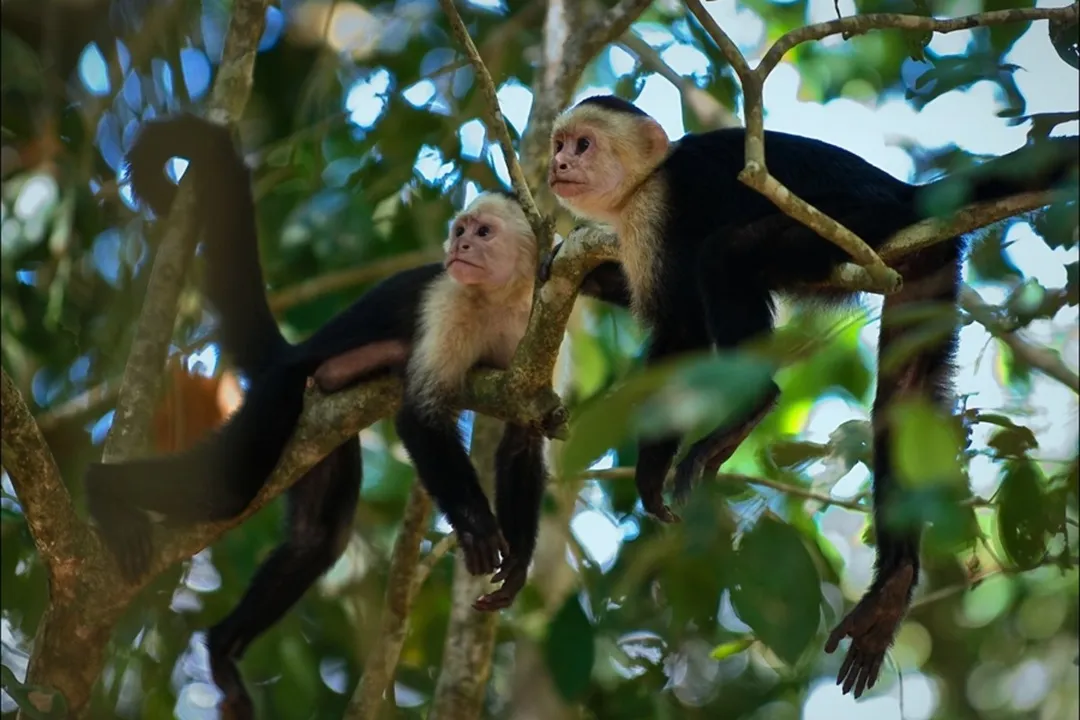
The evolutionary story of the white-faced capuchin, Cebus capucinus, is deeply intertwined with the broader narrative of primate intelligence and behavioral flexibility, offering researchers a living model for tracing the development of complex traits seen in humans. [1][9] These monkeys, part of the New World monkey family Cebidae, occupy a fascinating niche, demonstrating advanced cognitive abilities that challenge simple assumptions about primate brain size versus behavioral complexity. [3] Their evolutionary trajectory is not just marked by changes in bone structure but dramatically by the traditions they learn and pass down through generations. [1][2]
# Primate Cognition
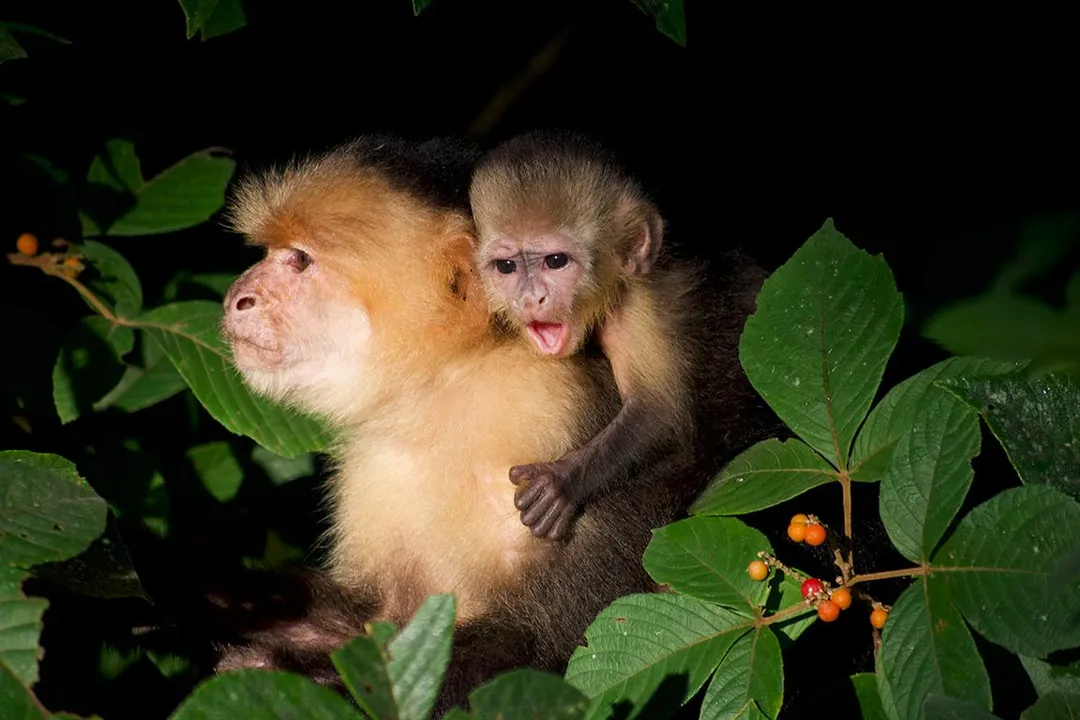
Capuchins stand out among small primates for their pronounced cognitive skills, which have been a focus for understanding how complex behaviors evolve. [1][9] Their intelligence is readily apparent in their problem-solving capabilities and their capacity for cultural transmission—the process where learned behaviors spread within a group. [2] This learning extends to technological advancement, most notably the repeated and skillful use of stone tools. [5] In the wild, capuchins are observed using stones as hammers and anvils to crack open hard-shelled nuts and shellfish, showcasing a form of dexterity and foresight that requires planning and sequential action. [5][3]
The ability to learn and innovate is key to their evolutionary success. Behavioral variation, including tool use traditions, can be transmitted non-genetically through social learning, allowing groups to adapt to local resources far faster than genetic evolution would permit. [2] For instance, if one individual discovers a successful technique for opening a particularly difficult fruit, that technique can spread, effectively becoming a behavioral adaptation for the entire group without waiting for a beneficial mutation. [2] This highlights a critical point: for capuchins, evolution in behavior can outpace evolution in anatomy, making them excellent subjects for studying how culture shapes survival. [1] It suggests that the pressures favoring behavioral flexibility might be just as strong, or even stronger, than those favoring specialized physical traits in their specific environments. [2]
# Lineage Tracing
The genus Cebus, which includes the white-faced capuchin, belongs to the order Primates, suborder Haplorhini, and infraorder Platyrrhini, placing them firmly within the New World monkeys. [8] The separation of the New World monkeys from Old World monkeys occurred many millions of years ago, marking a significant branching point in primate evolution. [8] Within the Capuchin group, there are distinct evolutionary trends. While the genus Cebus is characterized by these larger, more heavily built monkeys, the Sapajus genus, often called the robust capuchins, diverged from Cebus approximately 10 to 12 million years ago. [8] This split resulted in different body plans and potentially different selective pressures acting upon foraging techniques. [8]
The white-faced capuchin, Cebus capucinus, is found across Central America and into northwestern South America, spanning diverse habitats from tropical rainforests to dry forests. [6][8] This wide distribution suggests a high degree of adaptability, a hallmark of a successful evolutionary lineage. Interestingly, while the split between Cebus and Sapajus is significant, analyzing the minor differences between species within the Cebus genus can reveal the fine-tuning that allowed them to colonize varied ecological niches across their range. [7] The relatively small size of the Cebus species, when contrasted with their pronounced intelligence and broad dietary habits, implies that evolutionary pressure favored cerebral development over sheer physical bulk in their specific evolutionary pathway. [6][3] This is a subtle but important distinction: they achieved ecological dominance not through size, but through smarter interaction with their world. [1]
# Stone Toolmaking
Documenting tool use in the wild provides direct evidence of the culmination of millions of years of cognitive evolution. Research focused on contemporary capuchin groups confirms that the "Stone Age" behaviors observed in these primates are not isolated incidents but rather established, complex traditions. [5] When studying these populations, researchers can observe the entire sequence: selection of a specific type of stone, transportation to a favored anvil site, and the forceful impact required to access food. [5] This sequence requires recognizing the properties of different materials—a rock's suitability as a hammer versus a hard nut—a basic form of physics knowledge applied practically. [5]
The consistency across different, non-interacting groups performing similar stone-cracking tasks suggests that while innovation sparks the initial behavior, the trait is then maintained through learning and cultural inertia. [5][2] For a general reader, it might seem that this behavior is simply instinctual, but the variation in hammer size, the choice of anvil location, and the successful transfer of this knowledge to young capuchins—often observed but not yet fully quantified across all groups—demonstrates a learned component. [5] If a young capuchin fails to grasp the necessary force or accuracy, it may go hungry, illustrating the real-life selective pressure behind perfecting this acquired skill. [2]
# Facial Form
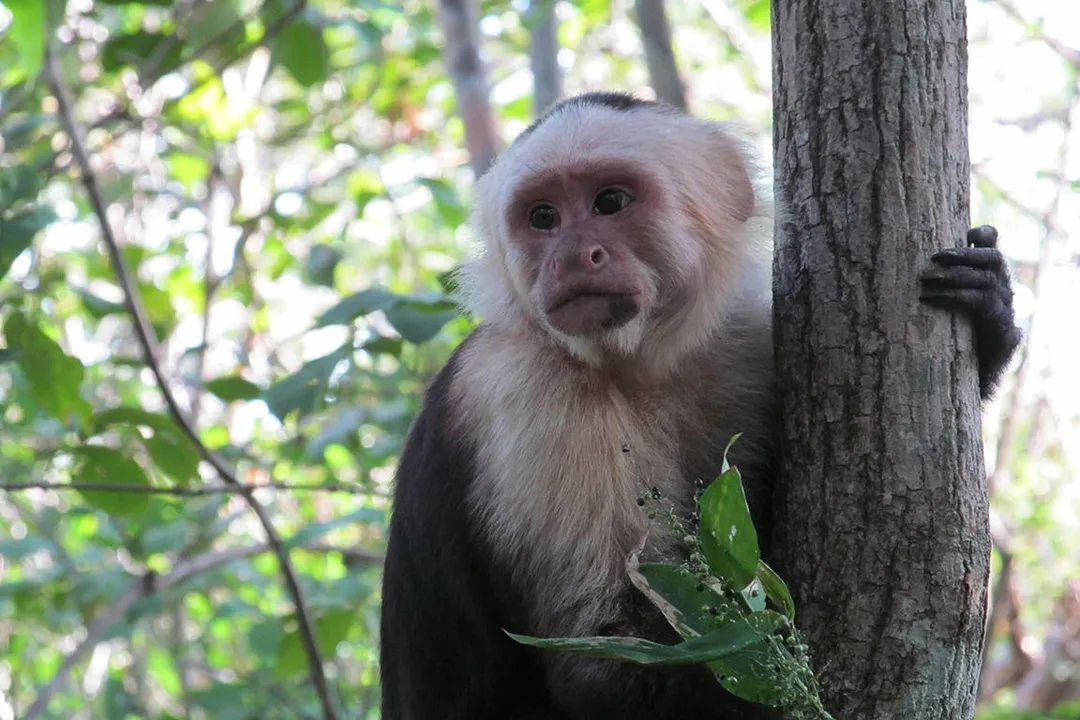
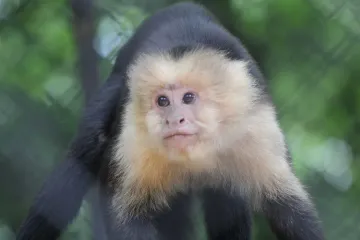
Evolutionary change is readily trackable in skeletal structures, and the face of the capuchin monkey tells a story about its feeding ecology and social signaling. [4] The white-faced capuchin possesses a striking, distinctly demarcated facial pattern—the white fur contrasting sharply with the black fur on the rest of the body and the dark skin around the eyes. [6][10] The structure of the face, particularly the palate and jaw, reflects a diet that is highly generalized, including insects, fruit, and seeds that require significant processing. [6]
The evolutionary process shaping primate faces often balances the mechanical demands of eating with the needs of social communication. [4] In highly social animals like capuchins, facial expressions are vital for maintaining group cohesion, signaling aggression, or initiating play. [1] While the specific evolutionary pressures that led to the highly contrasting white-and-black patterning of Cebus capucinus versus the generally darker coloration of other primates are complex, this distinct visual cue likely plays a role in species recognition or individual signaling across dense forest environments. [4][6] A comparative analysis between the generalized, omnivorous Cebus lineage and other monkey groups suggests that the need for forceful, all-purpose chewing (dietary mechanics) drove much of the robust bone structure, while social complexity refined the surface features. [4][7]
# Social Learning
The intense social lives of white-faced capuchins are crucial to their evolutionary fitness, particularly concerning the transmission of learned innovations. [1][3] They live in complex social groups, often with fluid dominance hierarchies. [6] This environment creates numerous opportunities for observation and instruction, which are the engines of behavioral evolution. [2] Unlike species where behavioral novelty dies with the individual, capuchins possess the neural plasticity to retain and pass on complex sequences of actions. [1]
The capacity for cultural inheritance means that the adaptive landscape for a capuchin group is not fixed by genetics alone; it is continually being shaped by the cumulative knowledge of the group members. [2] Consider a scenario where one group has successfully figured out how to defend a specific rich feeding patch against a predator using coordinated alarm calls, while another group, perhaps due to the loss of an older, experienced member, has not yet developed this defense. [1] The first group experiences a higher survival rate for its young, not because of inherent genetic superiority, but because of superior learned social knowledge. [2] This phenomenon suggests that in highly social, intelligent primates, the selection pressure on learning ability itself becomes a primary driver of evolutionary success, potentially leading to the expansion of brain regions dedicated to social information processing. [9] The relative success and persistence of the white-faced capuchin across varied Central and South American landscapes may therefore be less about having the "best" physical traits and more about having the "best" teachers and learners within their social units. [3][1]
Related Questions
#Citations
Behavioral evolution | Smithsonian Tropical Research Institute
Behavioural variation and learning across the lifespan in wild white ...
Meet the capuchin monkey: Curious, creative and vengeful
How Evolution Made the Monkey Face | Discover Magazine
Documenting the Monkey Stone Age in Real-Time
Cebus capucinus (white-faced capuchin) - Animal Diversity Web
The genomics of ecological flexibility, large brains, and long lives in ...
Capuchin monkey - Wikipedia
Center for Behavior, Evolution, and Culture - UCLA Social Sciences
White-Faced Capuchin Animal Facts - Cebus Capucinus