White Shark Evolution

The history of the great white shark, Carcharodon carcharias, is much deeper and more complex than its current status as a top ocean predator suggests. Sharks as a whole represent an ancient lineage, appearing in the fossil record about 450 million years ago, preceding even the dinosaurs. This incredible tenure means their evolutionary narrative is written across deep geological time, a story primarily preserved not in bone, but in the durable minerals of their teeth.
# Ancient Context

Sharks established themselves early on in marine ecosystems, representing some of the earliest true vertebrates. While the general shark group has been around for hundreds of millions of years, the specific branch leading to the modern great white is a more recent chapter, one defined by adaptation to specific marine conditions and a specialized predatory lifestyle. Tracing this path requires an understanding of the major shifts within the shark tree, particularly those separating the great white from its colossal relative, the Megalodon.
# Lineage Divergence
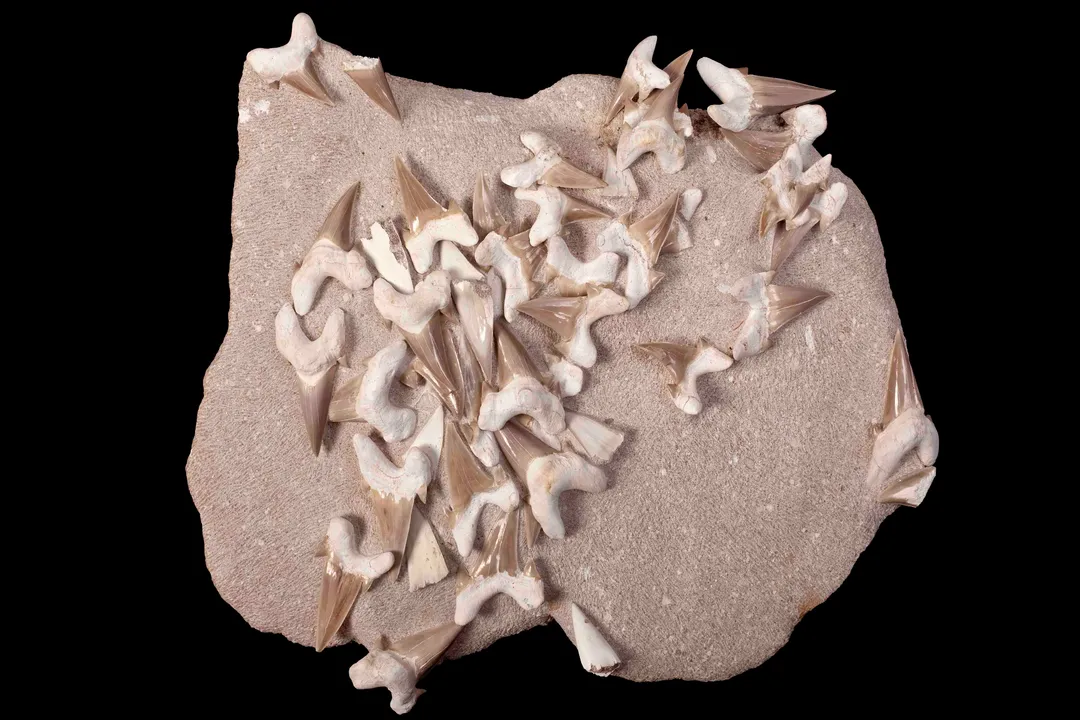
One of the most significant points of study involves the relationship between the modern great white and Otodus megalodon. Early hypotheses suggested that the great white evolved directly from the giant Megalodon. However, modern paleontological scrutiny, particularly of fossilized dental structures, points toward a different conclusion: the two represent cousins who shared a common, though ancient, ancestor but diverged long ago. The lineage leading to Megalodon followed a path of extreme gigantism, while the path leading to Carcharodon carcharias specialized along a slightly different trajectory.

# New Discoveries
Scientific understanding continues to sharpen with the discovery of transitional fossils. The identification of an ancient shark species, Otodus daguei, found in the eastern Atlantic, provides a crucial anchor point in this evolutionary map. This species, which lived approximately 10 million years ago, exhibits features that strongly suggest it sits near the base of the group that would eventually produce the modern great white. Scientists analyze the shape and serration of these older teeth to map the exact morphological progression that resulted in the modern great white’s signature blade-like cutting edges.
# Teeth as Records
Because cartilage skeletons rarely fossilize well, the evolution of the great white is overwhelmingly reconstructed using dental evidence. Scientists examine fossil teeth across different geological strata to track changes in size, the degree of serration, and the overall tooth crown shape. This method reveals a gradual refinement from earlier, sometimes thicker or less perfectly serrated teeth, toward the optimized, broad, triangular shape characteristic of the contemporary Carcharodon.
When comparing the evolutionary approach of the Carcharodon line to that of Megalodon, one notices a divergence in strategy over deep time. While Megalodon pursued an evolutionary path dominated by sheer, massive body size—a spectacular, singular push toward being the largest predator possible—the Carcharodon line appears to have focused more intensely on refinement and ecological efficiency within a moderately large framework [cite: 7 implies this contrast]. This suggests that for long-term survival across changing global conditions, developing highly specialized physical tools, like the modern great white’s precise dental architecture, can prove more successful than simply maximizing mass alone.
# Sensory Refinements
Evolution isn't just about size and structure; it involves perfecting sensory input for the current environment. The modern great white possesses a suite of highly tuned senses necessary for its role as an apex predator across varied temperate and subtropical waters. Its acute sense of smell, powerful vision, and unique ability to detect faint electrical fields via the ampullae of Lorenzini represent millions of years of sensory refinement. These adaptations allow for precise location and targeting of prey, cementing its place in the modern ecosystem.
# Molecular Confirmation
While fossils provide the visible evidence, genetics offers a complementary, molecular clock for dating evolutionary splits. Genetic sequencing allows researchers to map the relationship between ancient shark populations and modern species with high precision. This molecular data helps corroborate or refine hypotheses drawn from the fossil record, providing a more complete timeline for when the genetic separation between lineages—like the one leading to the great white versus the one leading to Megalodon—actually occurred.
If we look at the broader environmental context, the lineage leading to the modern great white seems to have successfully navigated a major ecological shift that its enormous cousin did not survive. As global ocean temperatures began to decline significantly, the vast, warm, shallow seas that Megalodon preferred contracted. The ancestors of the great white, already evolving toward a more robust, perhaps slightly more cold-tolerant, body plan, were better situated to adapt to cooler coastal upwelling zones and shifting prey bases. This highlights adaptability to environmental variance—the ability to thrive as conditions change—as a more durable evolutionary engine than static gigantism when measured across millions of years.

# Modern Shark Identity
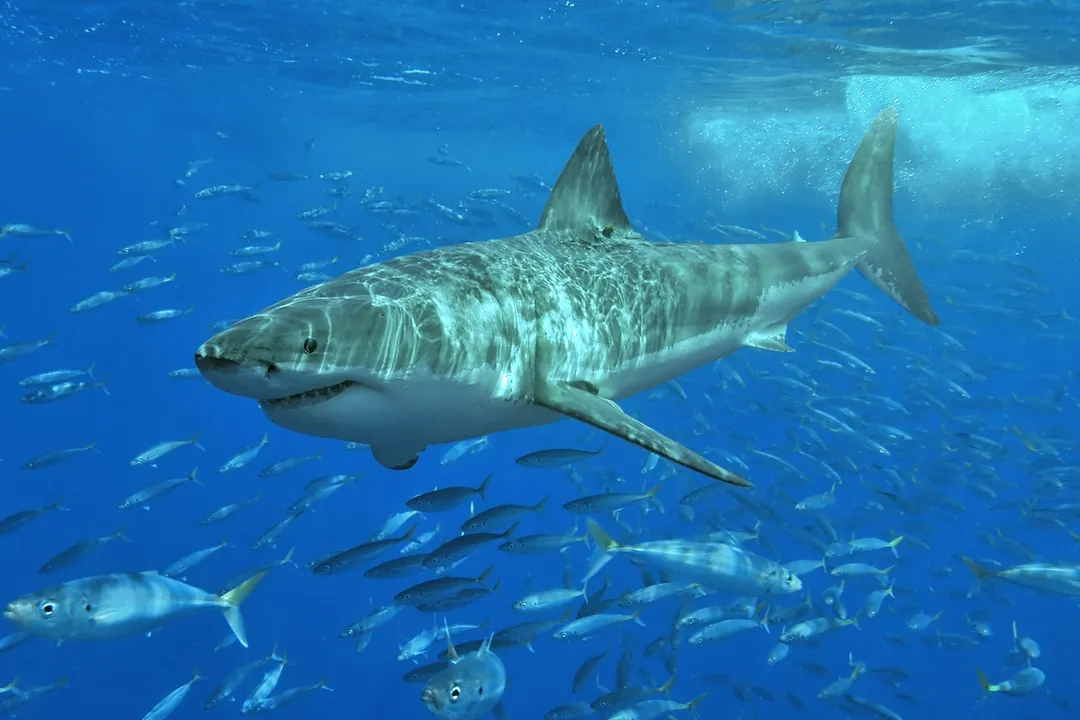
The great white shark today is the culmination of these long-term pressures—a finely tuned predator whose lineage has successfully navigated multiple extinction events and massive environmental reorganization. The creature swimming today represents the final, highly successful iteration of a family line that began branching off deep in the age of ancient fishes.
# Key Evolutionary Traits Summary
The key evolutionary milestones leading to Carcharodon carcharias can be generally characterized as follows:
- Early Shark Presence: Establishment of cartilaginous fish over 450 million years ago.
- Lineage Split: Divergence from the Otodus line, separating the future Megalodon clade from the Carcharodon clade.
- Transitional Forms: Appearance of intermediate species, like Otodus daguei, around 10 million years ago, showing early signs of the specialized dental structure.
- Dental Refinement: Gradual change in tooth morphology toward the broad, heavily serrated blade characteristic of the modern species, tracked through fossil teeth.
- Sensory Optimization: Refinement of sensory organs to efficiently hunt in diverse, changing thermal environments.
This long, branching story demonstrates that evolution is not a straight ladder of increasing size or complexity, but rather a complex bush of successful adaptations tailored to changing seas. The great white's enduring success stems from this long-term specialization rather than a singular, dramatic physical leap.
Related Questions
#Citations
Great white shark
Shark evolution: a 450 million year timeline
New ancient shark species gives insight into ...
Shark Teeth Tell Great White Shark Evolution Story
How did Great White sharks evolve?
Great White Shark Evolutionary Senses
Great White Shark Evolution - Megalodon Teeth