White-tail deer Evolution
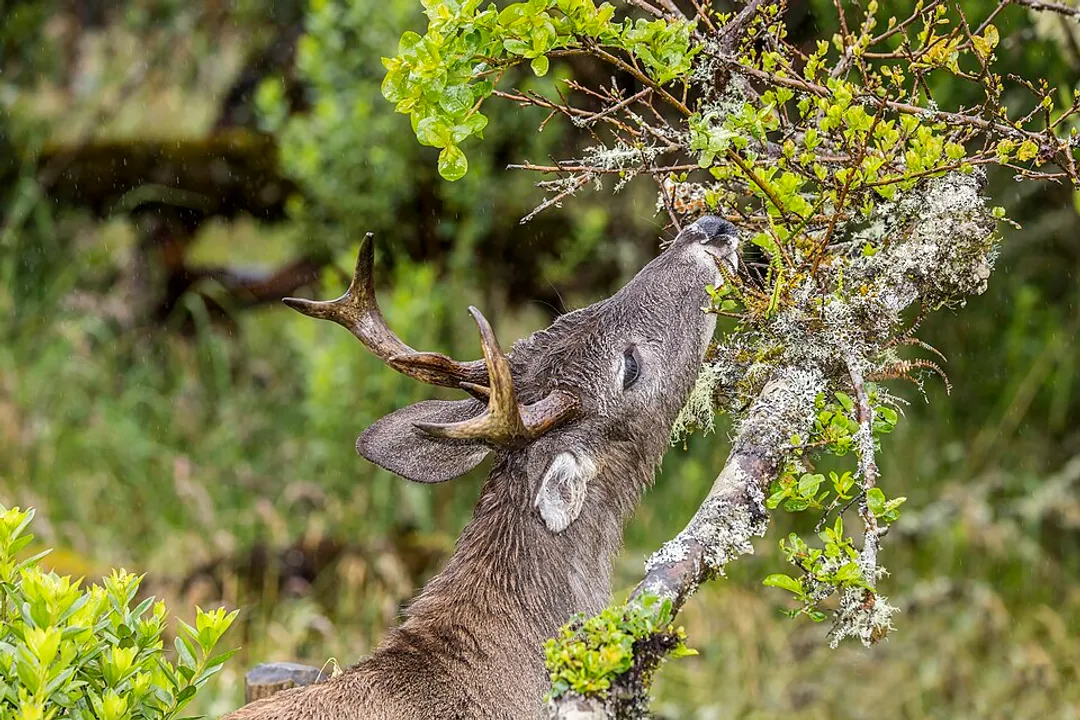
The white-tailed deer, scientifically known as Odocoileus virginianus, is perhaps the most familiar and widespread large mammal across the Americas, a testament to a remarkable evolutionary success story. Its adaptable nature has allowed it to thrive from South America well into the northern reaches of Canada, a range that speaks volumes about its genetic flexibility and resilience across diverse environments. Understanding this creature requires looking deep into its lineage, tracing the threads that connect it to ancient forms and charting the pressures that shaped its defining characteristics, like that characteristic white underside of its tail which gives it its common name.
# Ancient Roots
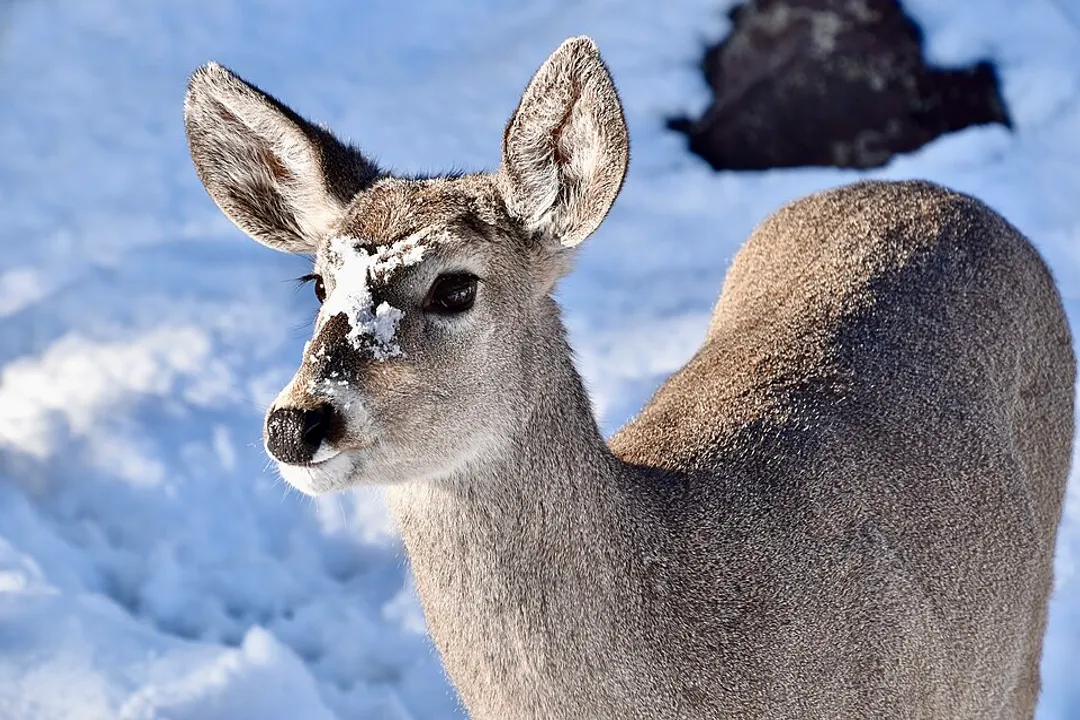
Tracing the ancestry of modern deer requires looking much further back than the Holocene epoch when O. virginianus solidified its current form. Deer belong to the family Cervidae, a group whose origins trace back tens of millions of years. The history of the entire deer family is one of diversification, a process where early forms slowly gave rise to specialized browsers and grazers suited to different ecological niches. While the specific origin point of the white-tailed deer lineage is complex, evidence suggests that deer evolved in Eurasia, eventually crossing into North America.
One interesting point of reference comes from examining the fossil record and modern relatives. Some sources point to the existence of incredibly ancient deer relatives, though not direct ancestors, showing the sheer depth of the family's evolutionary timeline. For instance, the understanding of what constitutes "deer" has shifted as paleontology uncovers older forms. The existence of modern deer is contingent upon the successful adaptation of their distant relatives over vast stretches of time, outlasting numerous climate shifts and the presence of formidable predators. It is within this vast biological context that the Odocoileus genus eventually found its footing.
# Divergence Paths
The Odocoileus genus, which includes the white-tailed deer and the mule deer (Odocoileus hemionus), represents a relatively recent split within the broader deer family tree. While both species share a common ancestor, their evolutionary paths diverged, leading to distinct physical characteristics and behaviors. The primary distinction often noted by observers relates to locomotion and response to danger: white-tails typically bound or run with a specific, stiff-legged gait, whereas mule deer employ a characteristic "stotting" or jumping motion when fleeing. This difference in escape strategy suggests differential selective pressures acting on their immediate ancestors in their respective historical ranges, perhaps relating to terrain or predator types prevalent during the divergence.
The North American range occupied by white-tailed deer—from southern Canada down through Central America—is vast and varied. The differentiation between mule deer and white-tails likely occurred after the last major glacial periods, as populations became geographically separated, allowing for independent adaptation. The white-tail’s range often overlaps with forests and mixed woodlands, environments where their agility and ability to utilize cover are highly advantageous, contrasting with the more open, arid, or mountainous terrain frequently favored by mule deer. This geographical specialization acted as a powerful evolutionary mechanism, reinforcing the distinct traits of each species.
An interesting observation here is that the differences in their namesake tail use—the white-tail lifts its tail as an alarm flag, while mule deer have large, mule-like ears that serve a similar visual/auditory signaling purpose—suggests that once a successful signaling morphology is established in a lineage, further evolutionary pressure might favor reinforcement of that signal over developing a completely novel one, especially if the primary predator base is similar.
# Shaping Adaptability
What separates the white-tailed deer from many extinct or geographically restricted relatives is its profound adaptability, which is a key driver of its evolutionary success. This adaptability isn't a single trait but a combination of behavioral flexibility and physiological plasticity. They are generalist herbivores, meaning their diet is not narrowly specialized to one or two types of plants. This allows them to shift their forage preferences based on seasonal availability or local environmental changes, a trait that has proven invaluable through changing climates.
The species’ ability to thrive in fragmented habitats—from suburbs bordering human development to dense forests—is a modern expression of this deep-seated flexibility. This contrasts sharply with species that require pristine, old-growth ecosystems, which often face much greater extinction risk. The white-tail’s physiology allows it to process a wide variety of browse, leaves, twigs, forbs, and even agricultural crops, making it less susceptible to localized ecosystem collapse than a specialist feeder.
The concept of the "rise and fall and rise again" illustrates this evolutionary dynamic perfectly. Significant population crashes, often driven by over-hunting or natural environmental pressures like severe winters or high predation rates from large carnivores such as wolves, have occurred throughout their history. Yet, the inherent genetic variability and broad habitat tolerance allow the remaining populations to rebound quickly when pressures ease, showcasing a strong capacity for rapid demographic recovery, which is an evolutionary advantage in unstable environments.
# Morphological Throwbacks
Evolution isn't always a clean march toward the "most advanced" form; sometimes, ancient genetic blueprints resurface under specific environmental cues or through rare mutations. The study of white-tailed deer occasionally reveals individuals that seem to echo distant ancestry. For instance, reports of bucks exhibiting unusual antler formations or skeletal features can sometimes be interpreted as a throwback to older Odocoileus forms that existed before the modern, highly refined antler structure became universal.
These rare instances are fascinating because they offer glimpses into the species' developmental plasticity. Antler growth, in particular, is highly complex and influenced by genetics, nutrition, and hormones. When a deer expresses a trait reminiscent of an extinct ancestor, it indicates that the genetic information for that trait hasn't been entirely purged from the population's gene pool; it remains dormant until the right set of conditions—or a developmental anomaly—allows it to manifest. Examining the skeletal structures of truly ancient deer relatives helps scientists map the progression of traits like antler complexity, demonstrating how the current typical fork-and-point structure evolved from more palmated or multi-tined predecessors.
For example, an individual exhibiting characteristics seen in a long-extinct ancestor of the white-tail might display a more basal dental structure or body proportion than the current population norm. This isn't evolution happening in real-time, but rather the expression of latent variability maintained over millennia. Considering the pressures exerted by large predators like the Gray Wolf (Canis lupus), the selective advantage likely favored efficient escape mechanisms and successful reproduction, which shaped the modern animal. The appearance of a "throwback" is a reminder that the genome carries the history of the species' entire evolutionary life.
# Evolutionary Landscape Dynamics
The interaction between predator and prey is a classic engine of evolution, and the relationship between the white-tailed deer and apex predators like wolves in regions such as Minnesota provides a tangible example. Wolves selectively remove the weak, the sick, or the less agile members of the deer herd. This predation pressure acts as a constant selective filter, favoring deer that are faster, more cautious, or better able to hide. Over countless generations, this dynamic refines the species' defensive behaviors and physical capabilities.
When wolves were extirpated from many areas, the selective pressure changed dramatically. Deer populations, freed from intense predation, experienced rapid growth, sometimes leading to overbrowsing of vegetation, which in turn impacts the overall health and genetic fitness of the herd. This scenario highlights an evolutionary feedback loop: the absence of a major selective agent (predator) can lead to a temporary surge in population numbers, followed by an environmental collapse (starvation/disease) that then exerts a different, powerful form of selection favoring those who can better survive scarcity.
To put this into context, if we consider a hypothetical historical scenario where the primary predator was a saber-toothed cat favoring a stealth ambush strategy, the evolutionary advantage would lean heavily toward acute hearing and rapid acceleration over short distances. In contrast, the modern wolf, capable of long, persistent chases, would favor sustained endurance and superior stamina in the deer population. The current deer population reflects the success of adapting to a diverse array of pressures, both biotic (wolves, parasites) and abiotic (climate, habitat quality).
# Comparing Success
It is worthwhile to compare the white-tail's evolutionary success with that of its close relatives, like the mule deer, to better understand the advantages of the virginianus traits. While both are highly successful, the white-tail's range expansion into Eastern North America, which historically involved denser, wetter forests and a greater variety of understory browse, seems to have favored its particular suite of adaptations—namely, its bounding gait and generalized diet.
Consider the key differences in locomotion again:
| Trait | White-tailed Deer (O. virginianus) | Mule Deer (O. hemionus) | Implied Selective Advantage |
|---|---|---|---|
| Locomotion | Bounding/Running (stiff-legged) | Stotting/Jumping (all four feet leave ground) | Agility in thick cover vs. high visibility terrain |
| Tail Signal | Flashes white underside when alarmed | Ears are primary visual signal | Effectiveness of signal based on habitat openness |
| Range | Eastern US, Mexico, Central America | Western North America, higher elevations | Tolerance for dense vegetation and humidity |
If one were to overlay historical human expansion patterns onto these ranges, the white-tail’s ability to utilize "edge habitats"—the boundaries between fields, forests, and human activity—is unparalleled. This is not just a behavioral quirk; it reflects an underlying genetic predisposition to capitalize on disturbed landscapes. This inherent flexibility means that as North American habitats have been perpetually altered by human land use over the last few centuries, the white-tail has been perfectly positioned to exploit these new ecological niches, often resulting in higher population densities than many other large ungulates can sustain. This continuous, rapid response to novel conditions is what keeps the Odocoileus virginianus story one of ongoing evolutionary relevance.
# The Legacy of Time
The sheer antiquity of the deer family provides a deep background for the specific story of O. virginianus. Every successful lineage that survives extinction events carries with it the compromises and triumphs of its predecessors. The white-tail deer we observe today is not a static endpoint but a moment in an ongoing evolutionary process, a highly refined machine for survival shaped by millions of years of trial and error across continents. Its current dominance in many parts of the world is a direct reflection of its successful navigation of ancient environmental shifts and its uncanny ability to adapt to modern ones, often in the shadow of humanity. Understanding this history moves the animal from being just a familiar sight to a profound biological success story written in its very form and behavior.
#Videos
The History Of Whitetail Deer - YouTube
Related Questions
#Citations
The Oldest Deer on Earth | National Deer Association
White-tailed Deer - Discover Lewis & Clark
White-tailed deer - Wikipedia
The Amazing Adaptable Whitetail Deer (Odocoileus virginiana)
Could anyone explain why mule and white tail deer evolved to have ...
White-tailed deer | Habitat, Diet & Adaptations | Britannica
The Ecological Relationship of Gray Wolves and White-tailed Deer ...
The rise and fall – and rise again – of white-tailed deer
The History Of Whitetail Deer - YouTube