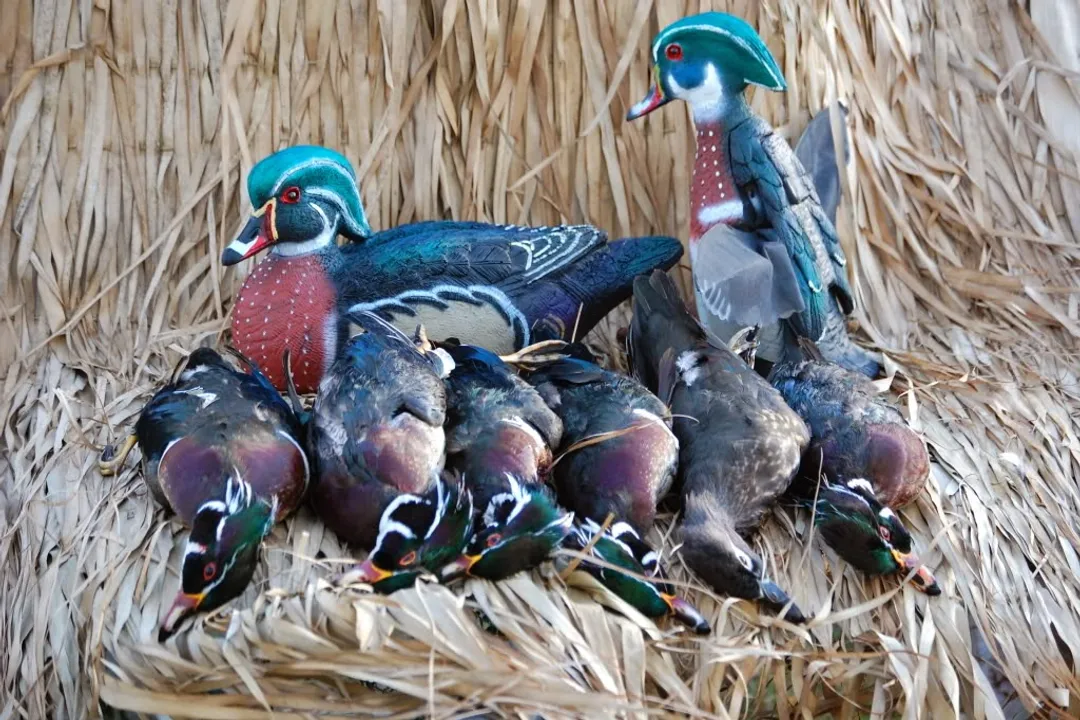
What indicates availability of safe nesting sites is a limiting factor for Wood Ducks?
They readily adopt artificial nesting boxes when natural cavities are scarce
The willingness of Wood Ducks to readily utilize human-provided artificial nesting boxes demonstrates that the primary limiting factor influencing their reproductive success is often the physical presence of a safe, enclosed nesting structure, rather than the intrinsic behavioral ability to construct a ground nest. When mature, dead, or damaged trees—which provide natural cavities—are removed, natural sites become scarce. The immediate adoption of human-provided structures, provided they meet specified size and placement criteria, confirms that access to these secure cavities is a stronger determinant of population success than other ecological variables, signifying strong historical selection for this nesting strategy.