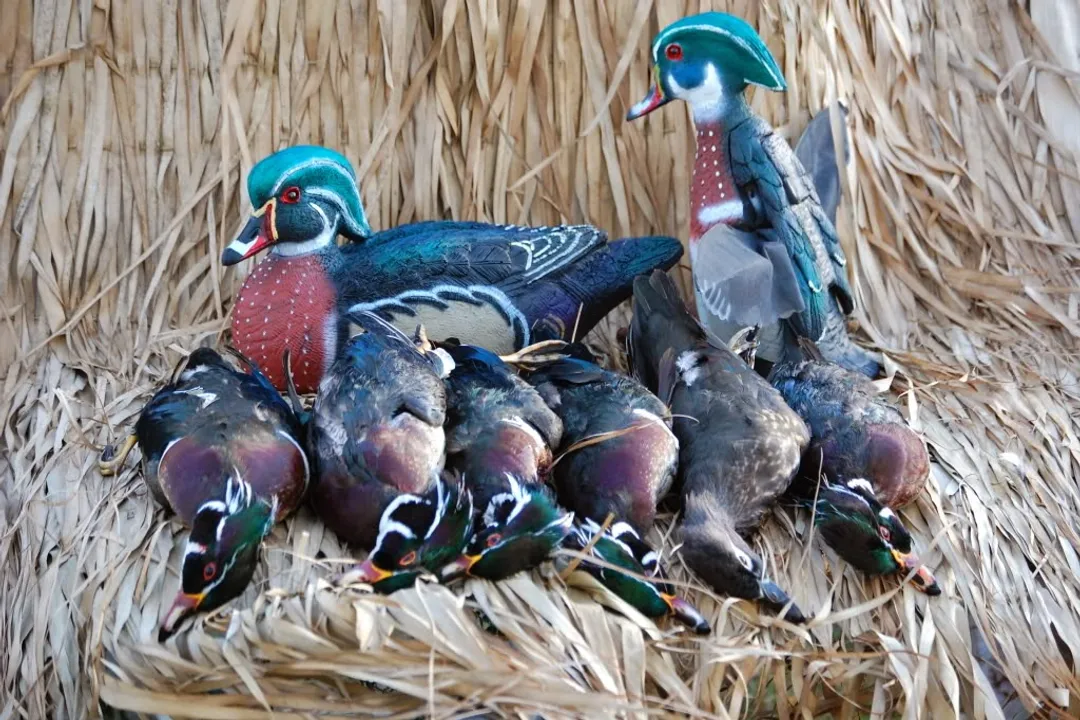
What does the Wood Duck Rule suggest about cavity-dependent species?
They maintain broader geographical distributions than ground-nesting relatives
The Wood Duck Rule posits an ecological observation concerning species that rely on tree cavities for nesting. It suggests that these species tend to possess wider geographical ranges compared to closely related species that choose to nest on the ground within similar environmental settings. The underlying reasoning provided is that while ground-nesting success is heavily influenced by variable factors like local soil composition and the density of immediate vegetation cover, suitable tree cavities may be distributed more consistently across various forest types and climates. This consistency in required habitat structure potentially grants the cavity-nesting species an inherent dispersal advantage across diverse landscapes.