What field observation helps confirm *P. ludoviciana*'s placement in **Cardinalidae**?
Answer
Hovering briefly to pick insects off foliage
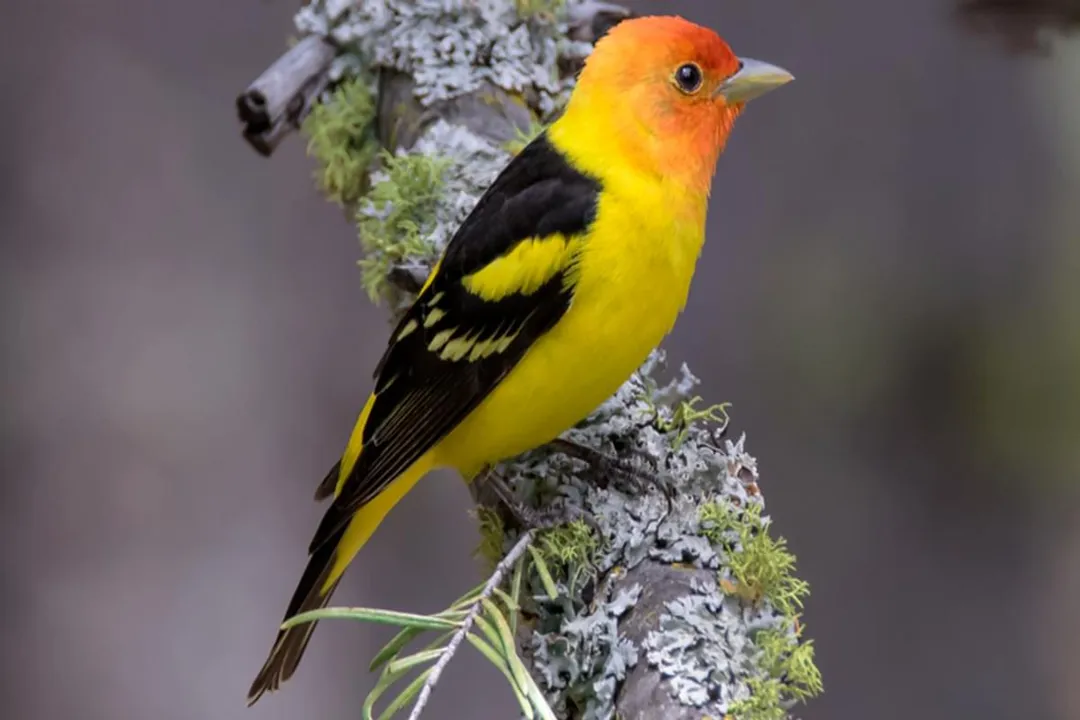
Confirmation of the Western Tanager's classification within Cardinalidae can be supported by observing its feeding behavior, which provides functional evidence aligning with its relatives rather than other taxonomic groups. While tanagers in the text are known for seed-eating, a feeding style common to their *Cardinalidae* relatives involves briefly hovering near foliage to snatch insects. This contrasts with the exclusive ground-gleaning behavior often seen in true sparrows (Family Passerellidae). Furthermore, their relatively stout bills, suitable for cracking seeds, support their placement alongside cardinals and grosbeaks rather than migratory tanagers in the Thraupidae family.
Related Questions
What part of Piranga ludoviciana denotes the genus?What unique foot structure characterizes the Order Passeriformes?What is the broadest accepted taxonomic rank for the Western Tanager?Why were North American tanagers reclassified into Cardinalidae?What common trait do birds in the genus Piranga often exhibit?What distinguishes *ludoviciana* from *P. olivacea* within their shared genus?What taxonomic rank do the Western Tanager and Song Sparrow share?What feature defines the Phylum **Chordata** for *Piranga ludoviciana*?What field observation helps confirm *P. ludoviciana*'s placement in **Cardinalidae**?What feature in juvenile *P. ludoviciana* links it to its species designation?