What feature in juvenile *P. ludoviciana* links it to its species designation?
Answer
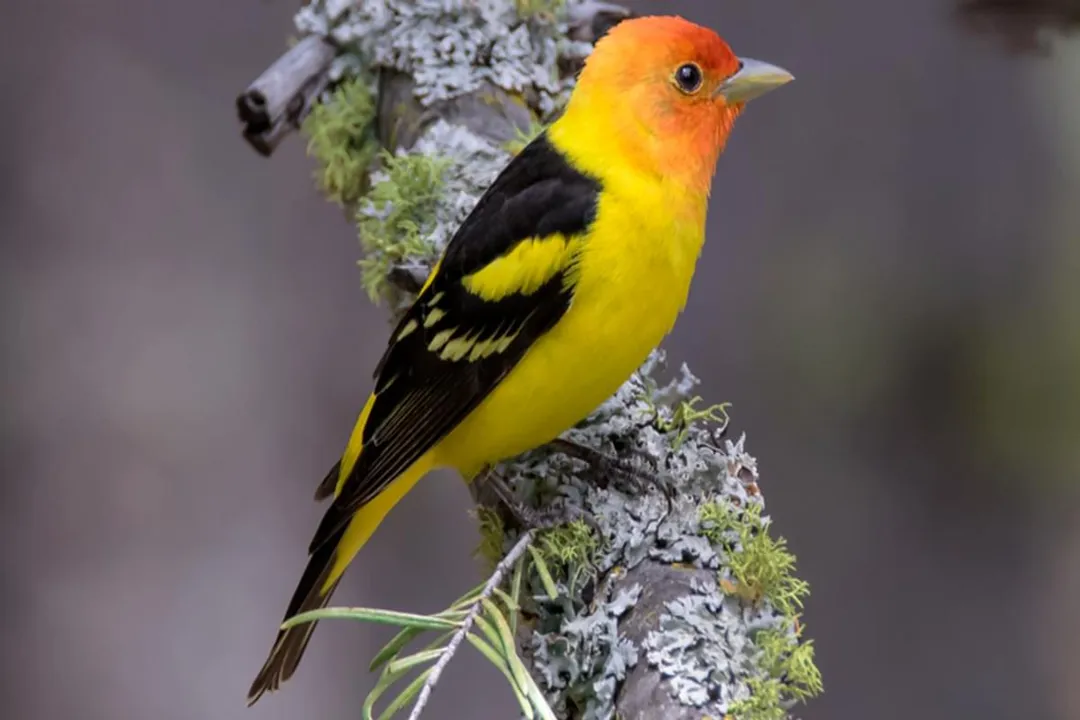
Two distinct yellow or yellowish-white wing bars
Accurate field identification, especially for less distinctive individuals like females or first-year birds, relies on consistent markings that persist across life stages. For the Western Tanager (*Piranga ludoviciana*), a key distinguishing feature, even when the bird exhibits duller olive-green plumage resembling warblers or vireos, is the presence of two clear wing bars. These bars are typically yellow or yellowish-white and contrast against the darker wings. Maintaining these specific wing markings provides practical, on-the-ground evidence confirming the identification of the individual as belonging to the *Piranga ludoviciana* species within the broader family context.
Related Questions
What part of Piranga ludoviciana denotes the genus?What unique foot structure characterizes the Order Passeriformes?What is the broadest accepted taxonomic rank for the Western Tanager?Why were North American tanagers reclassified into Cardinalidae?What common trait do birds in the genus Piranga often exhibit?What distinguishes *ludoviciana* from *P. olivacea* within their shared genus?What taxonomic rank do the Western Tanager and Song Sparrow share?What feature defines the Phylum **Chordata** for *Piranga ludoviciana*?What field observation helps confirm *P. ludoviciana*'s placement in **Cardinalidae**?What feature in juvenile *P. ludoviciana* links it to its species designation?