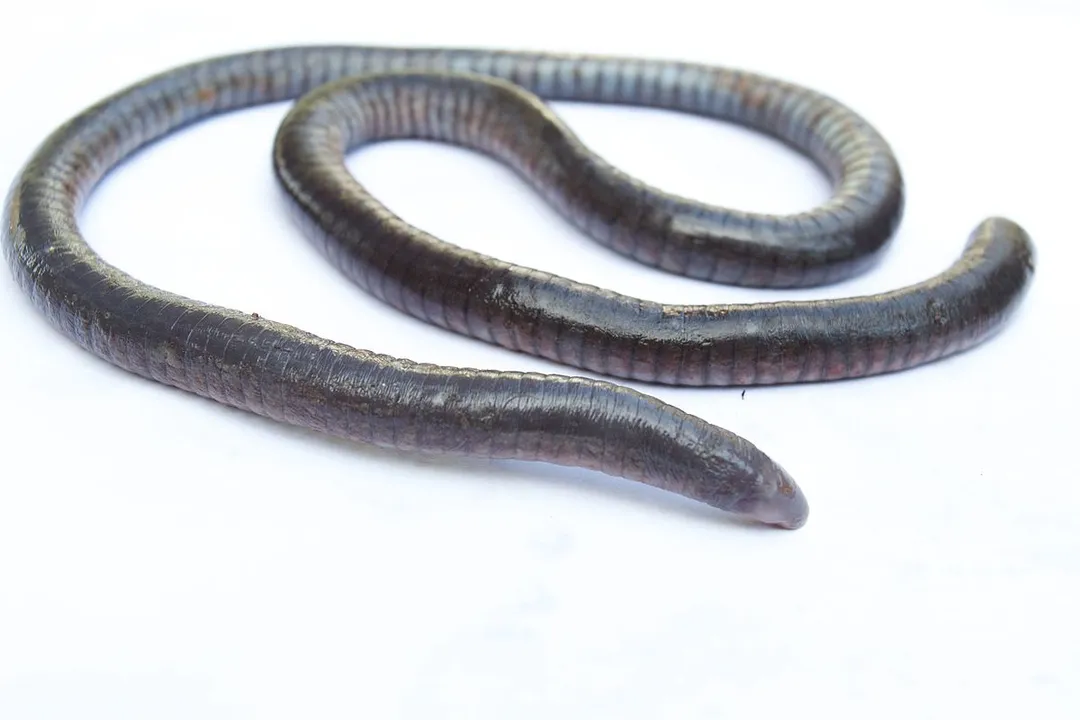
What evolutionary process explains the superficial similarity between burrowing caecilians and large earthworms?
Answer
Convergent evolution
The resemblance is a result of convergent evolution, where unrelated species evolve similar traits to adapt to the comparable environmental pressures of moving through soil.
#Videos
Caecilian facts: they're amphibians! | Animal Fact Files - YouTube
Related Questions
To which unique biological class do caecilians belong, despite superficial resemblance to worms?What fundamental internal structure confirms a caecilian's identity as a vertebrate, unlike an earthworm?What specialized, retractable sensory adaptation is located between a caecilian's eye and nostril?What type of skeleton do earthworms utilize for structure and movement, in contrast to caecilians?What feature embedded in the skin uniquely sets caecilians apart from frogs, salamanders, and worms?What evolutionary process explains the superficial similarity between burrowing caecilians and large earthworms?How do caecilians' reproductive strategies diverge from many aquatic worms?What characteristic confirms the caecilian developmental link to tetrapods, which snakes lack?How do caecilians move through soil using their vertebrate anatomy, unlike the worm's hydrostatic movement?According to the comparison table, what is the Phylum classification for an earthworm?