Worm Scientific Classification
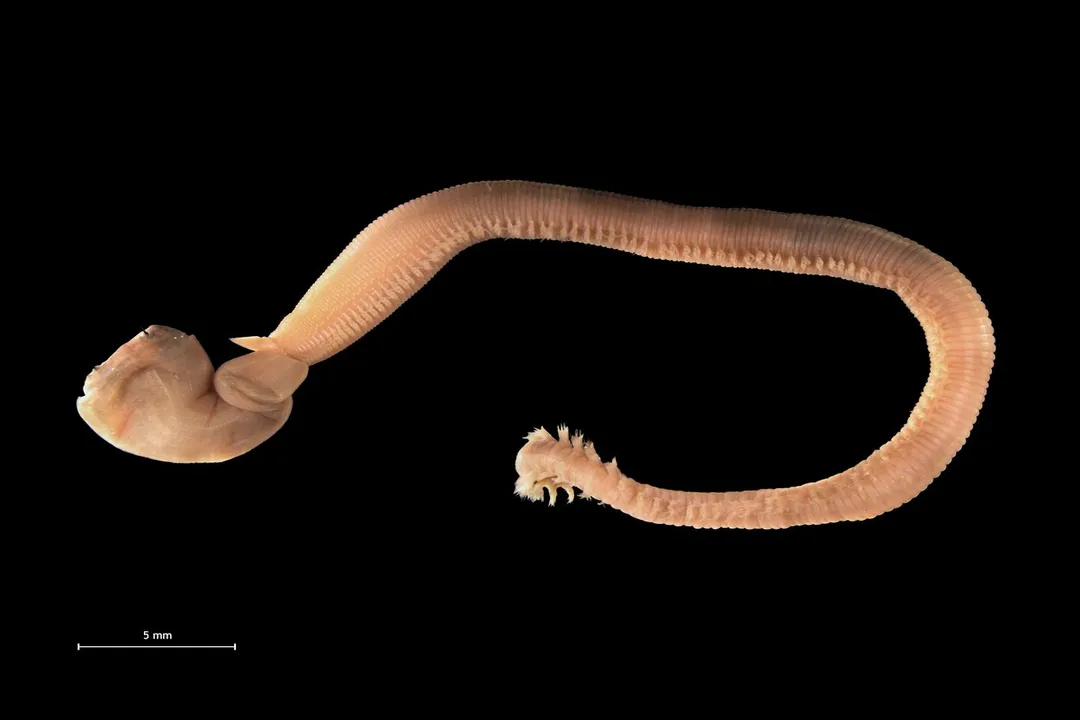
The term "worm" describes a vast array of elongated, soft-bodied invertebrates that often lack specialized appendages, which makes it more of a descriptive label than a precise scientific grouping. [8][3] Because this common name applies to creatures belonging to several distinct phyla—including flatworms, roundworms, and segmented worms—strict scientific classification is essential to understand their true evolutionary relationships and biological characteristics. [3][8] Without the Linnaean system, differentiating between a parasitic nematode and a beneficial soil-dwelling annelid would be nearly impossible based on appearance alone. [3]
# Broad Groupings
The informal term "worm" is applied across the animal kingdom to animals that share a general cylindrical or flattened shape. [3] For example, the phylum Nematoda consists of roundworms, which are incredibly abundant, inhabiting nearly every environment on Earth, often being microscopic and sometimes parasitic. [3] Another major group often called worms are the Platyhelminthes, the flatworms, which are characterized by their flattened bodies and simple structure. [8][3] These groups are evolutionarily distant from one another, which underscores why the word "worm" lacks specific taxonomic meaning at the higher levels. [3]
# Segmented Bodies
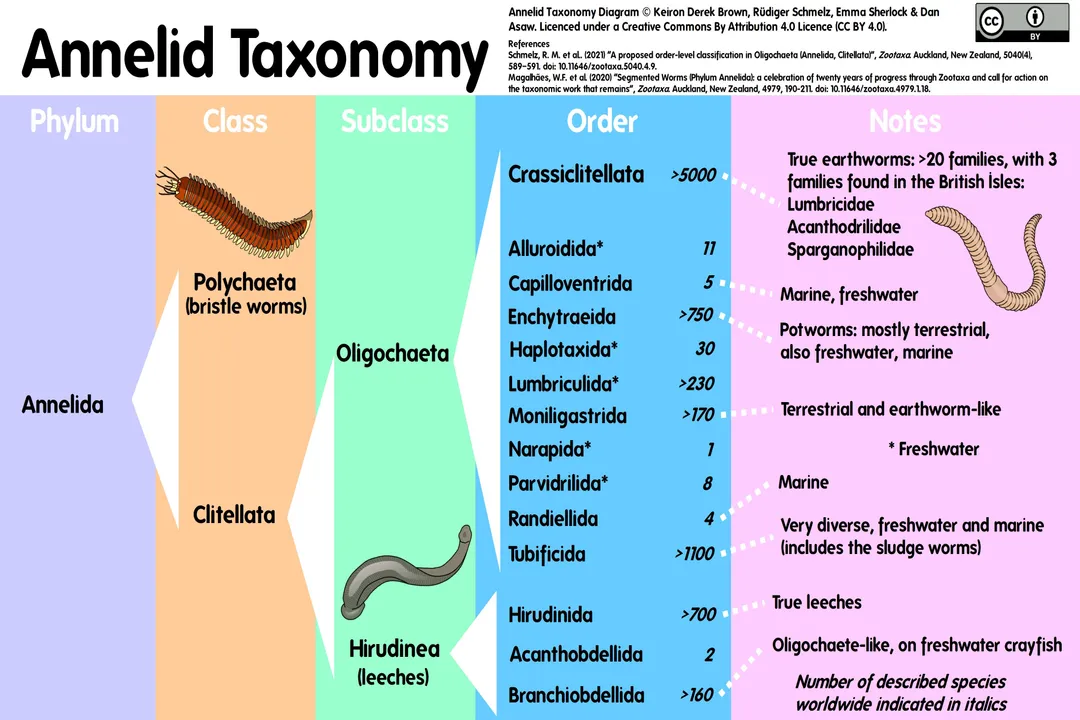
When most people picture a worm in the garden or on the sidewalk after a rainstorm, they are thinking of the segmented worms belonging to the phylum Annelida. [1][6] These creatures are segmented internally and externally, a defining characteristic that separates them from the unsegmented nematodes and flatworms. [6][1] Within Annelida, earthworms fall under the class Oligochaeta, which translates roughly to "few bristles". [1] This small number of bristles, called setae, which they use for anchoring in the soil, distinguishes them from their marine relatives in the class Polychaeta, which possess many bristles. [1]
Earthworms possess several key anatomical features that place them firmly within this classification. [6] They have a true coelom, or body cavity, which is fluid-filled and aids in circulation and locomotion. [6] Their digestive system runs the length of the body, processing organic matter as they burrow. [9] A crucial structure for reproduction, present in sexually mature earthworms, is the clitellum, a glandular, saddle-like band near the anterior end of the body. [1][4] This structure is essential for producing the cocoon in which eggs are deposited. [4]
# Taxonomic Rank
To move from the general concept of a worm to the precise identification of a common earthworm, we must trace its classification down through the recognized ranks. For a typical, non-marine earthworm, this hierarchy looks like this:
| Rank | Classification | Notes |
|---|---|---|
| Kingdom | Animalia | Multicellular, heterotrophic |
| Phylum | Annelida | Segmented worms [6] |
| Class | Oligochaeta | Few setae; includes most terrestrial worms [1] |
| Order | Haplotaxida | Specific grouping within Oligochaeta |
| Family | Lumbricidae | The common earthworm family [1] |
| Genus | Lumbricus or similar | Example: Lumbricus terrestris |
The classification Lumbricidae identifies the true earthworms, distinct from other annelids like leeches (Hirudinea) or marine bristle worms (Polychaeta). [1][7] Understanding this classification means recognizing that an organism in the family Lumbricidae is fundamentally different from one classified as a parasitic Nematode, even if both are squishy and elongated. [3]
# Ecological Importance
The scientific classification systems are not just academic exercises; they directly inform ecological understanding and management. [9] Earthworms, particularly those classified as epigeic (surface-dwelling composters), endogeic (topsoil burrowers), and anecic (deep-burrowing cast producers), are vital to soil health. [10][9] Their movement aerates the soil, improves water infiltration, and mixes organic matter deeper into the profile, creating rich humus. [9]
When dealing with soil ecology, understanding the difference between a native Oligochaete and an invasive Amynthas species—both commonly called "earthworms"—is crucial for local farmers or gardeners managing soil structure; the invasive species can rapidly strip away the crucial organic layer, unlike their native counterparts whose roles are already integrated into the ecosystem. [2][10] The presence of an invasive species, such as the Asian jumping worm, which belongs to a different lineage than many established earthworms, signals a significant shift in the ecosystem's natural composition. [2]
# Sensitivity and Biology
Diving deeper into the biology of these Annelids reveals fascinating adaptations that are consistently tied to their taxonomic niche. [4] Earthworms are highly sensitive to their immediate environment, a trait directly related to their lack of a complex respiratory system. [4] They breathe through their skin, requiring it to remain moist for gas exchange to occur. [4] This dependence on moist conditions explains why heavy rain often forces them to the surface, making them visible and easy to collect for study or dissection. [4] They also possess a strong aversion to light; even low levels of light can cause a significant avoidance reaction, pushing them back into the safety of the soil profile. [4]
It is interesting to note that while we can easily group earthworms based on macroscopic features like the clitellum, detailed molecular analysis sometimes reveals surprising genetic distances between soil-dwelling species that share identical habits, suggesting that morphology alone can sometimes oversimplify the actual evolutionary separation within a genus. [1] Taxonomists must weigh morphological evidence—like the arrangement of their digestive tracts or reproductive organs—against genetic sequencing to build the most accurate family trees for these ecologically important creatures. [6]
# Marine Forms
The classification web extends even into the oceans, where many distinct worm-like organisms exist, though they are often not Annelids. [7] The Marine Biodiversity Portal, for instance, catalogs countless species under names like marine segmented worms, which might belong to the Annelida phylum but often look nothing like their terrestrial cousins. [7] Even within the Annelids, the class Polychaeta, which dominates marine environments, exhibits significantly more diversity in feeding structures and body plans than the terrestrial Oligochaetes. [1][7] Recognizing this scope reinforces the reality that "worm" is a shape, while Annelida, Nematoda, and Platyhelminthes are the genuine scientific classifications that denote shared ancestry and biological mechanisms. [3]
Related Questions
#Citations
Earthworm - Wikipedia
common earthworm (Lumbricus terrestris Linnaeus, 1758)
Earthworm Biology
Earthworm Animal Facts - Lumbricina - A-Z Animals
Earthworm | Annelid, Burrowing & Soil Fertility | Britannica
WoRMS - World Register of Marine Species
What are worms? - The Australian Museum
Earthworm - Soil Ecology Wiki
Earthworm | University of Puget Sound