Why is a caecilian not considered a worm?
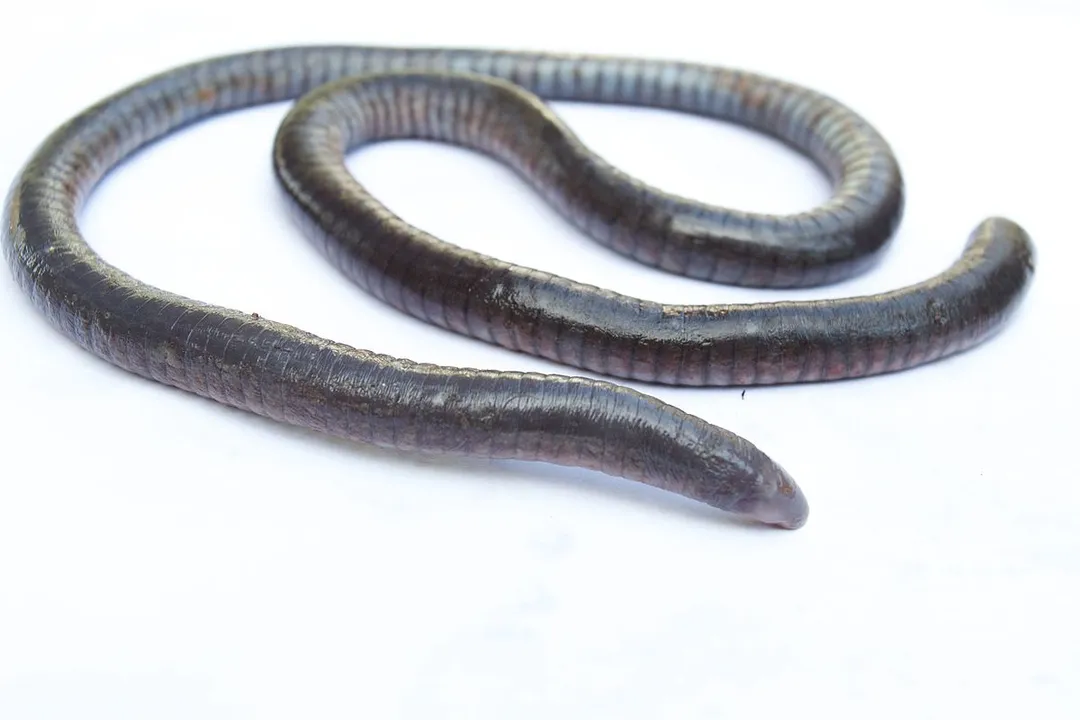
The sleek, elongated form of a caecilian often leads to immediate, though incorrect, identification. Many observers see a limbless creature and instantly file it away in their minds as either a snake or, more commonly, a large earthworm. [1][3][8] This initial, surface-level judgment, driven by superficial resemblance, completely overlooks the profound biological gulf separating these animals. Caecilians are not segmented worms inhabiting the soil; they are, in fact, a unique and ancient lineage of amphibians, related much more closely to the frogs and salamanders we know than to any invertebrate. [2][4][6] The fundamental difference lies in their very blueprint: caecilians are vertebrates, possessing an internal bony skeleton, while worms are invertebrates, lacking a backbone entirely. [3][4]
# Amphibian Lineage
To truly appreciate why a caecilian isn't a worm, we must place it within the tree of life. Caecilians belong to the amphibian order Gymnophiona. [3] This means that despite their snake-like or worm-like appearance, their shared ancestry ties them to tetrapods—the four-limbed vertebrates—rather than to Annelida (segmented worms) or Nematoda (roundworms). [4][6]
Worms, in contrast, belong to entirely different phyla, representing invertebrates whose bodies are structured around hydrostatic skeletons and repeated segments. [1] The physical manifestation of their classification is what causes the mix-up. Caecilians, like their salamander cousins, undergo metamorphosis, often beginning life as aquatic larvae equipped with gills, a characteristic feature of amphibians. [3] While many caecilian species have specialized their development, sometimes skipping a free-living larval stage or even retaining gills into adulthood, this developmental pathway firmly roots them in the tetrapod group. [3] Snakes, on the other hand, are reptiles, possessing scaly skin and undergoing direct development without an aquatic, gilled larval stage. [2][5] The confusion is understandable, but the ancestry is clear: caecilians are amphibians through and through. [2][4]
# Skeletal Architecture
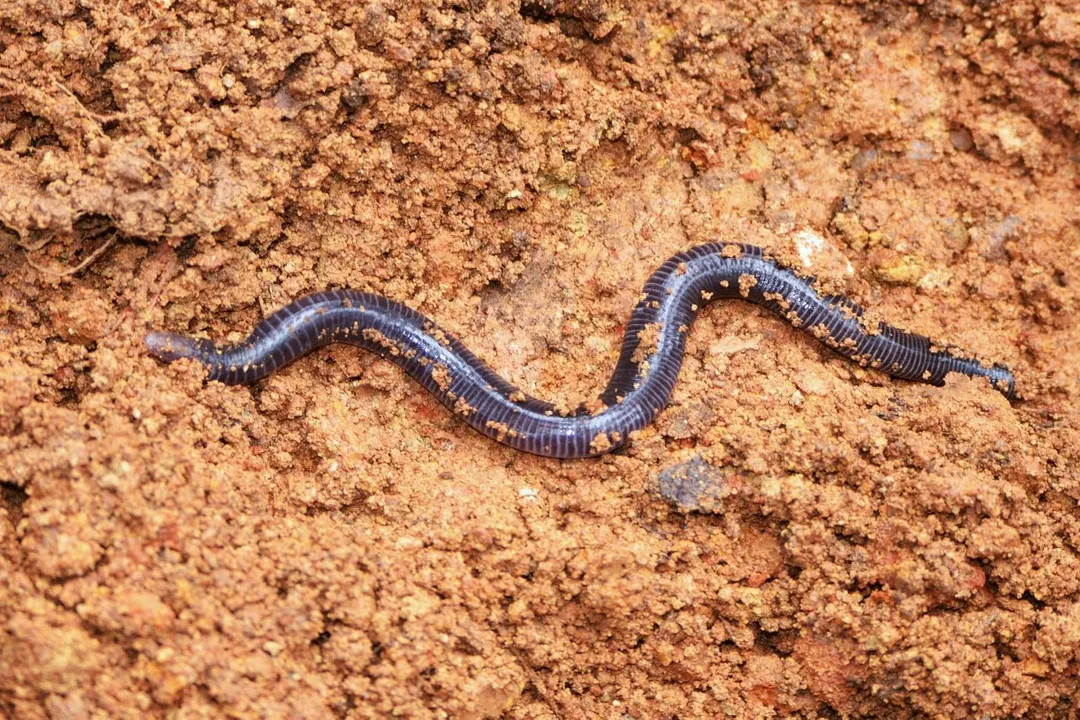
The internal structure of a caecilian reveals its vertebrate status, providing a massive divergence from the worm body plan. As tetrapods, caecilians possess a skull, a vertebral column, and ribs, even if their limbs have been lost through evolutionary reduction. [4] This internal skeleton provides a rigid, supportive structure for muscle attachment and movement. [3] Their lifestyle, often involving burrowing through soil or leaf litter, has driven significant adaptations to this skeleton, particularly in the skull, which is specialized and often fused to withstand the pressures of subterranean life. [3]
Worms, however, possess no such rigid internal scaffolding. Earthworms, for example, rely on a hydrostatic skeleton—a fluid-filled cavity that maintains its volume and allows muscles to contract against it, enabling peristaltic movement. [1] A worm’s body is built from repeating units, the segmentation itself being a defining characteristic of many worm groups, a feature utterly absent in caecilians. [3] Think of the difference between the strong, hinged framework of a building (the vertebrate skeleton) and the flexible, pressurized structure of a water balloon (the hydrostatic skeleton); the caecilian operates on the former principle, while the worm relies on the latter. [3]
# Skin and Sensory Apparatus
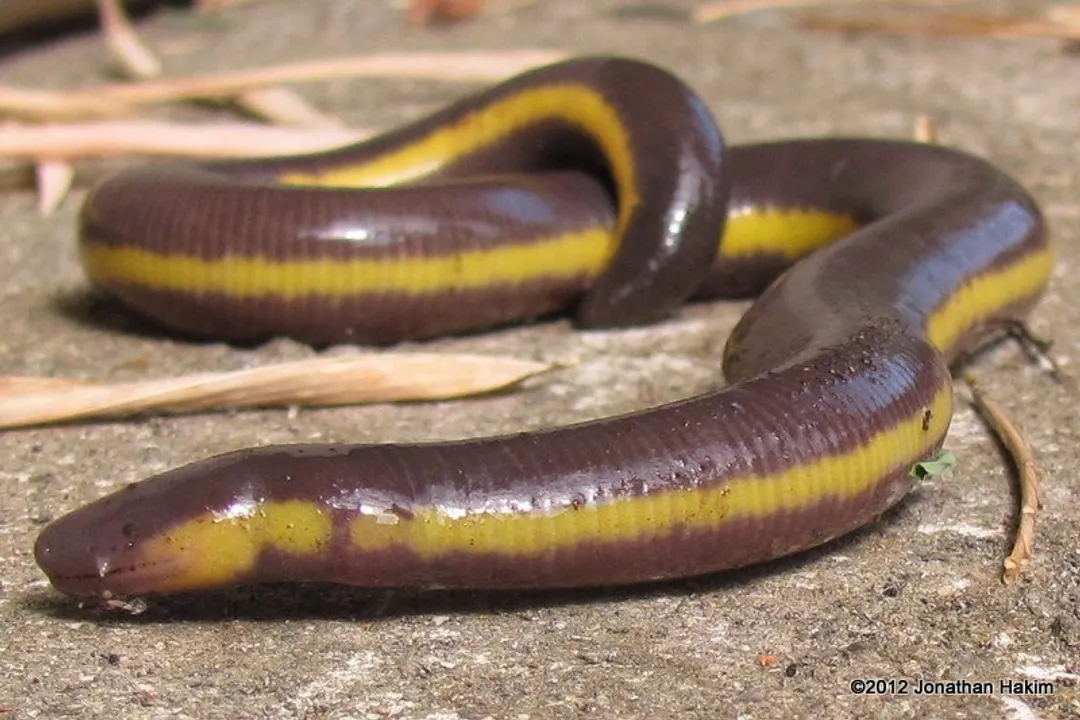
Perhaps the most striking anatomical difference, beyond the obvious presence or absence of bones, lies in the skin and the way the animal perceives its world. Worm skin is typically moist, thin, and highly permeable, serving as a primary surface for gas exchange and necessitating constant moisture. [2]
Caecilian skin, while sometimes appearing smooth and moist like an amphibian's, is unique among modern amphibians because it contains numerous tiny, bony plates or dermal scales embedded within the dermal layer. [3] These scales are not homologous to fish scales or reptile scales, but their presence sets caecilians apart from frogs and salamanders, and certainly distinguishes them from the simple, non-scaled skin of a worm. [3]
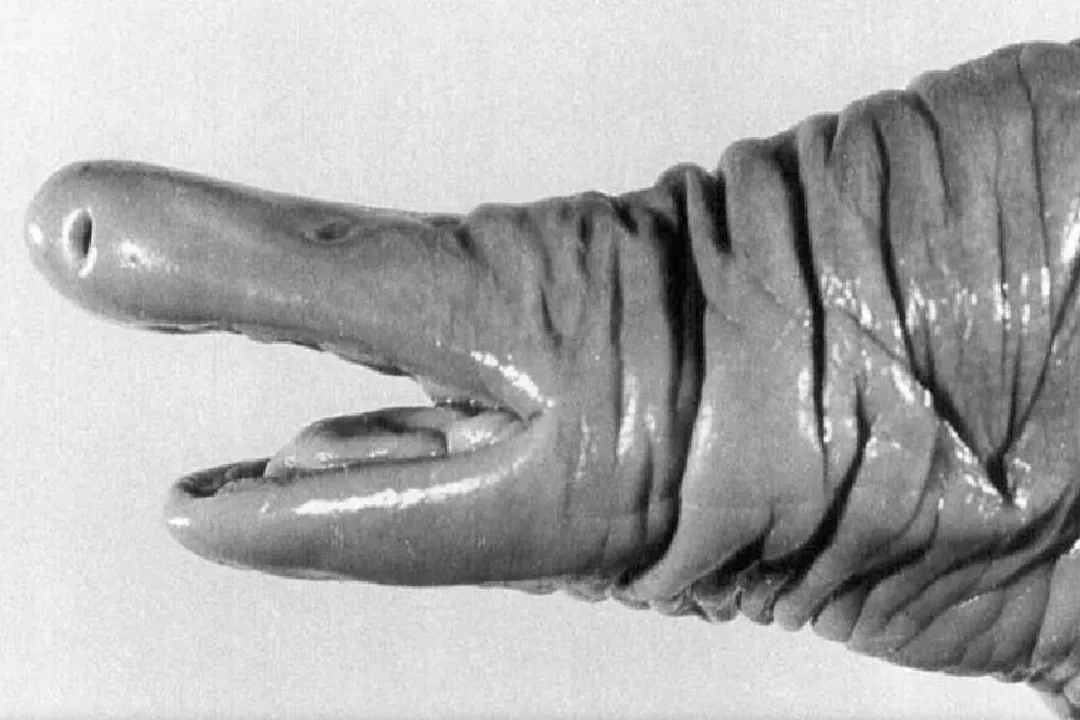
Furthermore, caecilians possess a remarkable sensory adaptation that worms and snakes lack entirely: a specialized, retractable tentacle located between the eye and the nostril. [4] This tentacle is critical for chemoreception—smelling and tasting their environment—allowing them to navigate the dark, soil-bound world they inhabit. [4] While worms use simple chemical receptors distributed across their body surface, and snakes rely on their tongue flicking to the Jacobson's organ, the caecilian tentacle represents a unique evolutionary solution to sensory input in a dark habitat. [4] This specialized organ is a clear indicator of their distinct evolutionary path as tetrapods, not simple invertebrates.
# A Comparison of Body Plans
To make the biological separation perfectly clear, considering a few key metrics side-by-side illustrates the separation between these body types:
| Feature | Caecilian | Earthworm | Snake |
|---|---|---|---|
| Phylum | Chordata (Subphylum Vertebrata) | Annelida | Chordata (Subphylum Vertebrata) |
| Class | Amphibia | Clitellata | Reptilia |
| Internal Skeleton | Present (Bony Vertebrae/Skull) [3] | Absent (Hydrostatic Skeleton) | Present (Bony Vertebrae/Skull) |
| Limbs | Absent (Evolutionary Loss) | Absent | Absent (Evolutionary Loss in this group) |
| Skin | Moist with embedded dermal scales [3] | Moist, permeable, segmented | Dry, covered in keratinous scales [2] |
| Larval Stage | Often present (Aquatic, Gilled) [3] | None (Direct development) | None (Direct development) |
This table highlights that while both caecilians and snakes are vertebrates that have secondarily lost their limbs, caecilians belong to a completely different class (Amphibia vs. Reptilia), and worms belong to an entirely separate phylum. [2][4]
# Reproductive Novelties
Amphibian reproduction in caecilians also shows divergence from the simpler invertebrate strategies. While some aquatic worms may broadcast spawn, caecilians almost universally employ internal fertilization. [3] This reproductive strategy is characteristic of terrestrial-adapted vertebrates, which require protection for the zygote against desiccation.
The reproductive adaptations in caecilians can be startlingly complex, even within the amphibian group. For instance, some species, like those in the genus Oscaecilia, have evolved a form of parental care so advanced that the female produces a substance chemically analogous to mammalian milk to nourish her young post-hatching. [9] This level of physiological investment and internal developmental reliance is worlds away from the reproductive cycles of soil-dwelling annelids. [9]
# Evolutionary Divergence in Subterranean Life
The superficial similarity between a burrowing caecilian and a large earthworm is a case of convergent evolution—where unrelated species evolve similar traits to adapt to similar environments. [1] Both groups have specialized for a life that involves moving through soil. However, their methods reflect their deep evolutionary history. The worm uses circular and longitudinal muscles acting against its fluid-filled segments to push and anchor itself through the dirt. [1] The caecilian, on the other hand, uses its robust, bony vertebral column and specialized skull to actively bore through the substrate. [3]
This difference in locomotor mechanics speaks volumes. The caecilian is functionally a "burrowing tetrapod," using vertebrate musculature and skeletal leverage; the worm is a purely invertebrate mover, relying on hydrostatic pressure and external friction. [3] When one observes the way a caecilian moves—often a snake-like undulation or a sidewinding motion on the surface, or a powerful, directed thrust underground—it is the action of a creature with a complex, segmented spine and strong muscle attachment points, not the simple inching of a worm. [6]
This deep split in morphology and development—vertebrate vs. invertebrate, specialized skull vs. segmented body, dermal scales vs. bare skin, and the presence of lungs (a tetrapod trait) vs. cutaneous respiration in worms—firmly establishes the caecilian's identity. They are not simple, segmented worms that forgot their segments; they are highly evolved, limbless amphibians whose form has been sculpted by the demands of the earth, placing them firmly alongside frogs and salamanders in the grand classification of life. [2][4] The resemblance is a fascinating, albeit deceptive, trick of nature, masking a fundamental difference in biological heritage. [8]
#Videos
Caecilian facts: they're amphibians! | Animal Fact Files - YouTube
Related Questions
#Citations
They not worms neither snakes. They are limbless elusive amphibians
Caecilians: The other amphibian - Science News Explores
Caecilian - Wikipedia
The Amazing Caecilians - Tetrapod Zoology
Not a snake - Caecilian - earth worm - Mr. Go says. Pa Nai - Phrao
Bizarre Beasts: Caecilians - Steemit
Caecilian facts: they're amphibians! | Animal Fact Files - YouTube
Spooky Fact: The Worm that is ACTUALLY an Amphibian! - Tumblr
Researchers have found an amphibian that makes milk for its babies