What ecological role is highlighted by the wood bison's habit of wallowing?
Answer
Small, temporary water catchments for invertebrates and small wildlife.
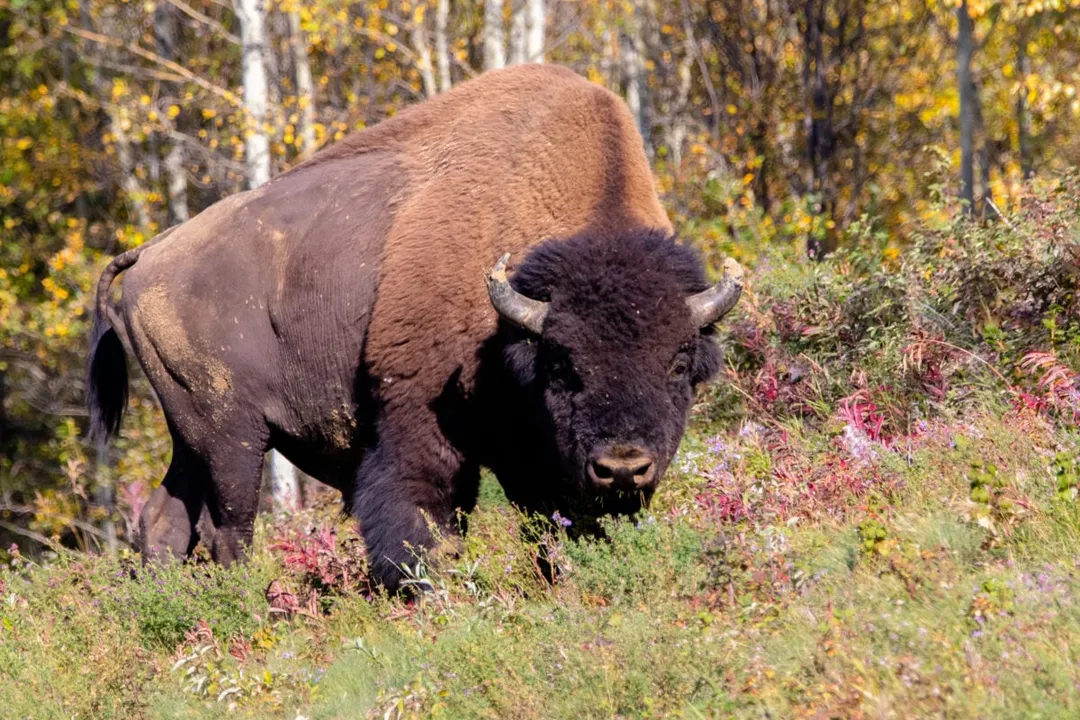
The behavior known as wallowing, where bison roll in shallow depressions, has a direct positive impact on local biodiversity. This rolling action creates small depressions that collect rainwater or snowmelt, forming temporary water catchments. These small pools become vital, intermittent water sources essential for the survival of various invertebrates and other small wildlife species in the generally dry, flat terrain they frequent.
Related Questions
What physical structures does the wood bison use to sweep snow aside for foraging in winter?What is the primary nutritional component defining the wood bison's graminivorous lifestyle?Which specific plants do wood bison supplementally browse on during warmer summer months?How does slowing their metabolic rate assist wood bison survival in cold temperatures?In the Slave River Lowlands, what two key species constitute over 70% of the wood bison diet year-round?What proportion of the diet did sedges account for in the Mackenzie Bison Sanctuary during winter observations?Why do wood bison show a strong preference for foraging on recently burned areas?What is the primary distinction when comparing year-round consumption between the Slave River Lowlands and Mackenzie Sanctuary?What ecological role is highlighted by the wood bison's habit of wallowing?Besides being generally classified as herbivores, what specific grazing term applies to the wood bison diet focus?What necessary element, besides vegetation, must be continuously available for wood bison survival?