What depth can *R. humilis* achieve when burrowing beneath the surface during its subterranean existence?
Answer
As deep as 20 metres (66 ft)
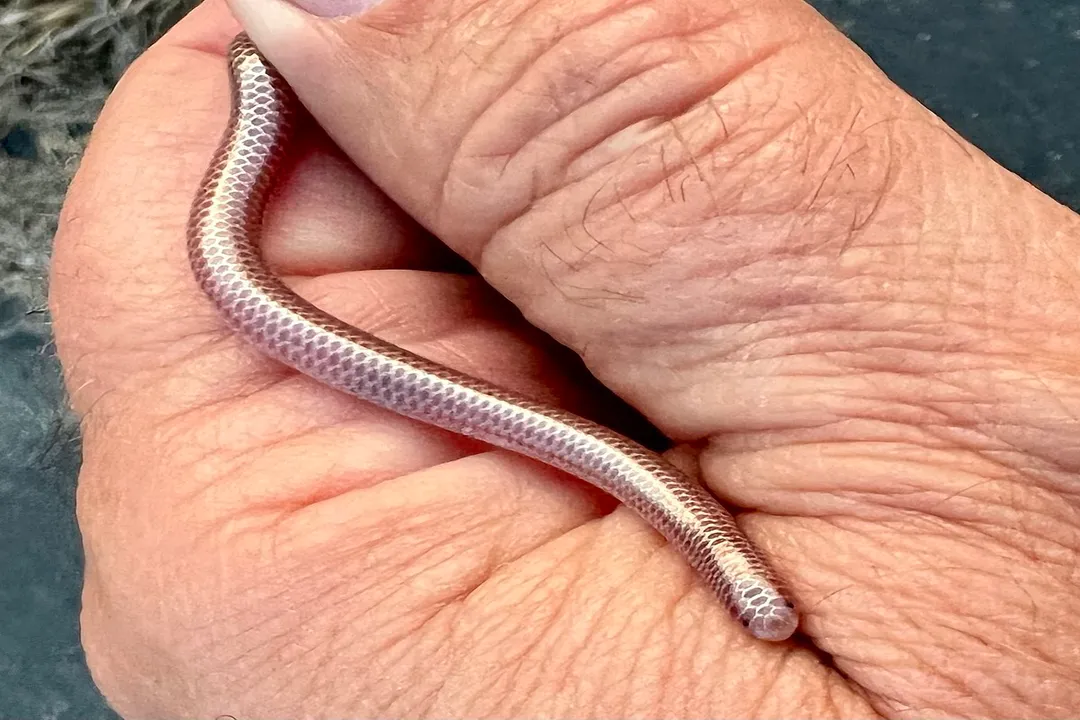
The primary mode of life for *R. humilis* is strictly subterranean, meaning it spends the overwhelming majority of its time beneath the soil surface. While it is often encountered closer to the surface, residing among roots or under logs and rocks, its physical capabilities allow for significantly deeper excursions. The text specifies that these snakes are capable of burrowing as deep as 20 metres, which is equivalent to approximately 66 feet. This extreme depth capability suggests a tolerance for varied temperatures and moisture levels found far below the immediate desert surface layer, although surface activity is nocturnal, especially after rain softens the ground.
Related Questions
What unique physical characteristic of *Rena humilis* allows researchers to observe it under specialized gear?What is the primary function of the sharp spine found at the terminus of the Western Blind Snake's tail?How is the geographical distribution of *Rena humilis* restricted specifically within the state of Utah?What characteristic distinguishes the head scale arrangement of *R. humilis* when compared to the similar New Mexico Threadsnake?What specific soil condition is consistently required by *R. humilis* for successful burrowing and foraging?What two primary chemical and physical defensive tactics does *R. humilis* employ when disturbed or captured?What is the main classification of invertebrates that constitutes the primary sustenance for the Western Blind Snake's diet?What are the two native subspecies of the Western Blind Snake identified within the state of California?What depth can *R. humilis* achieve when burrowing beneath the surface during its subterranean existence?What reproductive pattern is observed in some female *R. humilis* regarding the care of their underground clutches?