What defining feature distinguishes snakes within Order Squamata, which includes *H. platurus*?
Answer
Snakes in this order are identified by highly kinetic skulls and, specifically, the lack of external ear openings and eyelids.
Order Squamata is the largest order of reptiles, encompassing all lizards and snakes. While they share general reptilian traits, this order is specifically characterized by the structure of their skulls, which are highly kinetic, allowing for significant movement and manipulation of the jaws, crucial for swallowing large prey. For snakes within Squamata, supplementary identifying features include the physical absence of external ear openings and the lack of movable eyelids, features that differentiate them from many other members of the reptilian class.
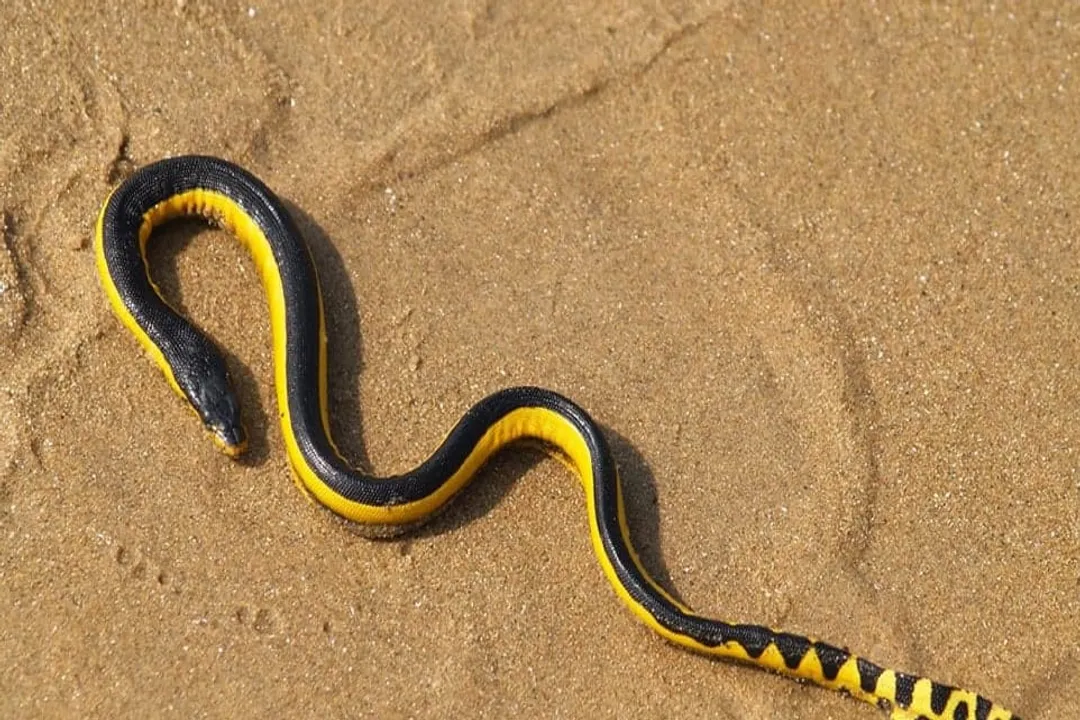
Related Questions
Why was Hydrophis platurus moved from the genus Pelamis to Hydrophis?What significant characteristic defines the Family Elapidae, to which Hydrophis platurus belongs?Which defining trait of Class Reptilia does Hydrophis platurus typically deviate from in its life cycle?What specific feature justifies the placement of Hydrophis platurus within Phylum Chordata?Who first formally named the species as *platurus* and in what year, according to accepted nomenclature authority?What defining feature distinguishes snakes within Order Squamata, which includes *H. platurus*?What does the notation *Hydrophis* (*Pelamis*) *platurus* signify regarding the original classification?What necessary characteristic is confirmed by the designation of *H. platurus* in Kingdom Animalia?What evolutionary conclusion is supported by *H. platurus* belonging to Family Elapidae despite its pelagic life?What concept does the specific epithet *platurus* reference regarding the physical attributes of *H. platurus*?