What concept does the specific epithet *platurus* reference regarding the physical attributes of *H. platurus*?
Answer
The flattened nature of its tail, derived from the root term *platus*.
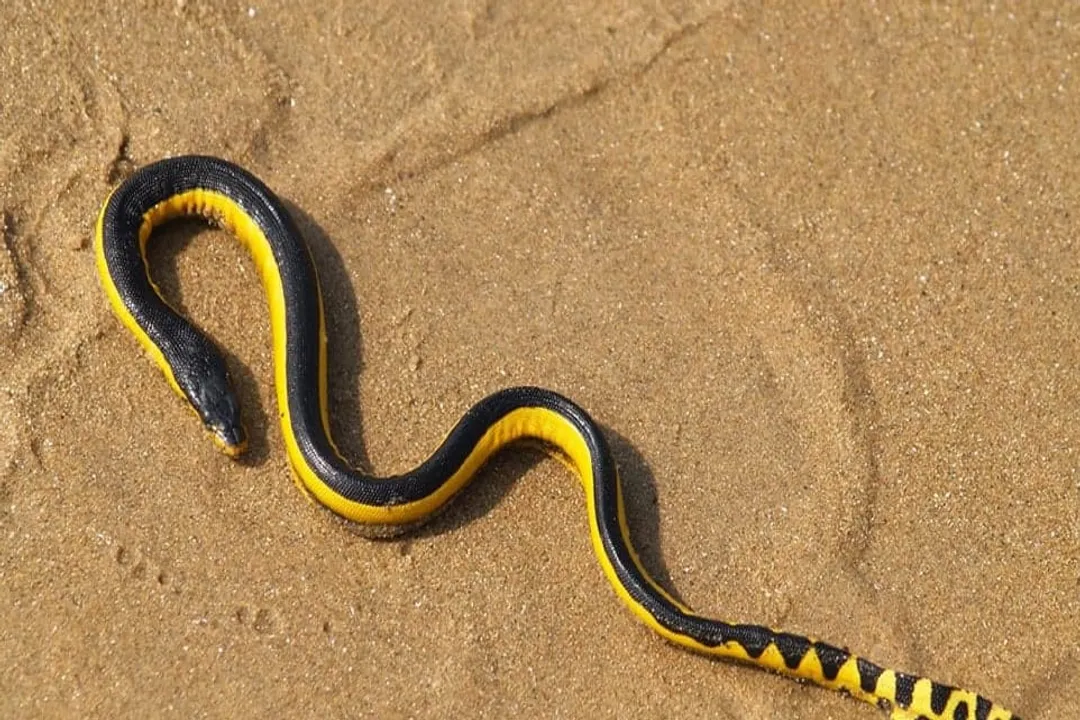
In binomial nomenclature, the specific epithet often provides descriptive information about the species named. The term *platurus* is linked to the root word *platus*, which translates to flat. This descriptor directly references a notable physical characteristic of the Yellow-Bellied Sea Snake: its distinctively flattened tail structure. This morphology is an adaptation suited for propulsion in its pelagic environment. This detail, originating from Linnaeus's original description in 1766, remains a stable identifier for the species despite changes to its generic grouping.
Related Questions
Why was Hydrophis platurus moved from the genus Pelamis to Hydrophis?What significant characteristic defines the Family Elapidae, to which Hydrophis platurus belongs?Which defining trait of Class Reptilia does Hydrophis platurus typically deviate from in its life cycle?What specific feature justifies the placement of Hydrophis platurus within Phylum Chordata?Who first formally named the species as *platurus* and in what year, according to accepted nomenclature authority?What defining feature distinguishes snakes within Order Squamata, which includes *H. platurus*?What does the notation *Hydrophis* (*Pelamis*) *platurus* signify regarding the original classification?What necessary characteristic is confirmed by the designation of *H. platurus* in Kingdom Animalia?What evolutionary conclusion is supported by *H. platurus* belonging to Family Elapidae despite its pelagic life?What concept does the specific epithet *platurus* reference regarding the physical attributes of *H. platurus*?