How is the water buffalo's coat generally described in contrast to many other large mammals?
Answer
The coat tends to be sparse rather than thick.
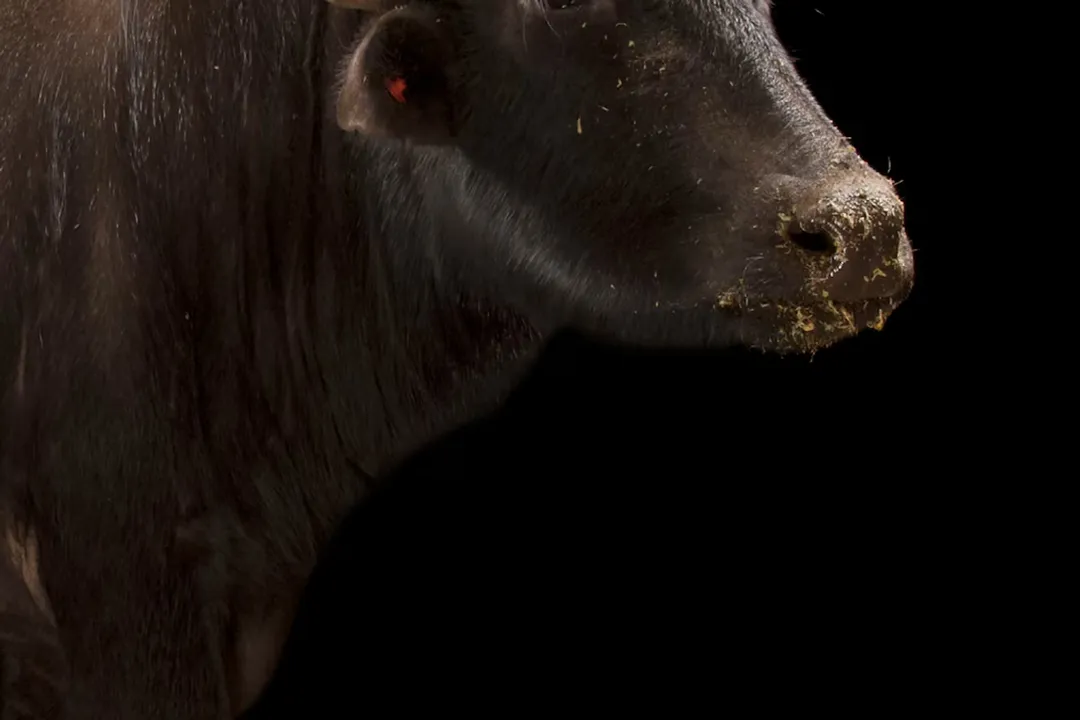
The exterior covering, or coat, of the water buffalo is described as being relatively sparse when compared to the thick pelts often found on other large mammals. This characteristic is relevant because it links directly to their thermoregulation needs. A thick coat would further inhibit heat dissipation, especially given their limited capacity for cooling via sweating. The sparse nature of the coat means that the animal must rely heavily on external factors, such as water and mud, to manage its body temperature effectively, as the coat itself does not provide significant insulation or evaporative cooling benefits.
Related Questions
What genus do water buffalo belong to, specifically adapted for Asia's marshlands?Why do water buffalo frequently wallow in water or mud during the day?What adaptation of water buffalo hooves aids traversing soft, saturated ground?Regarding stature, how does sexual dimorphism manifest in water buffalo size?What feature is significantly larger and more robust in wild *Bubalus arnee* horns?What physical role does a coating of mud serve on the water buffalo's dark skin?Why are water buffalo superior draught animals to cattle in Southeast Asian rice paddies?Which conservation status applies to the domestic water buffalo, *B. bubalis*?How is the water buffalo's coat generally described in contrast to many other large mammals?What is the broad muzzle of the water buffalo suited for utilizing as primary food sources?