How does the water vole's typical gait on land contrast with the posture of a rat?
Answer
The water vole tends to move with a slightly clumsy, waddling gait
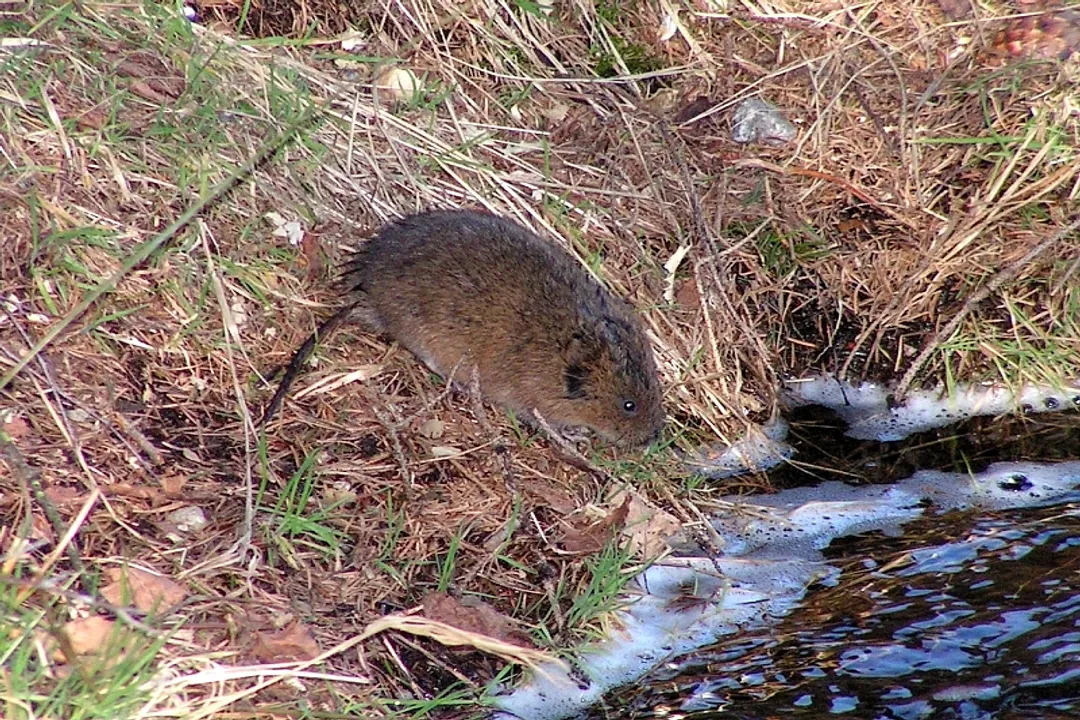
Although the water vole is an accomplished swimmer, its terrestrial movement reflects its evolutionary bias toward the water's edge. When moving on land, the water vole typically exhibits a gait described as slightly clumsy and waddling. This movement pattern is in direct contrast to the posture of a rat, which is generally described as being more agile. This difference in gait serves as a helpful field observation, especially when size similarities between a vole and a young rat might cause confusion during identification.
Related Questions
What feature immediately separates the water vole's head profile from the common brown rat's muzzle?What is the defining characteristic regarding the water vole's tail length compared to its head and body measurement?What physical geometry is noted for the water vole compared to a similar-sized rat, suggesting a thermal advantage?What specific coloration pattern is described for the water vole's fur regarding its upper body versus its underside?What is the typical weight range, in grams, generally observed for the water vole?How are the water vole's ears described in relation to its thick fur and overall head appearance?What specific adaptation is noted on the hind feet of the water vole that assists in aquatic movement?How does the water vole's typical gait on land contrast with the posture of a rat?What term describes the overall feature of the water vole's head that distinguishes it from many other small mammals?What is the typical combined length range, in centimeters, for the head and body of the water vole?