What specific coloration pattern is described for the water vole's fur regarding its upper body versus its underside?
Answer
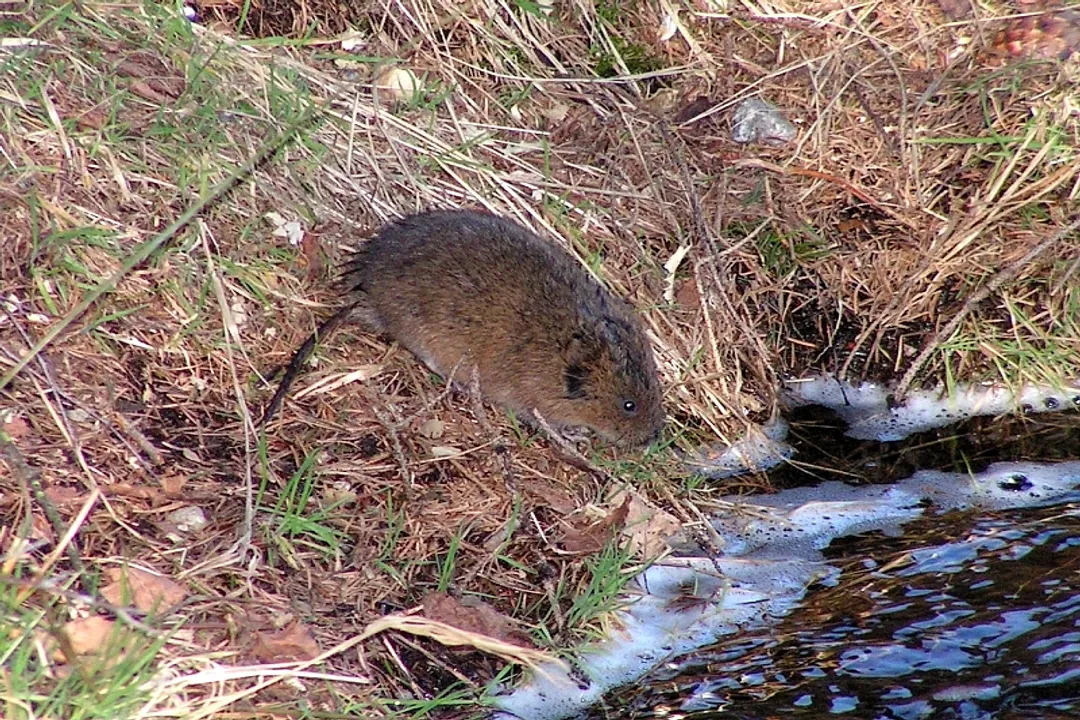
Dark brown or reddish-brown above, lightening to greyish or off-white below
The water vole's coat exhibits a common pattern known as countershading, which is vital for camouflage within its riverine habitat. The fur along the back and the upper flanks typically presents a dark brown or rich reddish-brown hue. As the coloration moves towards the underside of the animal, it lightens significantly, often appearing as a paler greyish or off-white shade. This dual coloring provides camouflage benefits in two ways: the dark top blends with the muddy banks or dark water surface when viewed from above, and the lighter underside helps it blend with the lighter sky if viewed from beneath the water surface.
Related Questions
What feature immediately separates the water vole's head profile from the common brown rat's muzzle?What is the defining characteristic regarding the water vole's tail length compared to its head and body measurement?What physical geometry is noted for the water vole compared to a similar-sized rat, suggesting a thermal advantage?What specific coloration pattern is described for the water vole's fur regarding its upper body versus its underside?What is the typical weight range, in grams, generally observed for the water vole?How are the water vole's ears described in relation to its thick fur and overall head appearance?What specific adaptation is noted on the hind feet of the water vole that assists in aquatic movement?How does the water vole's typical gait on land contrast with the posture of a rat?What term describes the overall feature of the water vole's head that distinguishes it from many other small mammals?What is the typical combined length range, in centimeters, for the head and body of the water vole?