During which time frame is the parasitic female Bombus vestalis most frequently observed while scouting for a nest?
Answer
March to August
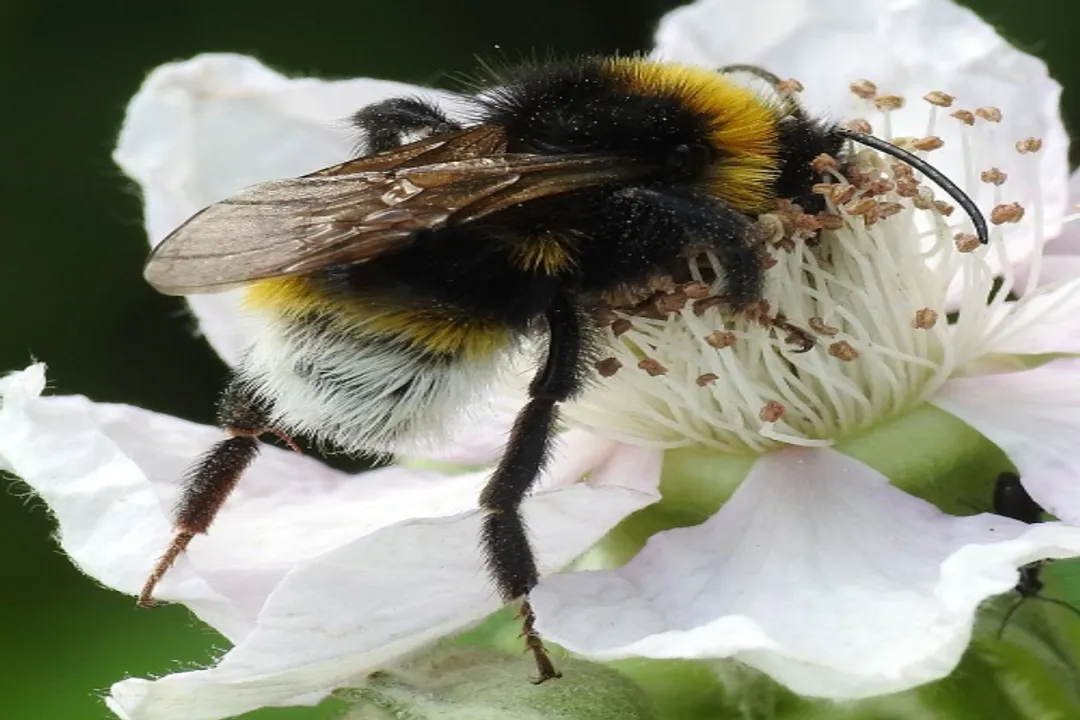
The lifecycle of the Bombus vestalis is synchronized with the emergence of its host. The mated queen survives the winter in hibernation and emerges in the spring. Her primary objective upon emergence is to find a suitable nest to parasitize, which requires a window of time during which the host colony is active but not yet too large to be suppressed. While records can vary, the prime period for observing these females is typically from March through August. Within this window, the most critical time for an observer to see the takeover attempt is often during late May or June, when the host nest has enough workers to be worth invading but has not yet grown to a size that makes it difficult for the invader to dominate.
Related Questions
What distinctive physical feature is conspicuously absent on the legs of the female Bombus vestalis?Which region of the United Kingdom serves as the primary stronghold for the Bombus vestalis population?Which bumblebee species acts as the exclusive host for the reproductive cycle of the Bombus vestalis?Which other species is known as the Southern Cuckoo Bumblebee and is often confused with the Bombus vestalis?During which time frame is the parasitic female Bombus vestalis most frequently observed while scouting for a nest?In the Vice County 55 (VC55) area of Leicestershire and Rutland, what is the reported status of the Bombus vestalis?What specific action does the invading Bombus vestalis queen take upon successfully entering the nest of a Bombus terrestris?Why is the Bombus vestalis often found in suburban gardens and urban areas?What primarily restricts the distribution of the Bombus vestalis in Scotland and northern regions?Which nature reserve is explicitly noted as a location where the Bombus vestalis is commonly found?