Vestal Cuckoo Bumblebee Physical Characteristics
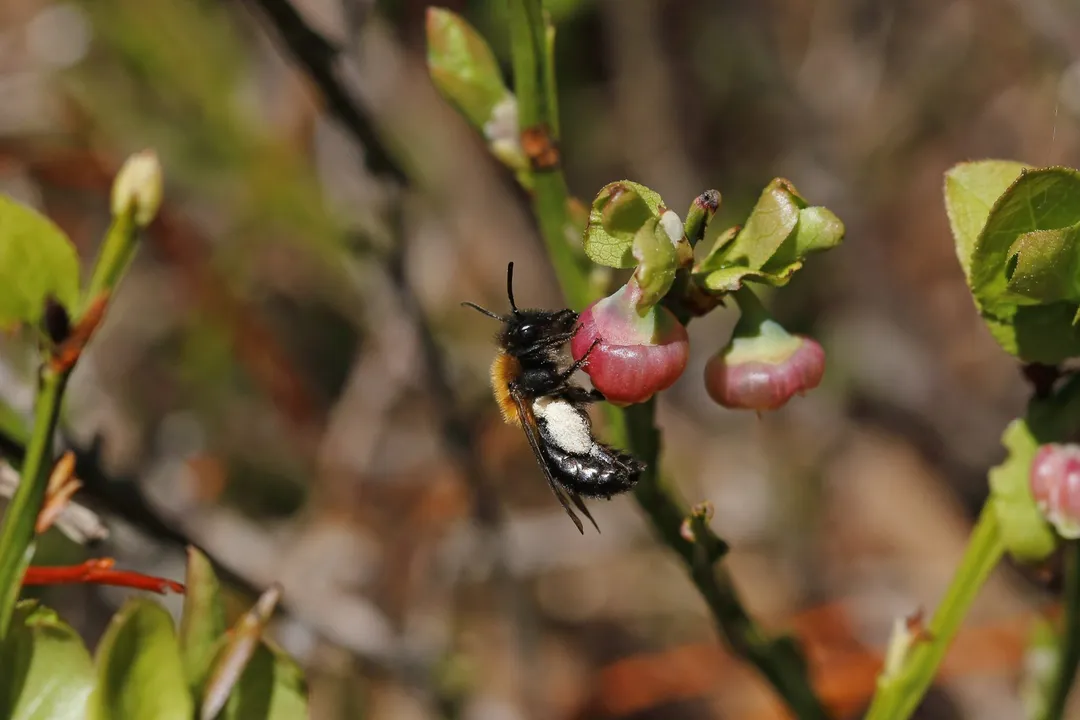
The Vestal Cuckoo Bumblebee, scientifically cataloged as Bombus vestalis, presents a striking appearance, one that immediately signals its unique, parasitic lifestyle compared to its social relatives. While superficially resembling the common bumblebees whose nests it targets, closer inspection reveals a suite of physical characteristics that are direct evolutionary results of its dependency on host colonies. These bees, belonging to the sub-genus Psithyrus, are generally more heavily armored and darker in overall aspect.
# Overall Structure
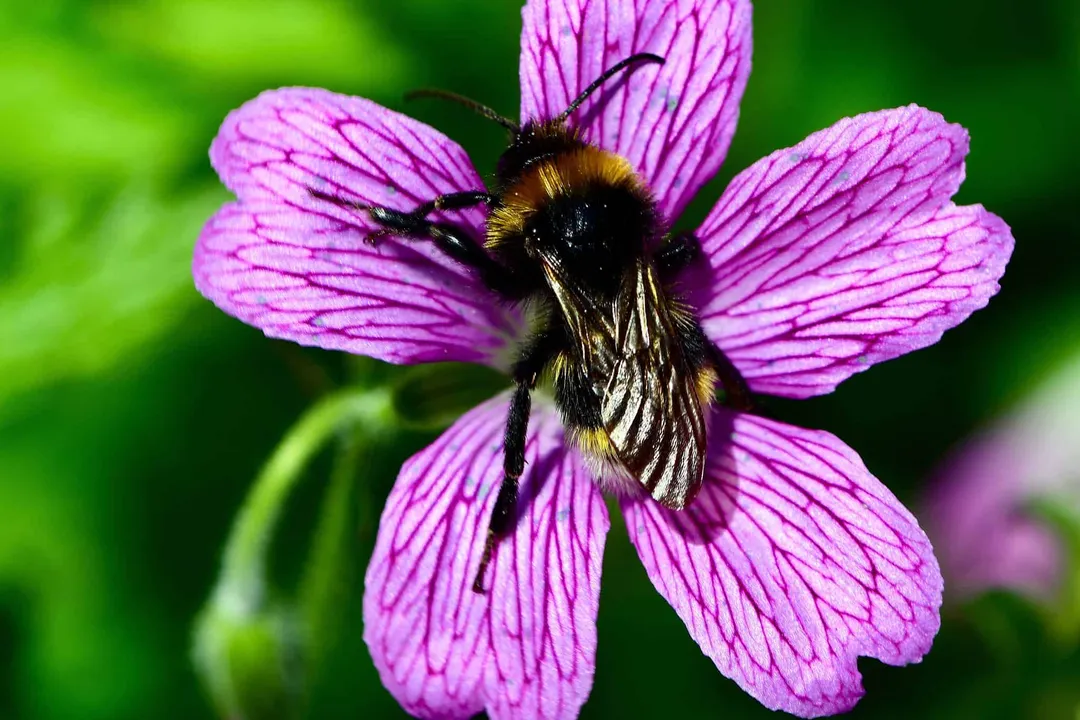
A defining physical trait shared across all cuckoo bumblebees, including the Vestal Cuckoo, is the absence of the specialized structures necessary for independent colony maintenance. Most noticeably, they lack the corbiculae, or pollen baskets, on their hind legs, which social bees use to carry provisions back to the nest. Instead of functioning as pollen-carrying surfaces, the hind legs of the cuckoo females are densely haired. Furthermore, they possess underdeveloped and non-functional wax glands. This lack of wax-secreting ability means the female cuckoo cannot construct the necessary larval cells or food storage pots required by social bees.
To compensate for this dependency and to successfully commandeer established nests, B. vestalis has evolved greater physical resilience for direct confrontation. They often exhibit thicker chitin—effectively stronger body armor—and possess longer, more powerful stingers than their host species, equipping them for battle against the resident queen and workers. This specialization toward conflict rather than collection is a central theme in the Vestal Cuckoo’s morphology. A solitary parasitic existence, relying on the industry of others, results in the loss of foraging adaptations in favor of brute force and chemical stealth.
# Queen Appearance
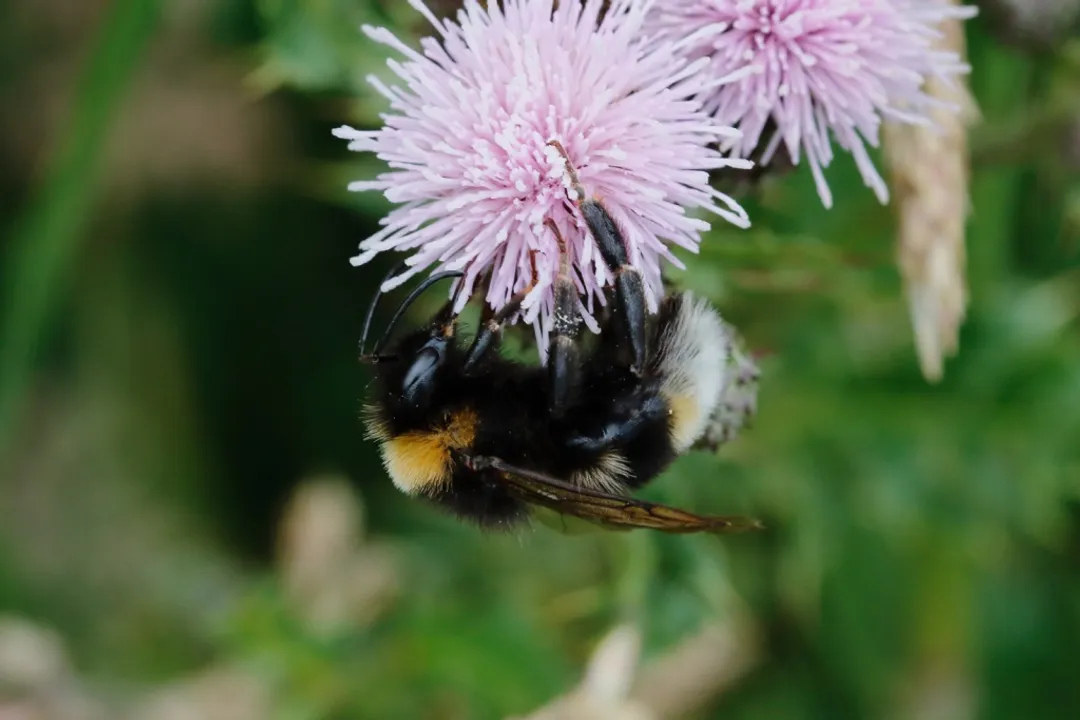
The queen, the reproductive female that initiates the invasion, is substantial in size, classifying B. vestalis as one of the larger bumblebee species. Queens can reach a length of up to (about ) with a wingspan approaching (). Their coloration is fundamentally dark, predominantly black.
Specific banding patterns on the abdomen are crucial for identification:
- Collar: There is a distinct band of hair behind the head, often described as an orange collar, or more specifically, a ginger-yellow collar.
- Thorax/Abdomen Junction: The third abdominal segment (tergite) features a border of yellow hairs, sometimes appearing as two sulphur-yellow side flashes.
- Tail: The hair on the fifth abdominal segment is mostly white, forming a clear whitetail tip.
The overall impression is often a neat coat of black fur overlaying this characteristic striping. Like other cuckoos, they tend to have sparser overall fur compared to social bees, which can make the shiny black exoskeleton more visible. Additionally, cuckoo bumblebees frequently exhibit duller and smoky wings, contributing to a generally darker visual profile than their host counterparts. A subtle but potentially vital field mark, noticeable with magnification, is the possibility of scattered black hairs within that yellow collar, a feature said to differentiate it from the similar Gypsy Cuckoo Bee (Bombus bohemicus).
# Male Morphology
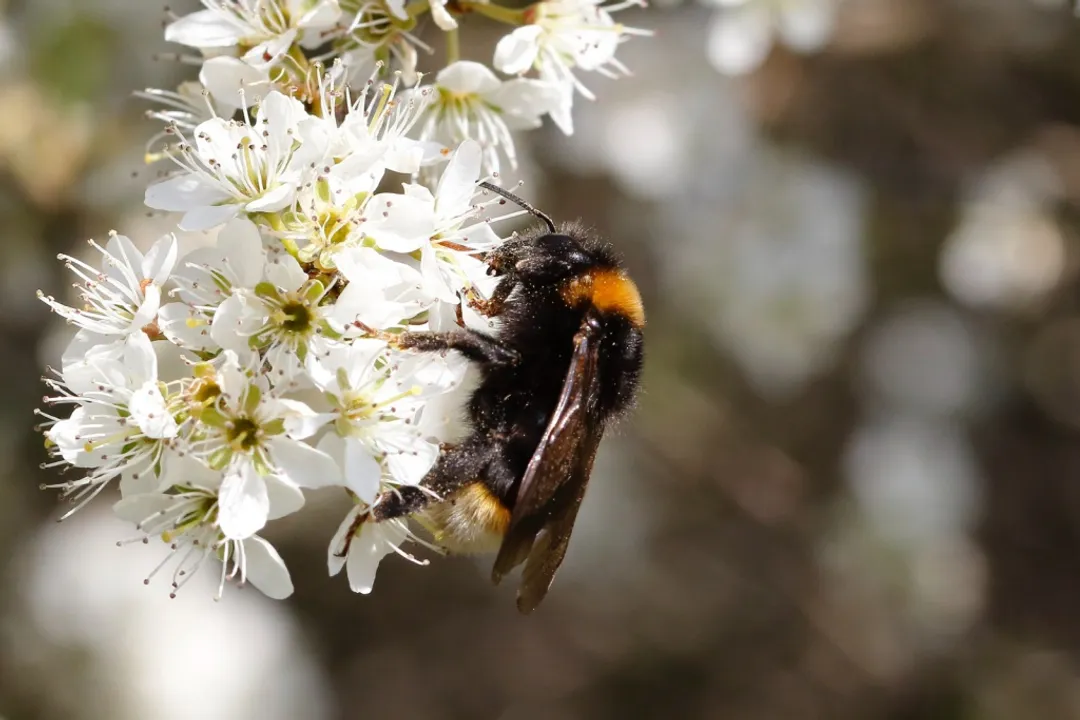
Male Vestal Cuckoos share the same general color scheme as the females but are markedly smaller. While queens may reach nearly an inch in length, males are smaller, with body lengths around () and wingspans closer to .
Beyond size, one of the main morphological distinctions of the male is found in the head structure: the males possess characteristically longer antennae than the females. For those attempting precise identification, the structure of these antennae offers a scientific distinction from similar species. In B. vestalis, the fifth antennal segment is equal in length to the third and fourth segments combined. Alternatively, one source notes that if antennal segment 3 is shorter than segment 5, it points towards B. vestalis. A final physical note on the males is the potential for an additional, though often weak, yellow midriff band across the lower thorax or top of the abdomen.
# Comparing Cuckoos and Hosts
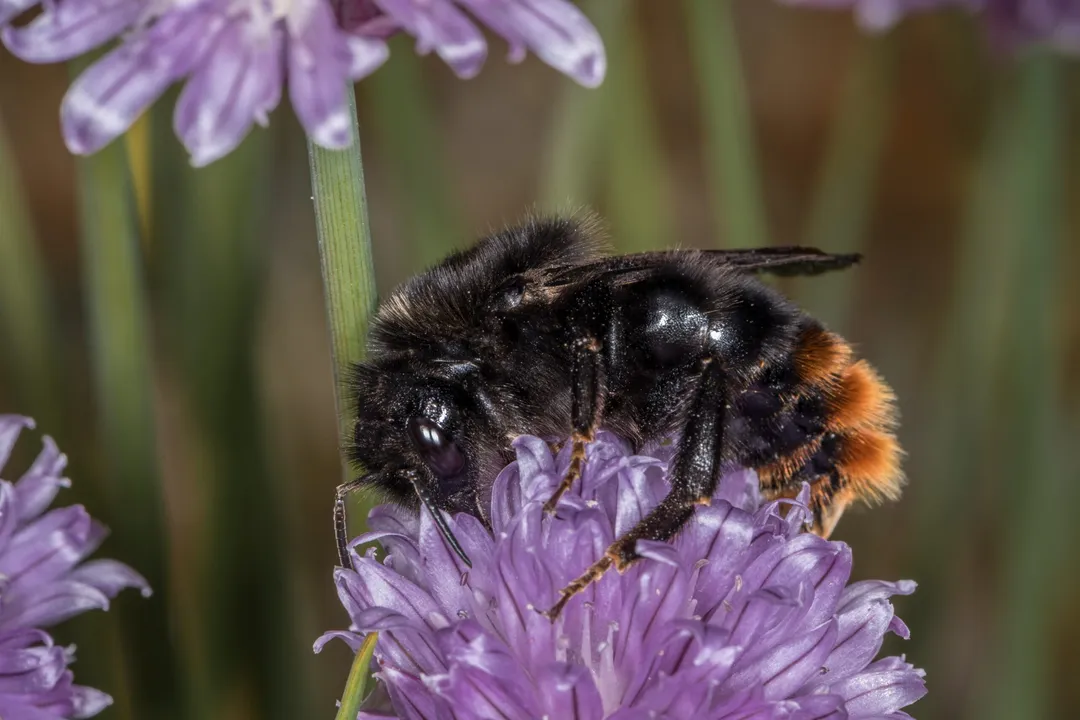
The Vestal Cuckoo’s success is intrinsically linked to its ability to mimic its primary host, the Buff-tailed Bumblebee (Bombus terrestris). The physical resemblance is intentional, helping the invading queen mask her identity with the nest's scent. While the cuckoo is generally slightly larger than its host queen, the yellow markings are adapted for mimicry. Specifically, B. vestalis has a darker yellow band on the thorax to match B. terrestris.
This contrasts sharply with the other common look-alike, the Gypsy Cuckoo Bee (B. bohemicus), which parasitizes the White-tailed Bumblebee (Bombus lucorum group). B. bohemicus typically displays a paler yellow band. For the careful observer distinguishing between the two cuckoos, this difference in yellow saturation on the thorax is a key visual cue, though the structural measurement of the antennae remains the most definitive non-invasive separation method. Paying close attention to such subtle variations in hair color intensity, like the presence of those scattered black hairs in the collar of B. vestalis, can be the difference between correct identification and misclassification in the field.
If you are observing a cuckoo bee in a garden known to host B. terrestris (Buff-tailed), the likelihood of encountering B. vestalis is high, which can serve as a strong piece of secondary evidence supporting the visual identification of the physical markings. The relative 'fluffiness' is another comparative point: the Gypsy Cuckoo is often described as being fluffier than the Vestal Cuckoo.
# Adaptations for Inhabitation
The differences between cuckoos and social bees are not just superficial; they reflect fundamental shifts in biology. The fact that the Vestal Cuckoo forgoes collecting pollen—having no baskets and underdeveloped wax glands—means its entire reproductive strategy hinges on the physical prowess of the female to subdue the host queen and the subsequent labor of the surviving host workers. The resulting physical investment in the heavy armor and strong sting thus represents a trade-off: the bee is built for a single, decisive battle to gain access to resources, rather than for the daily, sustained labor of foraging and wax production required to raise a colony from scratch. For the observer, noting the bee's behavior—whether it is meticulously packing its legs with pollen or flying directly into a nest entrance with a very purposeful, non-foraging gait—can often confirm its physical specialization as a brood parasite. In essence, the Vestal Cuckoo Bumblebee’s appearance is that of a specialist warrior, not a general laborer of the bee world. The males, being built for mating rather than invasion, show a reduction in bulk and an extension in antennae length, reflecting their specialized, aerial role.
Related Questions
#Citations
Vestal Cuckoo Bumblebee - Bombus vestalis - NatureSpot
Bombus vestalis - Wikipedia
Vestal Cuckoo Bumblebee Insect Facts - Bombus vestalis
Bombus vestalis - Facts, Diet, Habitat & Pictures on Animalia.bio
A Guide to Cuckoo Bumblebees
The Cuckoo Bumble Bee (Psithyrus) Images, Behaviours And Hosts