Yellowish Cuckoo Bumblebee (formerly Fernald’s Cuckoo Bumblebee) Diet
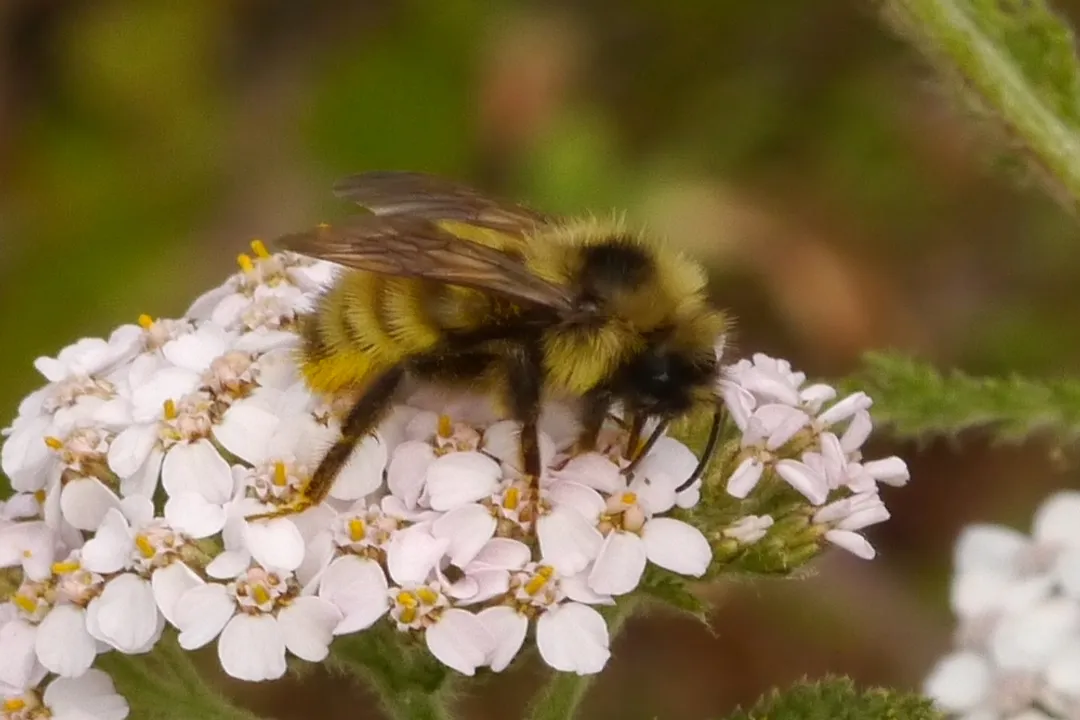
The Yellowish Cuckoo Bumblebee, now formally known as Bombus flavidus, presents a fascinating study in insect survival, particularly when examining what sustains it throughout its active season. This species, once frequently called Fernald’s Cuckoo Bumblebee, operates under a unique reproductive strategy that dictates a very specific, though still broad, dietary focus. [2][5] Unlike the familiar social bumblebees that build large, enduring colonies with specialized worker castes, B. flavidus females—along with males—are the only forms produced, making their individual needs paramount. [2][5]
# Nectar Fuel

For the adult Yellowish Cuckoo Bumblebee, whether queen or male, the primary, non-negotiable component of the diet is nectar. [3][5] Nectar is the high-energy carbohydrate source that fuels the demanding muscular activity required for flight. [2] Given that the new, mated queens emerge from diapause (hibernation) in the spring to begin their search for a host nest, maintaining high energy reserves is critical for this initial, potentially aggressive phase. [5] The energy must support high-speed travel between foraging sites and the energy-intensive process of subduing or killing a host queen to take over her nascent colony. [1][5]
Though specific metabolic rates are seldom detailed for this species, general bumble bee physiology suggests a significant need for sugar intake. It has been noted in some contexts that these bees can consume an amount of nectar equivalent to twice their body weight daily. [3] If this applies to B. flavidus, it highlights why continuous access to nectar-rich flowers is essential for the solitary foraging female before and after her parasitic mission is complete. Her entire life cycle, which spans from spring emergence through late summer/early autumn, is dependent on her ability to locate and efficiently exploit these floral sugar supplies. [1]
# Pollen Paradox
A crucial aspect of the Yellowish Cuckoo Bumblebee's diet is what it does not consume to provision its young: pollen. This distinction is fundamental to understanding its ecological niche. [5] Bombus flavidus belongs to the subgenus Psithyrus, which comprises the social parasites of the Bombus genus. [5] Because these cuckoos do not produce a worker caste, they have no need to gather and store pollen to feed a growing brood of immature bees. [2][5]
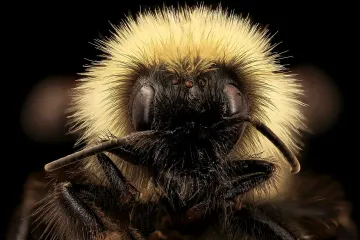
In fact, a defining morphological characteristic that separates cuckoo bumble bees like B. flavidus from their social relatives is the absence of a pollen basket, or corbicula, on the hind tibia. [1][5] Social bumble bees possess this specialized structure for packing and transporting large quantities of pollen back to the nest, where it serves as the primary source of protein for larval development. [2] The cuckoo queen bypasses this entire logistical step. She usurps an established, though perhaps small, colony of a host species—such as the Red-belted (B. rufocinctus) or the Confusing bumble bee (B. perplexus)—and relies entirely on the host workers to feed the parasite’s eggs and resulting larvae. [2][5]
The implication for the B. flavidus queen is that her foraging behavior is purely self-serving; she gathers what she needs for immediate or short-term energy maintenance, rather than engaging in the heavy, long-haul provisioning flights undertaken by social queens and workers. This energetic difference is subtle but significant in resource partitioning within a floral community. While a social bee must balance the need for nectar (energy) with the need for pollen (protein), the cuckoo only requires nectar, potentially making her a less efficient pollinator overall, as she is not carrying pollen to the next flower on her legs. This leads to an interesting thought: the preferred foraging habitats of B. flavidus queens might skew toward areas with the highest nectar concentration, even if the pollen sources in those same flowers are plentiful, simply because the pollen itself is useless to the queen B. flavidus. [5]
# Floral Preferences
While the need for pollen is eliminated for brood rearing, nectar is still needed, and the queen must still visit flowers to obtain it. Bombus flavidus is generally characterized as a generalist forager, visiting an extensive range of plant species across its wide geographical distribution spanning North America and Eurasia. [1][6]
The recorded list of flowering plants visited by B. flavidus is quite long, suggesting adaptability in its diet, which is vital for a species that may need to locate a suitable host nest in various types of meadows or open forest edges. [1] Commonly cited nectar sources across different regions include:
- Aster Family: Aster, Solidago (goldenrods), and Senecio. [1][5][6]
- Clovers and Legumes: Trifolium (clovers) and Melilotus (sweet clovers). [2][5]
- Rose Family: Potentilla (cinquefoils) and Rubus (blackberry/raspberries). [2][5]
- Other Notables: Cirsium (thistles) and Vaccinium (blueberries/cranberries). [1][5]
More specific records indicate visits to Arctostaphylos, Asclepias, Chrysothamnus, Eriogonum, Haplopappus, Helianthus, Hieracium, Rhododendron, Ribes, Smelowskia, Tanacetum, Taraxacum, Veratrum, and Viguiera. [1] In the Pacific Northwest, foraging on willow (Salix) has been documented. [6] Anecdotally, some observations suggest a preference for purple-hued flowers. [3] For a gardener aiming to support the local population of these rare cuckoo bees, this list offers a menu of possibilities, but the key insight is to select plants known for producing abundant nectar, perhaps favoring those with open or relatively shallow corollas that allow quick processing of the carbohydrate load.
# Host Reliance and Timing
The consumption of pollen by the host colony's workers has direct implications for the cuckoo. When a B. flavidus queen successfully invades a nest, the host workers transition from provisioning their own developing brood (which requires pollen) to provisioning the B. flavidus larvae (which also require pollen). [5] The cuckoo queen only needs to ensure her own energy needs are met via nectar gathering, allowing her to devote more time to monitoring or defending her takeover, as the tedious work of pollen collection and larval feeding is outsourced. [5]
This division of labor based on diet defines the adult activity periods. In many areas, the queens emerge in spring, active from March or May through September. [1][5] Males are active slightly later, generally appearing from May or June into September. [1] The entire reproductive phase of the cuckoo is compressed into the foraging season of the social species they parasitize. Therefore, the availability of suitable nectar sources must coincide with the activity period of the host species; a gap in floral resources during peak host colony activity could be fatal to the cuckoo’s reproductive attempt by leaving the queen too weak to assert dominance or sustain herself while the host workers feed her parasitic brood. [1]
# Supporting the Parasite
Understanding the diet of Bombus flavidus leads to a slightly counter-intuitive conservation or gardening approach. While supporting native pollinators is always encouraged, focusing on planting for B. flavidus is best achieved by creating a dense, continuous source of nectar for the queens and males throughout the warm months, rather than focusing on pollen providers. [5] Since the species produces no workers, planting large swathes of single-species flowers might be less critical than ensuring a reliable, staggered succession of nectar-rich blooms across the landscape from early spring to late summer. Consider plants like clovers and goldenrods, which appear repeatedly in the visitation lists, as reliable foundational nectar providers for these unique, single-sex dependents of the bumble bee world. [5][6] By ensuring robust nectar flow, we indirectly support the reproductive success of the Yellowish Cuckoo Bumblebee, even though the bees themselves are not directly carrying the protein needed for their young. This strategy ensures the queen has the necessary fuel to execute her parasitic role effectively within the community of social bees. [1][5]
Related Questions
#Citations
Yellowish Cuckoo Bumblebee (formerly Fernald's ... - Wowzerful
Bombus fernaldae - Wikipedia
Flavid Cuckoo Bumble Bee - Montana Field Guide
Bombus flavidus - Bumble Bee Atlas
[PDF] Bumble Bees of the Eastern United States - Xerces Society
Wi BBB: Bombus flavidus