Yellowish Cuckoo Bumblebee (formerly Fernald’s Cuckoo Bumblebee) Physical Characteristics
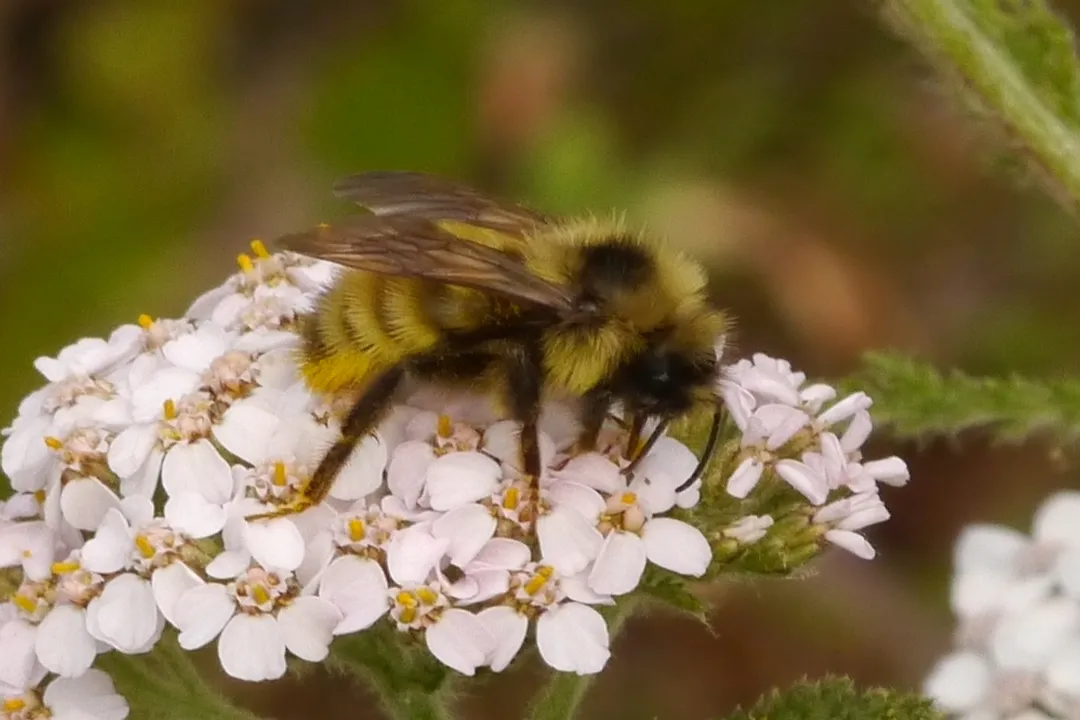
The Yellowish Cuckoo Bumblebee presents a fascinating subject for observation, especially given its former designation as Fernald’s Cuckoo Bumblebee (Bombus fernaldiae). [2][7] Understanding its physical makeup is key, as this species, like others in the cuckoo lineage, possesses unique adaptations tied to its parasitic lifestyle. [8] Unlike the common bumblebees that diligently collect pollen for their colonies, these bees are social parasites, meaning the females invade nests of host species to reproduce. [3][8] This fundamental difference in behavior is reflected directly in their physical anatomy, making a close look at their morphology essential for accurate identification.
# Coloration Details
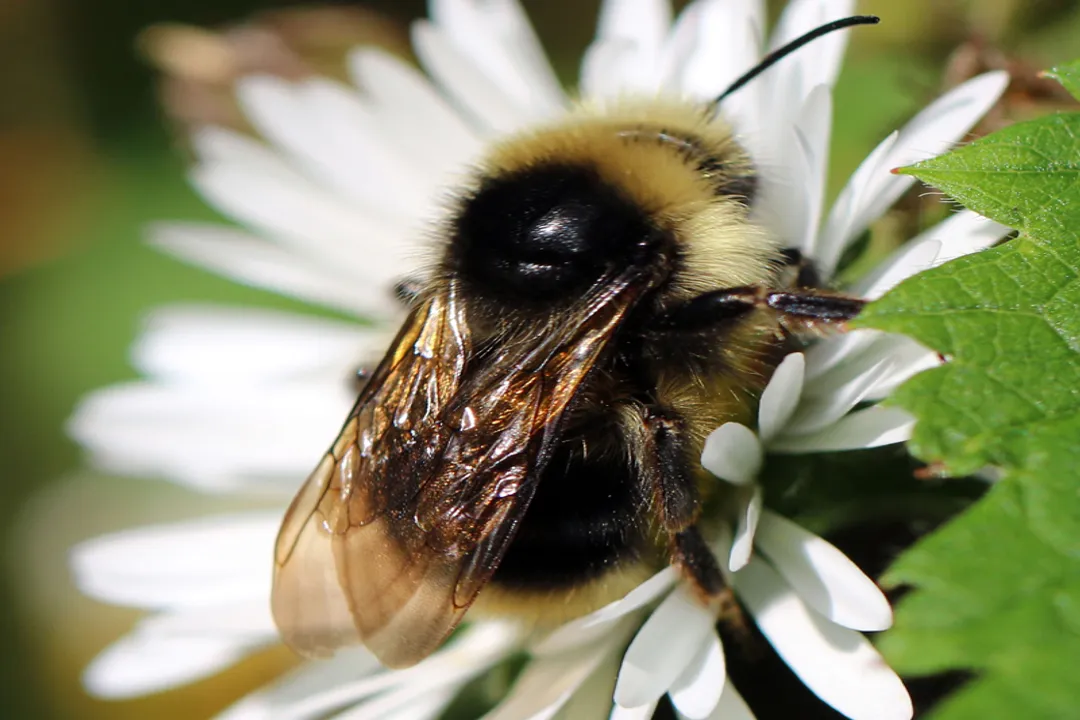
The name itself hints at the most striking feature: a generally yellowish or orangish-yellow overall appearance. [1][6] The thorax, the central segment of the body, often presents as bright yellow. [6] However, relying solely on the yellow can be misleading, as the amount of black patterning on the abdomen exhibits considerable individual variability. [1][6] While many specimens show a distinct black band or patch on the abdomen, the extent of this dark marking is highly inconsistent across the population. [1] Some individuals lean toward being almost entirely pale yellow, making identification challenging without looking closer at structural features. [1] This variability means that spotting one in the field requires looking past the general color and focusing on finer details of the body segmentation and structure.
# Defining Structure
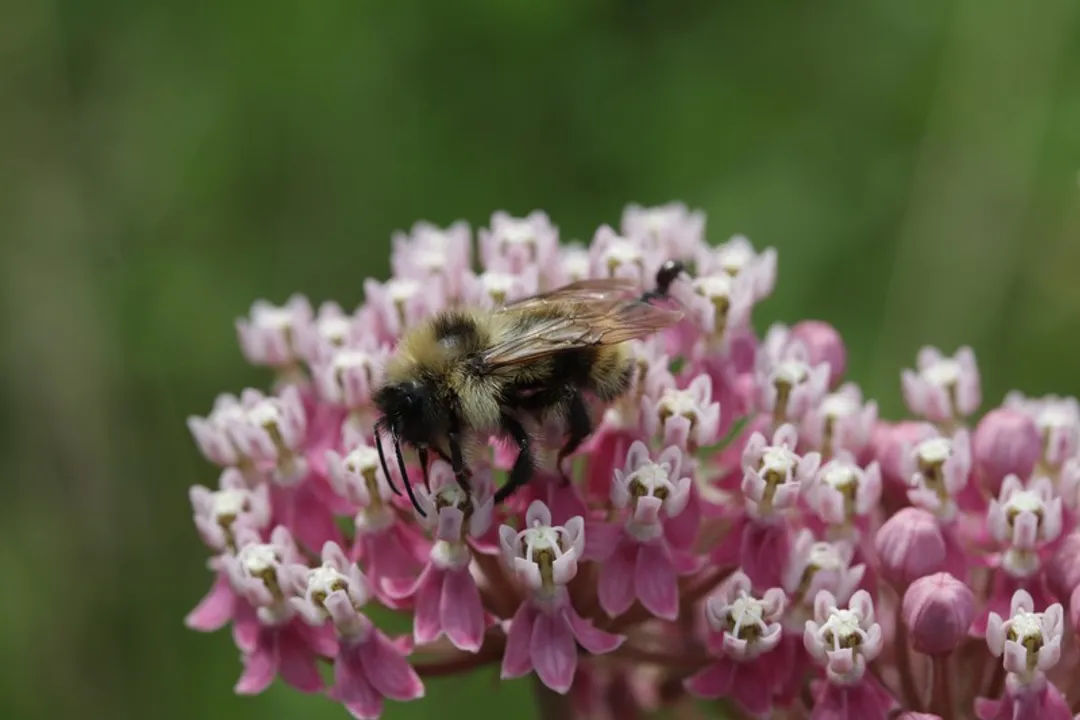
The defining structural difference for a cuckoo bumblebee is what it lacks. Since cuckoo bumblebees, including the Yellowish Cuckoo Bumblebee, do not rear young or collect nectar and pollen themselves—a task left entirely to the host colony—they do not develop the specialized structures for transport common to standard bumblebees. [8][3] Specifically, females lack corbiculae, which are the smooth, concave areas on the hind tibia fringed with stiff hairs that serve as pollen baskets in worker and queen bumblebees that provision their own young. [3][8] If you observe a large bumblebee species that is predominantly yellow but has smooth hind legs with no evidence of pollen loads, you are likely looking at a cuckoo species like this one. [3] This anatomical omission is perhaps the most reliable visual cue separating it from non-parasitic relatives.
# Sexual Size
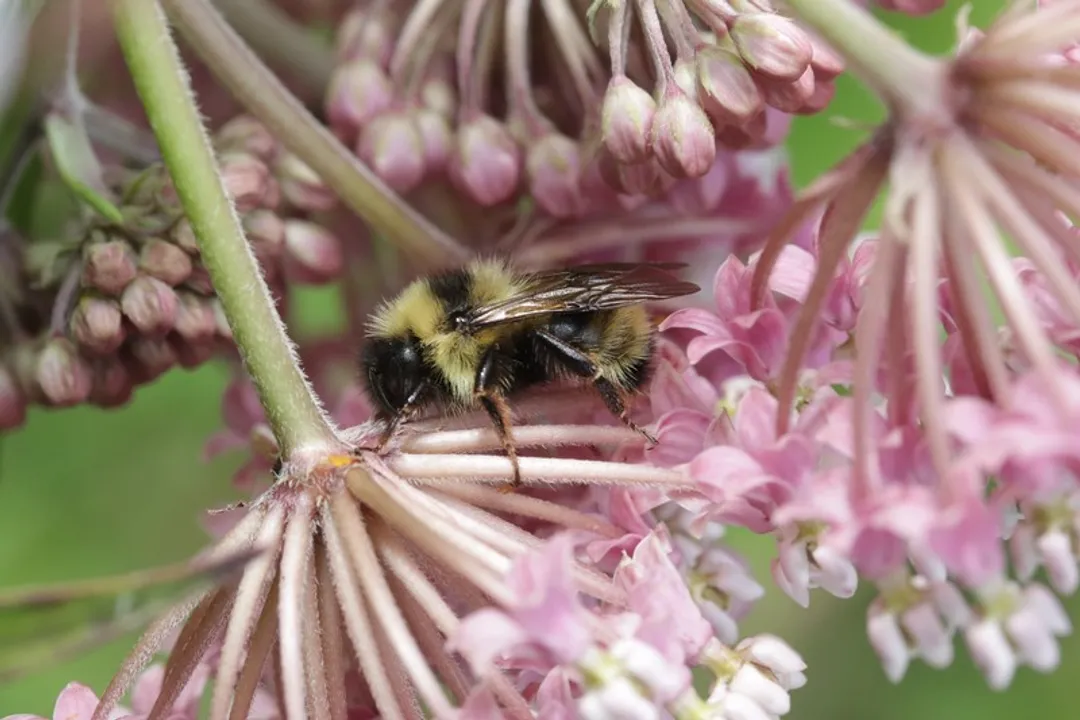
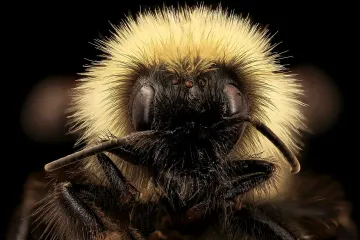
Sexual dimorphism is present in the species, meaning males and queens look different from each other, though the most immediate distinction is often between the parasitic female (queen) and the male. [1] In general terms, the queens are notably larger than the males. [1] This size difference is common across many bee species, where the founding female needs more mass to successfully survive the initial stages of nest invasion and dominance over the host queen. [8] While the queen is the infiltrator that establishes the nest takeover, the larger size likely aids in dominance displays or successful intrusion into the established host nest. [1]
Considering the range of coloration, a helpful mental comparison for field identification might be against common, non-cuckoo species like Bombus impatiens (Common Eastern Bumblebee), which often presents as a very clearly segmented black-yellow-black pattern. [1] The Yellowish Cuckoo, conversely, often blurs these lines, with the black abdominal marking being a variable patch rather than a solid, distinct band separating two large yellow sections. [1][6] Furthermore, because this species is known to inhabit areas spanning from the eastern parts of North America outward, recognizing the subtle difference in pile (hair) length or density between local non-cuckoo species and this one can sometimes be crucial, although sources generally emphasize color and leg structure over pile thickness for primary identification. [1][6]
# Field Observation Tips
The consistent thread across recorded observations in places like Montana and the broader eastern range is the pale, often bright yellow overall hue, making it distinct among more consistently striped bumblebees found in many local ecosystems. [1][9] When documenting potential sightings, particularly if you suspect you’ve found this species, focusing on the legs is key, as mentioned. A good practice, especially for citizen science reporting or local biodiversity studies, would be to capture photographs that clearly show the hind leg profile, even if the bee is only momentarily still. [1] Since coloration is so variable, a photo that clearly shows the absence of corbiculae on the queen or male—indicated by a smooth, hairy, but un-specialized tibia—provides far stronger evidence than a dozen color-only shots. [3][8] Think of the smooth hind leg as the species' telltale signature, overriding the confusing color palette when you are out in the field trying to secure a positive ID.
The appearance noted in guides for this species covers broad regions across North America, highlighting its wide, though sometimes patchy, distribution. [1][9] For instance, observations recorded in states like Montana show the characteristic yellow-dominant coloring. [1] The structure and coloration patterns detailed here serve as the primary basis for distinguishing this fascinating social parasite from the vast majority of the pollen-carrying bumblebees it shares habitat with. [2][3]
Related Questions
#Citations
Flavid Cuckoo Bumble Bee - Montana Field Guide
Bombus fernaldae - Wikipedia
Flavid Cuckoo Bumble Bee - Conservation Guides
Wi BBB: Bombus flavidus
Yellowish cuckoo bumble bee - - Bee-Hind Your Garden -
Bombus flavidus - Bumble Bee Atlas
Fernald's Cuckoo Bumble Bee (Bombus fernaldae) - iNaturalist
Cuckoo bumblebee | Research Starters - EBSCO
Fernald's Cuckoo Bumble Bee (Bombus fernaldae) | Vermont Atlas ...