Which two specific plant species are Willow Flycatchers strongly associated with in California's moist, dense thickets?
Answer
Willows and alders.
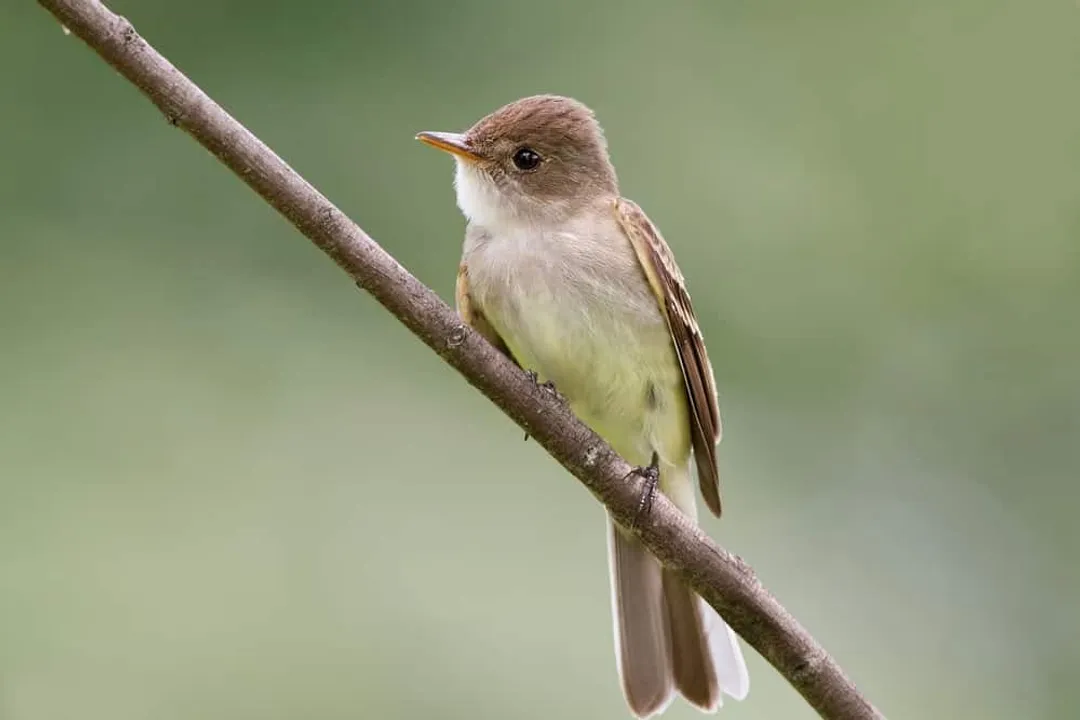
The identification of specific dominant vegetation is key to understanding the flycatcher's habitat requirements, although the general necessity is always dense, water-adjacent shrubbery. In the context of California, where moisture availability supports lush growth, the bird's association is explicitly detailed with thickets comprised of willows and alders. These two genera provide the necessary dense, vertical structure that the flycatchers utilize for foraging perches, territorial displays, and, most importantly, the concealment needed to safely construct and protect their nests from predators throughout the breeding season.
Related Questions
How does the Willow Flycatcher's two-part song, rendered as *fee-bee*, differ from the Alder Flycatcher's song?What specific field mark, though sometimes subtle, is crucial for identifying the Willow Flycatcher?What habitat structure is most strongly required by the Willow Flycatcher, influencing its presence?What sharp, clear call does the Willow Flycatcher give when it is not actively singing on its breeding territory?What is the primary method the Willow Flycatcher uses to procure its insect diet?What adornments are sometimes used on the outer surface of the Willow Flycatcher's nest structure?To which geographic regions do long-distance migrant Willow Flycatchers undertake their southward journey?What management practice is cited as a major contributor to the decline of riparian habitat for western populations?What is the typical clutch size range observed in the nests of the Willow Flycatcher?Which two specific plant species are Willow Flycatchers strongly associated with in California's moist, dense thickets?