Willow Flycatcher Scientific Classification
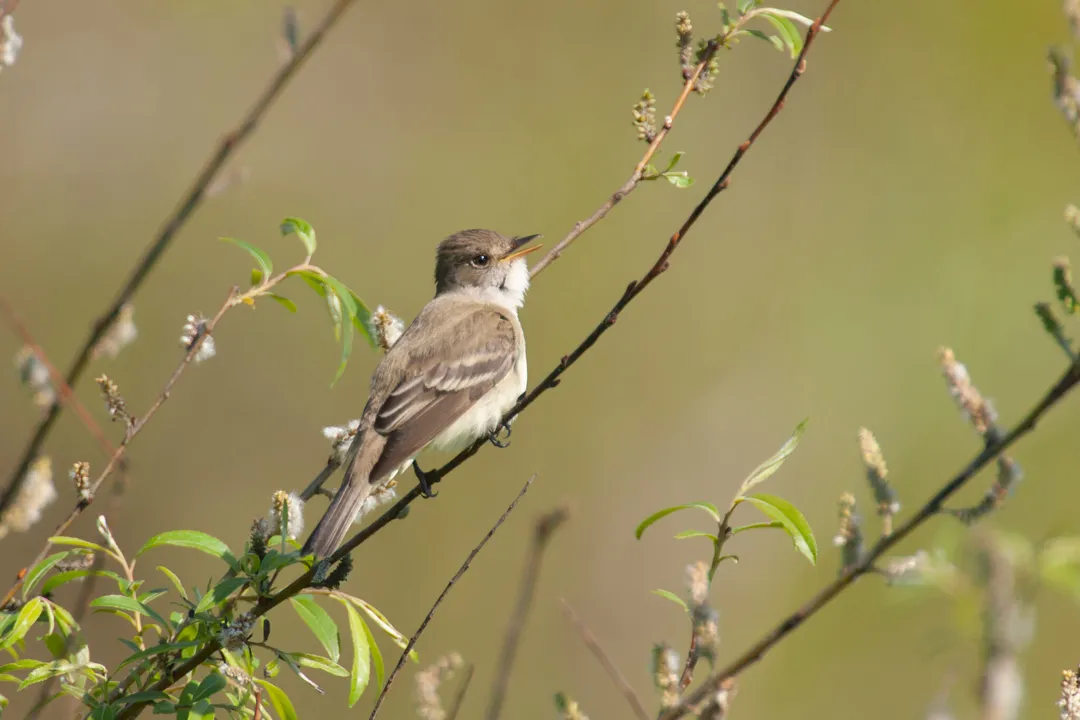
The scientific classification of the Willow Flycatcher, formally known as Empidonax traillii, provides a structured framework for understanding its place in the vast web of life. This small songbird belongs to a complex group, often challenging even for seasoned birders due to its subtle appearance, making a solid grasp of its taxonomy quite helpful for accurate identification and conservation efforts. [1][4][6] The formal scientific designation Empidonax traillii immediately places it within the Tyrant Flycatcher family, Tyrannidae, reflecting its North American distribution and its insectivorous feeding habits. [4][8]
# Kingdom Animalia
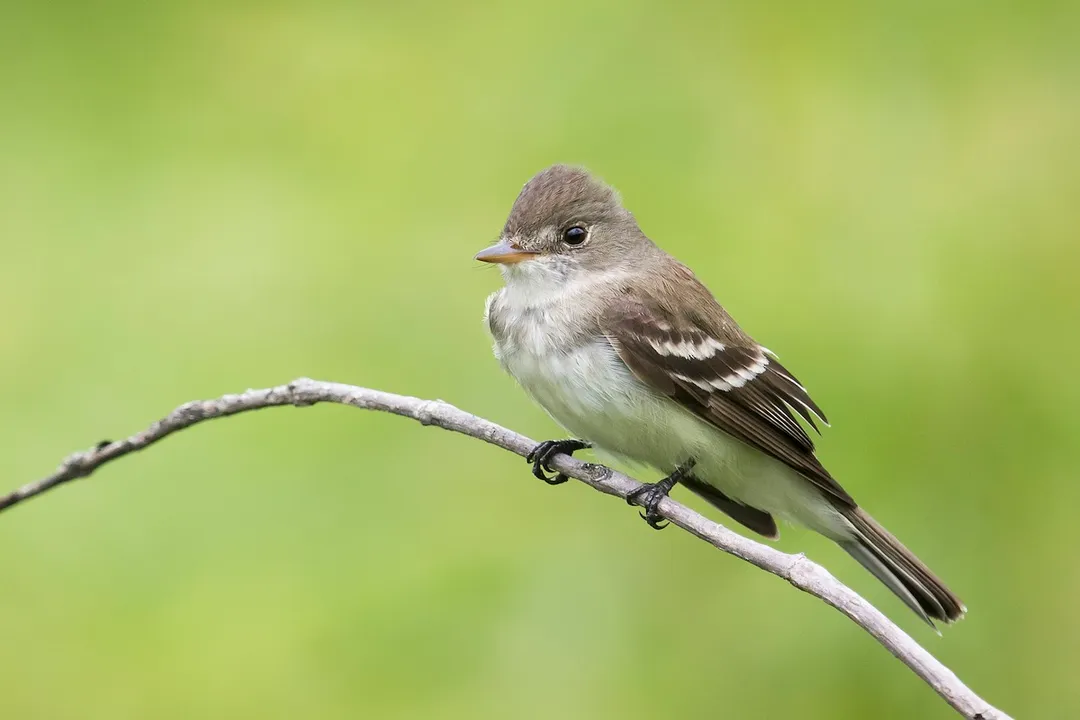
Like all birds, the Willow Flycatcher begins its taxonomic placement at the highest level, the Kingdom Animalia. [1][8] This kingdom groups together multicellular, eukaryotic organisms that are heterotrophic, meaning they obtain nutrition by consuming other organisms, and generally lack cell walls. [8] This broad grouping instantly separates the Willow Flycatcher from plants, fungi, and protists. [8]
# Phylum Chordata
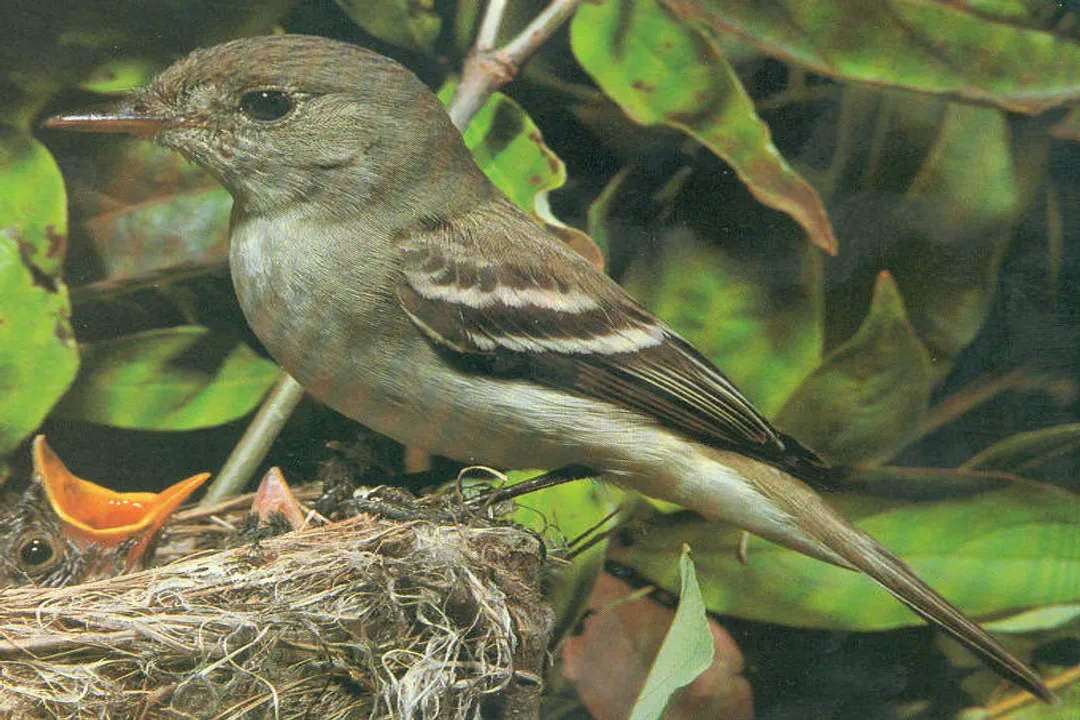
Moving down a level, the flycatcher falls into the Phylum Chordata. [1][8] Membership in Chordata signifies that, at some stage in its life cycle, the organism possesses a notochord, a dorsal hollow nerve cord, pharyngeal slits, and a post-anal tail. [8] For the Willow Flycatcher, these features are present during its embryonic development, culminating in the vertebrate structure we recognize in birds. [8]
# Class Aves
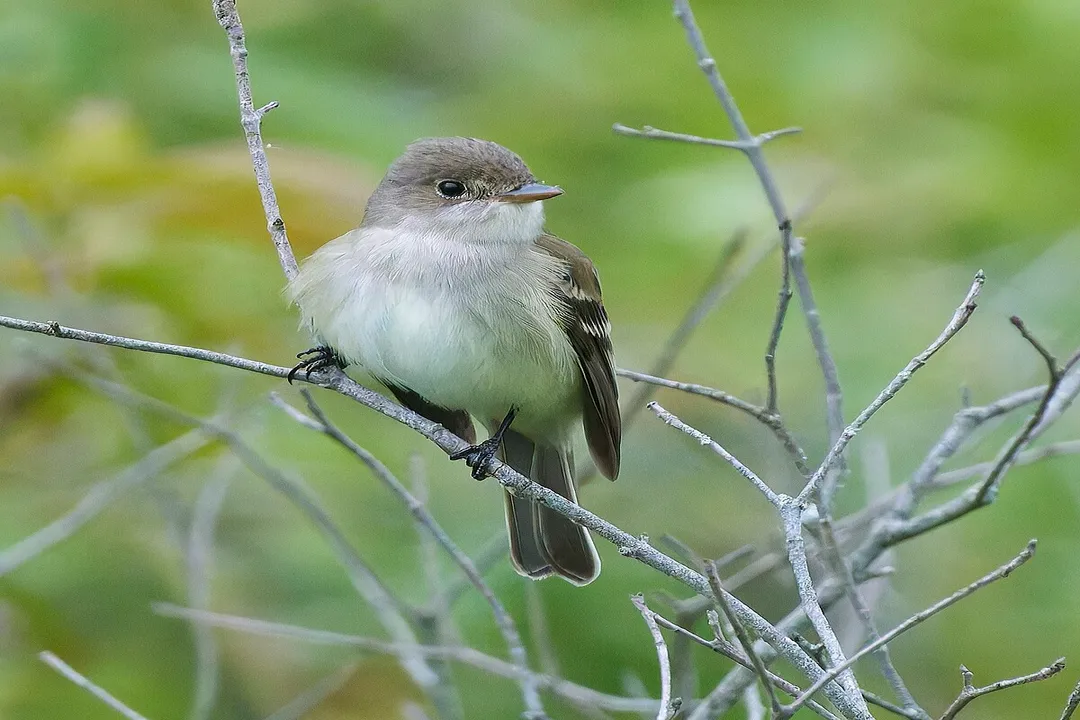
The Class Aves, encompassing all birds, is where the Willow Flycatcher begins to display more specific characteristics. [1][8] Birds are defined by traits like feathers, a beak with no teeth, the laying of hard-shelled eggs, a high metabolic rate, a four-chambered heart, and a lightweight yet strong skeleton. [8] These adaptations are what make the Willow Flycatcher an aerial insectivore capable of covering vast distances during migration. [4]
# Order Passeriformes
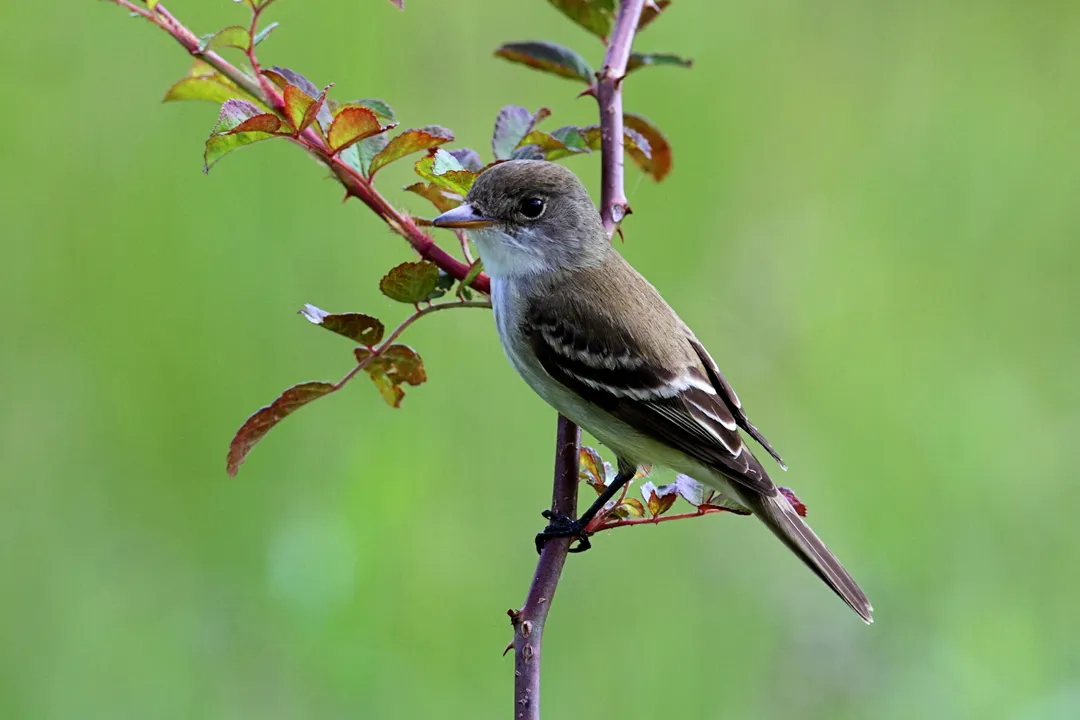
The Order Passeriformes, often referred to as the perching birds or songbirds, is a massive and diverse group. [1][8] Birds in this order possess specialized feet with three toes pointing forward and one toe pointing backward, which allows them to perch securely on branches—a common sight for the Willow Flycatcher. [1][8] This specialization is a key characteristic differentiating them from other avian orders.
# Family Tyrannidae
The family Tyrannidae, the Tyrant Flycatchers, is the next critical placement. [1][4][6][8] This is the largest family of birds in the Americas, exclusively found in the New World. [6] Members of Tyrannidae, including Empidonax traillii, are known for their often upright posture, relatively large heads, and aerial feeding strategy where they sally out from a perch to catch insects mid-air. [4][8] This family placement is what gives the bird its common descriptive name, the Willow Flycatcher. [4]
# Genus Empidonax
The genus Empidonax contains many small, drab, flycatching species, which is precisely where many of the identification challenges arise. [1][6] This genus includes about 15 species, many of which look strikingly similar, often separated only by subtle details in plumage, wing-bar appearance, eye-ring size, or, most reliably, vocalizations. [1][6][9] Distinguishing the Willow Flycatcher from close relatives like the Least Flycatcher (Empidonax minimus) or the Acadian Flycatcher (Empidonax virescens) requires keen observation or a good ear. [1][6] It is fascinating to consider how evolutionary pressure in similar, dense riparian habitats led to such slight phenotypic divergence, relying instead on acoustic isolation for species recognition. [6] The necessity of learning the distinct "fee-bee" song of the Willow Flycatcher is therefore less an academic exercise and more a vital identification tool for the field observer. [4][9]
# Species Empidonax traillii
The species designation, Empidonax traillii, is unique to the Willow Flycatcher. [1] This species is widespread across North America, breeding from central Alaska and southern Canada south to the Great Basin and northeastern United States. [1][5][7] While classified as a single species, like many widely distributed North American birds, it is further divided into several recognized subspecies, reflecting patterns of migration and localized adaptation. [5][6]
# Subspecific Variation
The species Empidonax traillii is recognized as having four subspecies, though the precise taxonomy and recognition of these groups can sometimes be debated among authorities. [5][6] These subspecies generally reflect geographic populations that differ slightly in size, plumage tone, and coloration. [5]
One particularly well-studied group is the Great Basin Willow Flycatcher, Empidonax traillii extimus. [7] This subspecies primarily breeds in the Great Basin area, spanning parts of Nevada, Utah, Idaho, and surrounding states. [7] The Nevada Department of Wildlife notes that this specific population is a species of conservation concern within the state. [7] The variation among subspecies is often subtle enough that it is difficult to reliably distinguish them without examining museum specimens or relying on detailed geographic context. [5]
The nominate subspecies, E. t. traillii, is often associated with the more northern breeding populations. [5] Understanding these subspecies is not just for the sake of complete scientific cataloging; it is essential for regional conservation planning, as some isolated populations might face more immediate threats than the species as a whole. [7]
For instance, if a land manager were assessing habitat in the arid Great Basin versus a riparian corridor in coastal California, knowing the expected subspecies allows for more tailored management prescriptions, particularly concerning the required density and type of willow growth necessary for nesting success. [7] While the overall species is common, the persistence of E. t. extimus requires focused attention in its specific range. [7]
# Hierarchical Placement Summary
To better visualize the taxonomic journey from a broad category to the specific bird we observe, here is a summary of the Willow Flycatcher's classification:
| Rank | Taxon | Common Descriptor |
|---|---|---|
| Kingdom | Animalia | Animals [8] |
| Phylum | Chordata | Possesses a notochord [8] |
| Class | Aves | Birds [1] |
| Order | Passeriformes | Perching Birds [8] |
| Family | Tyrannidae | Tyrant Flycatchers [4] |
| Genus | Empidonax | Small, often confusing flycatchers [6] |
| Species | E. traillii | Willow Flycatcher [1] |
This arrangement places the Willow Flycatcher firmly within the family of New World insect-eaters, yet its distinction at the genus level highlights the tight evolutionary constraints that have shaped its appearance. [6] The fact that the genus Empidonax is so notoriously similar across multiple species suggests a relatively recent diversification or strong selective pressure maintaining a generalist morphology, with reproductive isolation achieved through auditory cues rather than obvious visual ones. [1][6]
# Conservation Context
Although the species as a whole is often listed as being of Least Concern globally by some organizations, reflecting its wide distribution, localized populations face significant pressure. [2][5] NatureServe lists the global conservation status as G5, indicating a secure species globally. [2] However, state-level assessments, like those in Nevada for the Great Basin subspecies, reveal a more nuanced picture where local extirpation or decline is a genuine threat. [7] This discrepancy between global and regional status underscores why knowing the exact scientific classification—and, by extension, the subspecies geography—is not merely academic, but a foundation for effective ecological management. [2][7] The health of the Willow Flycatcher population often serves as an indicator for the health of the wet, shrubby habitats it relies upon across its range. [4]
The Willow Flycatcher's scientific naming follows the binomial nomenclature established by Linnaeus, providing a universal, unambiguous reference that transcends regional common names, which can vary significantly even within North America. [1][9] Whether an observer in Montana calls it a Willow Flycatcher or if a researcher in the eastern US uses the same term, the scientific name Empidonax traillii ensures they are discussing the exact same biological entity, a necessity when comparing breeding success data across state lines or international borders. [9] This clarity is foundational for scientific studies, especially those tracking migratory connectivity between distant breeding and wintering grounds. [5]
Related Questions
#Citations
Willow flycatcher - Wikipedia
Empidonax traillii - Willow Flycatcher - NatureServe Explorer
willow flycatcher (Empidonax traillii (Audubon, 1828)) - Invasive.Org
willow flycatcher - Illinois Department of Natural Resources
WILLOW FLYCATCHER | The Texas Breeding Bird Atlas
Systematics - Willow Flycatcher - Empidonax traillii - Birds of the World
Great Basin Willow Flycatcher - Nevada Department of Wildlife
Empidonax traillii (willow flycatcher) - Animal Diversity Web
Willow Flycatcher - Montana Field Guide