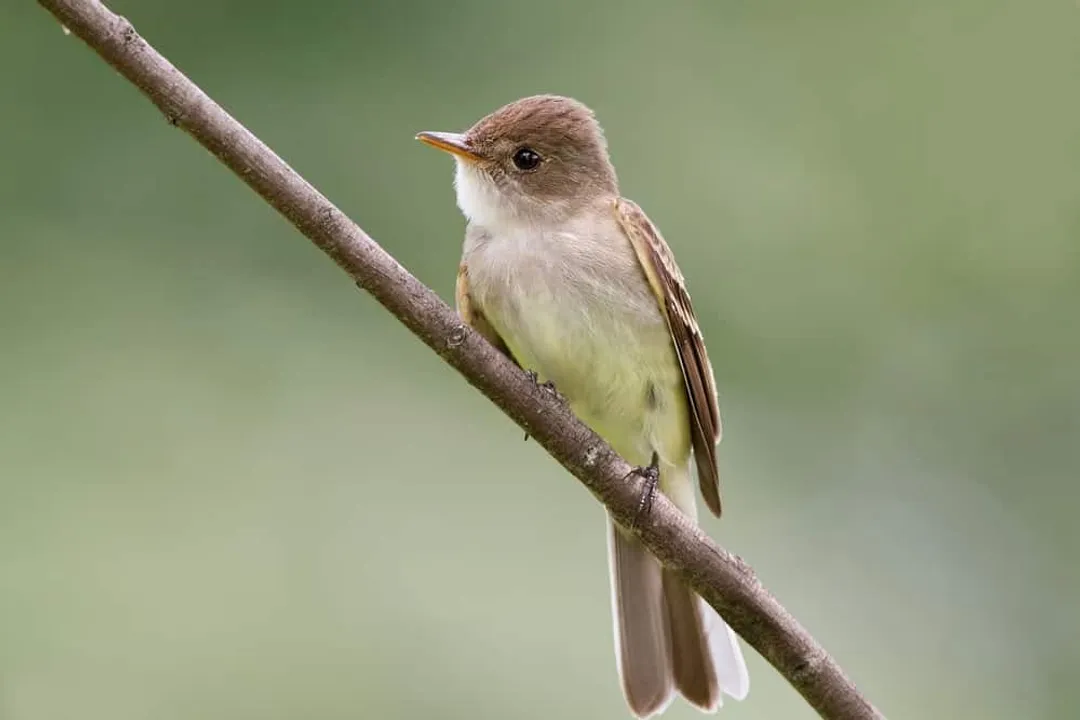
What habitat structure is most strongly required by the Willow Flycatcher, influencing its presence?
Riparian corridors featuring dense, tall shrubbery or young deciduous trees near water.
The survival and breeding success of the Willow Flycatcher are inextricably linked to its specialized habitat niche, which centers around water availability and dense vegetative structure. These birds overwhelmingly require riparian corridors, meaning the vegetation immediately adjacent to permanent or semi-permanent water sources like streams, wet meadows, or marshes. Crucially, the density and structural complexity of this understory—often composed of willows and alders, or young cottonwood growth in certain regions—provide the necessary concealment for nesting and protection from predators. If this dense, water-dependent cover is removed or significantly degraded, the species rapidly disappears from the area, indicating that vegetation structure outweighs specific elevation concerns.