Willow Flycatcher Facts
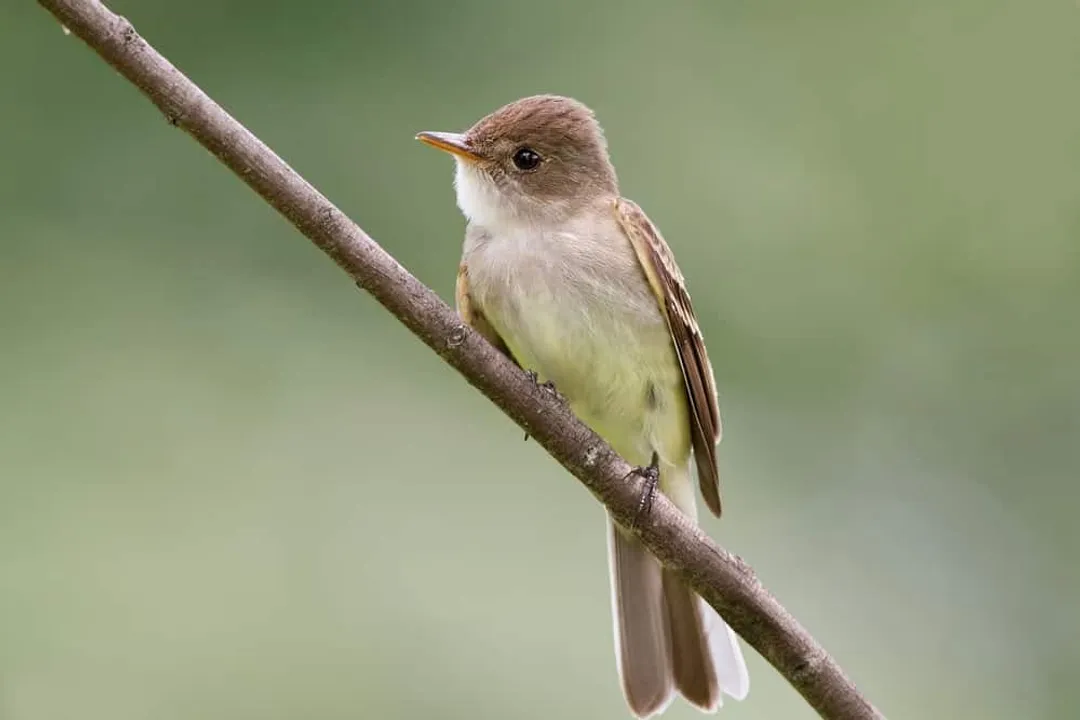
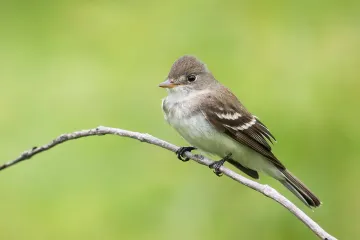
The Willow Flycatcher, a small, unassuming bird, often blends into the dense green thickets it calls home across western North America. It is frequently heard before it is seen, especially when its distinctive territorial song rings out during the breeding season. Belonging to the notoriously challenging Empidonax genus—a group of very similar, small flycatchers—reliable identification often hinges less on plumage and more on vocalization and specific habitat preferences. These tiny migrants possess an olive-green back, a paler throat, and exhibit faint wing bars, yet it is the pale, often incomplete eye-ring that serves as a crucial, though sometimes frustratingly subtle, field mark.
# Song Identification
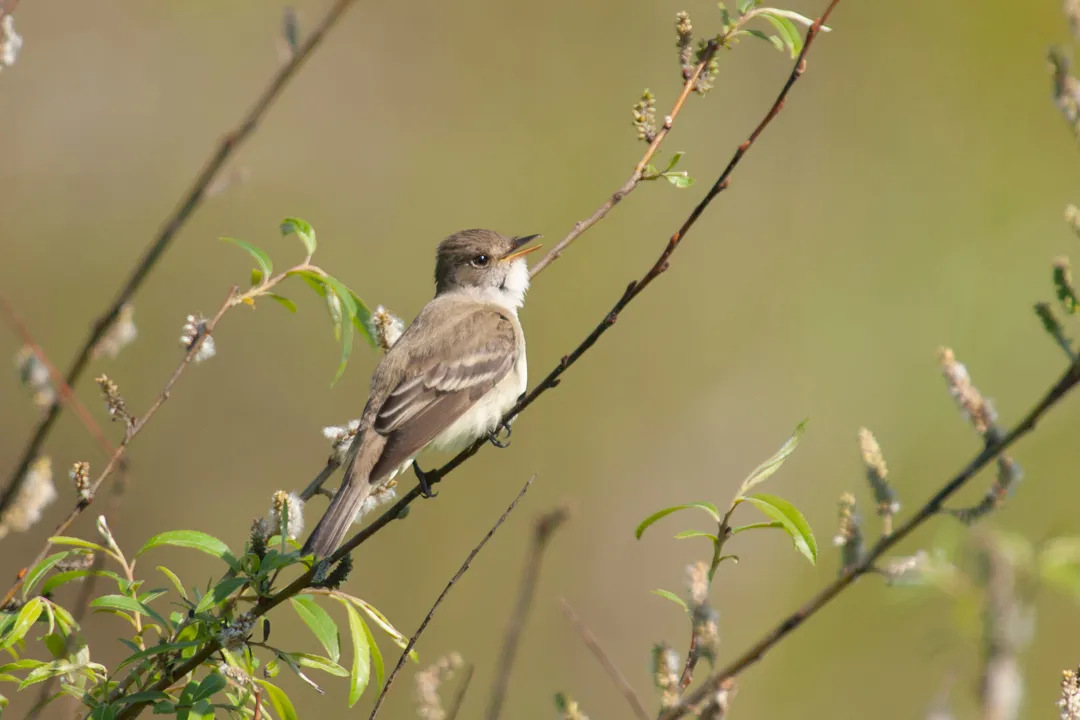
The primary key to confirming a Willow Flycatcher’s presence is its song. Unlike some of its relatives, the Willow Flycatcher delivers a clear, emphatic two-part whistle best phonetically rendered as fee-bee or fitz-bew. This song is typically delivered from an exposed perch within the dense shrubbery. Distinguishing this song from that of the very similar Alder Flycatcher can be difficult, as both sing two-part phrases. A subtle observation many field guides note is that the Willow Flycatcher’s song often carries a slightly descending or drawn-out quality to the second note, whereas the Alder Flycatcher’s version tends to be more abrupt and emphatic. When not singing on territory, the bird gives a sharp, clear whit call.
# Habitat Niche
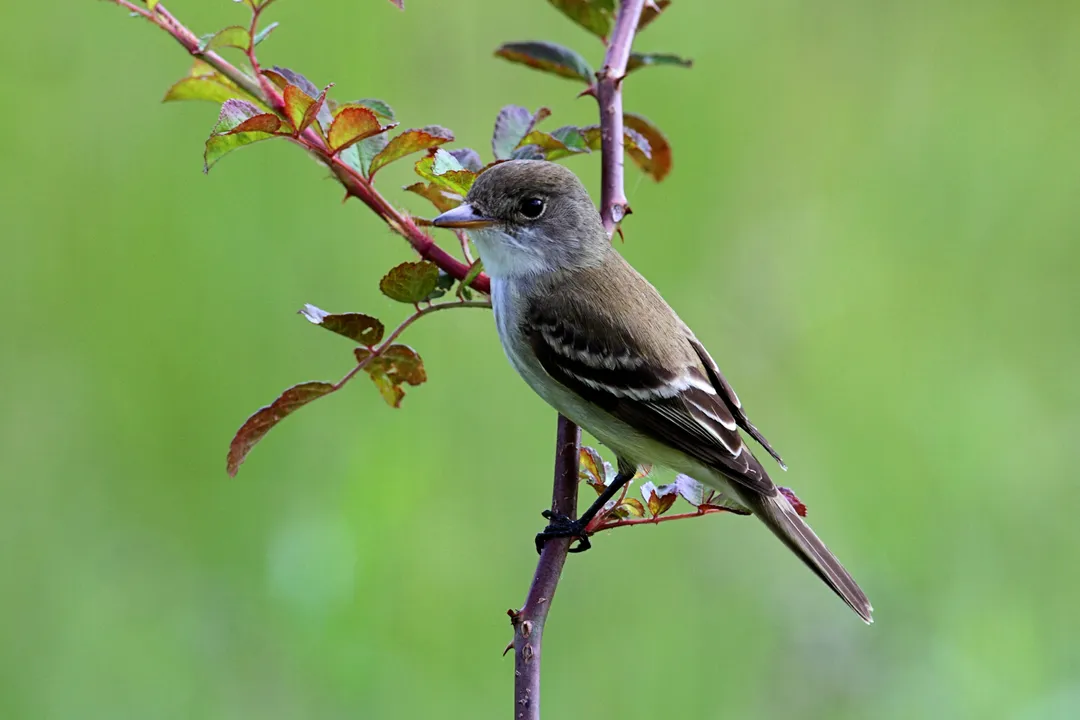
Willow Flycatchers have a relatively specialized habitat requirement, tying their presence strongly to riparian corridors. They overwhelmingly prefer areas with dense, tall shrubbery or young deciduous trees, especially those situated near water sources like streams, wet meadows, or marshy areas. This dense understory provides the necessary cover for foraging and nesting security. In California, for instance, they are strongly associated with moist, dense thickets of willows and alders. Similarly, in the Great Basin region, their habitat choice leans heavily toward dense, shrubby riparian areas, often dominated by willows. The density and structure of this vegetation are far more important than the specific elevation range they occupy. In areas where riparian vegetation is heavily modified or removed, the species is quickly absent.
For context across their breeding range, while the general requirement is dense, water-adjacent thicket, the specific dominant shrub species can shift. In the northern reaches, alder and willow thickets are key, while in parts of the Sierra Nevada, the specific composition of the young growth layer needs to provide adequate nesting concealment, often favoring species like willow or cottonwood growth near water bodies.
# Range Migration
The Willow Flycatcher is a long-distance migrant, breeding across western North America, though populations are often divided into distinct subspecies groups. They arrive on their northern breeding grounds in late spring, often after many other insectivores have already established territories. Once the breeding season concludes, they undertake an extensive migration southward, wintering primarily in Central America and northwestern South America. This migratory route connects diverse ecosystems, requiring the birds to navigate complex ecological landscapes twice a year. The long-distance nature of their movement means that threats occurring on their wintering grounds can indirectly impact breeding success back home.
# Diet Insects
As their name implies, the Willow Flycatcher subsists almost entirely on insects. They are classic aerial insectivores, sallying out from a perch to capture flying prey in mid-air. Once the insect is caught, the bird typically returns to the same perch or a nearby one to consume the meal. Their diet is diverse, including wasps, bees, flies, moths, and various beetles. This reliance on flying insects means that the abundance and availability of aerial arthropods in their dense shrub habitat directly influence their ability to feed themselves and their nestlings.
# Nesting Behavior
The construction and placement of the nest are closely tied to the bird’s habitat preference for dense cover. The nest is a deep, compact cup, carefully woven from fine plant materials such as grasses, rootlets, and strips of bark. It is often supported within a fork of a small branch or sturdy twig, situated high enough within the dense shrubbery to offer protection from ground predators. While the main structure relies on vegetative fibers, the outer surface may be adorned with lichens or moss, and the interior lined with soft plant down or fine feathers to cushion the eggs. Clutch size is typically small, ranging from three to five eggs.
# Conservation Status
While the global conservation status of Empidonax traillii is generally categorized as of Least Concern by organizations like NatureServe, this broad designation masks significant regional vulnerability. Several distinct populations, particularly those in the arid western United States, face severe localized threats that have led to much higher risk assessments.
A primary driver of population decline across the West is the modification or destruction of their essential riparian habitat. Water management practices are a major contributor; diversions for agriculture or municipal use can lower the water table, causing the critical willow and cottonwood stands that support the flycatchers to dry out and degrade. When the dense shrub cover is lost, the birds cannot breed effectively in that area.
Other factors compounding these issues include:
- Altered stream flows due to flood control measures, which can scour away necessary young vegetation.
- Overgrazing by livestock, which removes the low, protective shrub layer.
- The encroachment of invasive, non-native plant species that create a habitat structure unsuitable for the flycatchers’ nesting needs.
For instance, the Great Basin population faces specific challenges where habitat management must carefully balance water availability, grazing pressures, and native vegetation health to ensure these specific breeding sites persist. Protecting these birds means protecting the integrity of the water-dependent plant communities where they raise their young. Even on migration, habitat fragmentation along their routes presents challenges, but the most acute threat remains the loss of suitable, dense, water-associated cover on the breeding grounds.
Related Questions
#Citations
Willow Flycatcher | Audubon Field Guide
Empidonax traillii (willow flycatcher) - Animal Diversity Web
[PDF] Life history account for Willow Flycatcher
Willow Flycatcher - Sierra Forest Legacy
Great Basin Willow Flycatcher - Nevada Department of Wildlife
Willow Flycatcher - Montana Field Guide
Willow Flycatcher Bird Facts - Empidonax traillii - A-Z Animals
Willow Flycatcher - Bird Genoscape Project
Empidonax traillii - Willow Flycatcher - NatureServe Explorer