What specific ecological feature do Willow Flycatchers strongly depend on for breeding habitat?
Answer
Moist, dense shrubs along riparian corridors
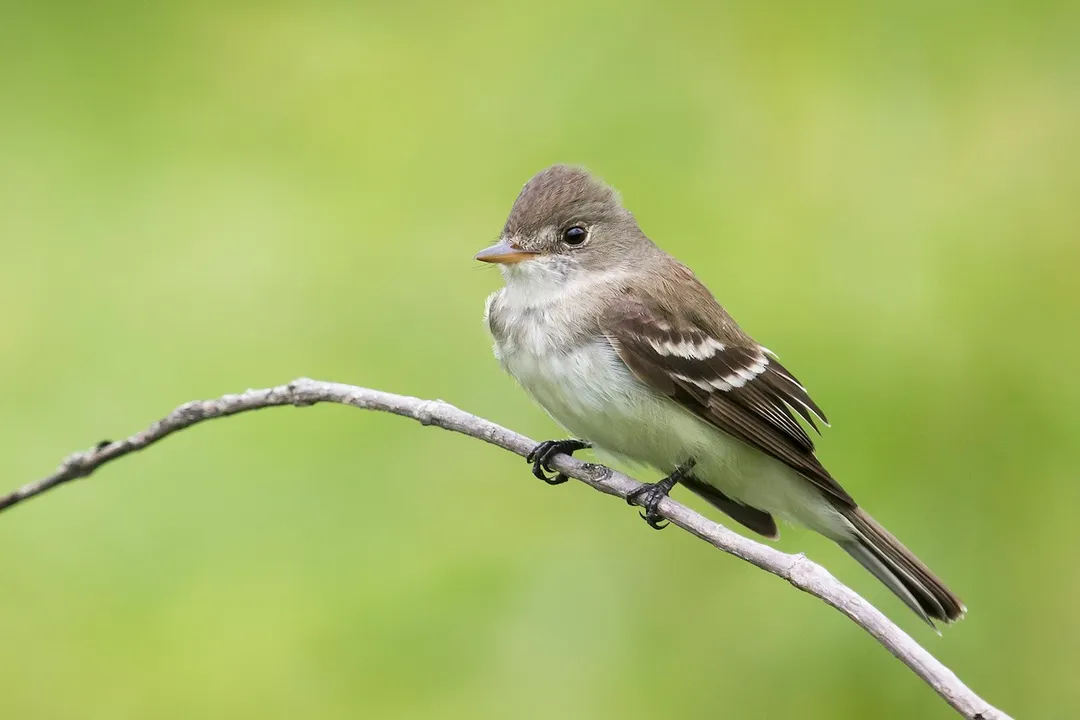
The existence of the Willow Flycatcher is intrinsically linked to healthy riparian ecosystems. These birds specifically favor thickets characterized by moisture, such as willow thickets, alder groves, and wet meadows. This preference dictates that their survival is highly dependent on the structural quality of these dense, shrubby habitats, especially in regions like California where habitat loss in these streamside environments poses an immediate threat to the species.
Related Questions
How is the Willow Flycatcher often recognized, contrasting with its subtle appearance?What specific ecological feature do Willow Flycatchers strongly depend on for breeding habitat?Which recognized Willow Flycatcher subspecies generally tends to breed at higher elevations than *E. t. traillii*?What is the primary anthropogenic engine currently influencing the rapid evolution of *Empidonax traillii*?What is the typical foraging strategy employed by the insectivorous Willow Flycatcher within its habitat?How does the documented genetic adaptation rate in the Willow Flycatcher compare to typical rates inferred from the fossil record?What concept might supersede neat geographical lines when describing future population structure based on modern genetic data?What subtle facial feature is often described as incomplete or weak on the Willow Flycatcher?In the Rocky Mountains, what local selective driver might favor Willow Flycatchers genetically predisposed to earlier breeding?For a migratory species like the Willow Flycatcher, where does adaptation pressure manifest besides the breeding grounds?