Vermilion Flycatcher Facts
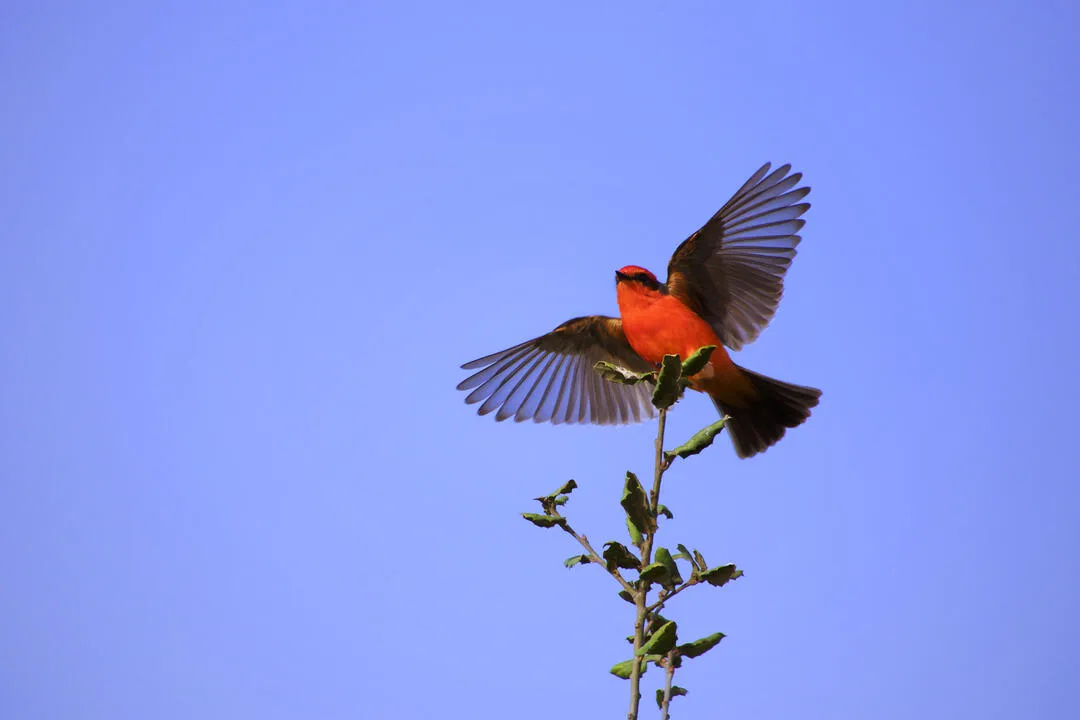
The male Vermilion Flycatcher is a spectacular sight, a flash of impossible red against the arid landscape, making it a true outlier in the generally muted family of Tyrant Flycatchers. This bird achieves a level of vibrancy in its plumage that immediately arrests the eye of any observer, often becoming a "spark bird" that ignites a new passion for birding. [6] Yet, one must look twice to appreciate the female, who wears a subtle palette of gray and white, accented by a warm salmon-pink or yellowish wash on her belly. [2][6][10] These small, six-inch-long birds are a study in contrast, both within the sexes and when compared to many of their North American relatives. [2][6]
# Fire Head Etymology
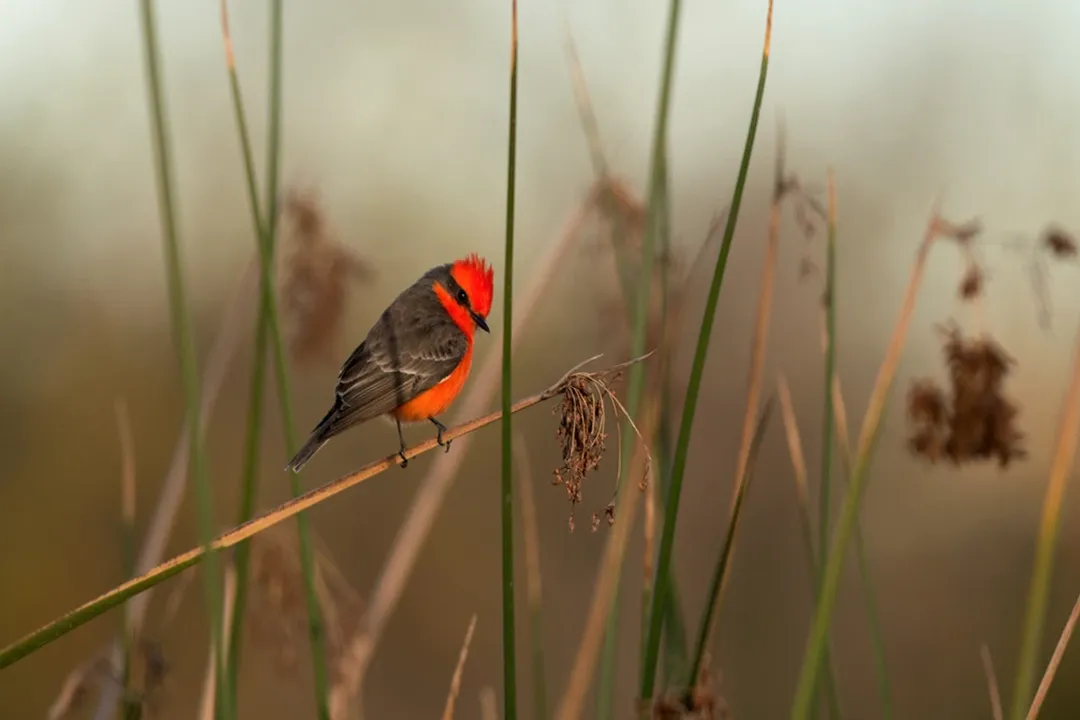
The genus name, Pyrocephalus, is a direct nod to the male’s brilliant appearance, derived from Greek words that roughly translate to "fire-headed" or "flame headed". [3][4][10] The specific epithet has seen revisions, currently standing as Pyrocephalus rubinus in many modern accounts, though Pyrocephalus obscurus is also used following a 2016 molecular study that redefined species boundaries within the complex. [1][4][10] These studies resulted in the elevation of some former subspecies to full species status, like the now-extinct San Cristóbal flycatcher. [3][4] Despite the taxonomic fluidity, the male’s description remains consistent: brilliant red crown, chest, and underparts sharply delineated from blackish-brown wings, upperparts, and a thin black mask across the eyes. [2][3][6] This remarkable coloration is not just for show; it is a costly signal. Maintaining such vivid red requires the bird to metabolize yellow carotenoid pigments obtained through diet, specifically yellow precursor molecules like zeaxanthin. [3] A male in peak color is essentially broadcasting his exceptional foraging skills and genetic fitness to prospective mates and rivals. [3][6] If kept in captivity, these birds often lose their vermilion hues, underscoring the critical link between their vibrant appearance and their wild diet. [3]
# Range and Habitats
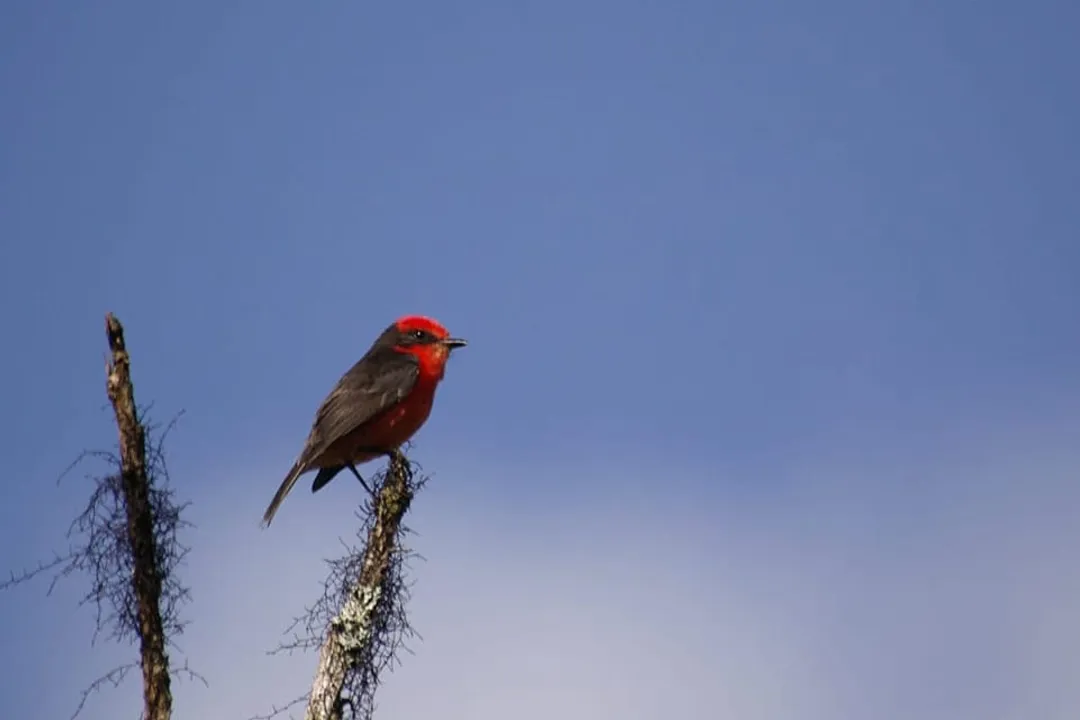
The range of the Vermilion Flycatcher is extensive, stretching from the southwestern United States south through much of Central America and deep into South America. [2][4][6] Within the U.S., breeding populations are characteristic of the arid Southwest—parts of Arizona, southern Nevada, southern California, and Texas—though small numbers winter along the Gulf Coast and California coast. [2][5][7] Interestingly, in Utah, the species is a rare summer resident primarily confined to the southwestern corner, such as Washington County. [9] While generally found year-round across their range, populations farther south undertake long migrations, sometimes covering up to 2,500 miles to avoid temperatures dropping below freezing. [3]
Their habitat preference reveals a strong dependency on water, even in otherwise dry regions. [2][9] They favor somewhat open environments such as savanna, scrub, agricultural areas, and especially riparian woodlands—the corridors of trees and shrubs along streams, rivers, ponds, or oases. [2][6][7] They shy away from dense growth, instead selecting exposed perches atop shrubs, fences, or in the canopies of favored trees like mesquite, willow, or cottonwood. [2][3][7] While this reliance on natural riparian areas is well-established, the bird has shown an ability to colonize human-modified landscapes. In places like Tucson and parts of California, they are increasingly found nesting in parks, golf courses, and residential areas. [3][6][7] This adaptation to human structures suggests a degree of flexibility, but it is worth considering whether these developed areas offer the same ecological quality as pristine settings; for instance, increased human activity in these pockets might also bring a corresponding increase in nest predators or, more acutely, the brood parasitic Brown-headed Cowbird. [3][7]
# Aerial Hunting
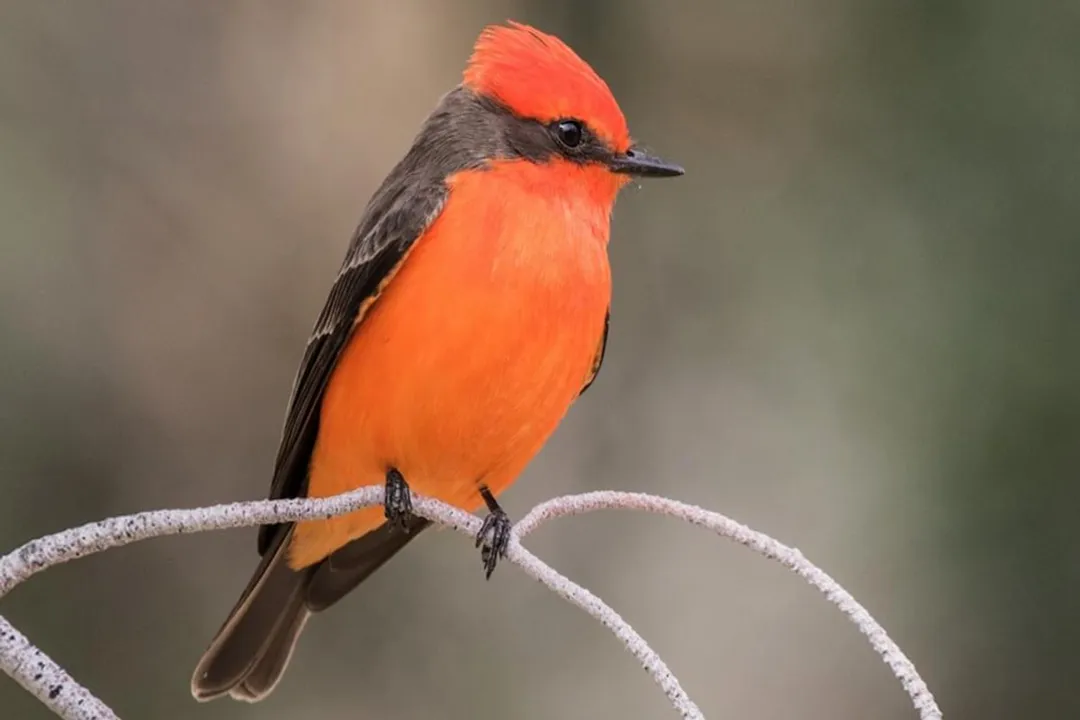
As members of the Tyrant Flycatcher family, their primary method of securing food is, unsurprisingly, flycatching. [3][10] They are specialized aerial insectivores, typically spending about 90% of their active day perched on an exposed vantage point, often relatively low to the ground, perhaps within ten feet. [3][6] From this perch, they watch for prey, then sally forth in direct, sometimes acrobatic flight to snatch flying insects from the air. [2][3] If the initial attempt fails, they are capable of agile maneuvers to secure the meal. [3] They have also been observed hovering momentarily before dropping to the ground to catch insects there. [2] Their diet is composed mostly of insects, including beetles, flies, and grasshoppers, and they are known to occasionally consume bees, sometimes even attacking beehives. [2][3][10] Though rare, they have been documented eating small fish, indicating an opportunistic nature, but they are not known to consume plant matter. [3] After eating, they often clean their bill or regurgitate the indigestible parts of their meal in the form of pellets. [2]
# Family Dynamics
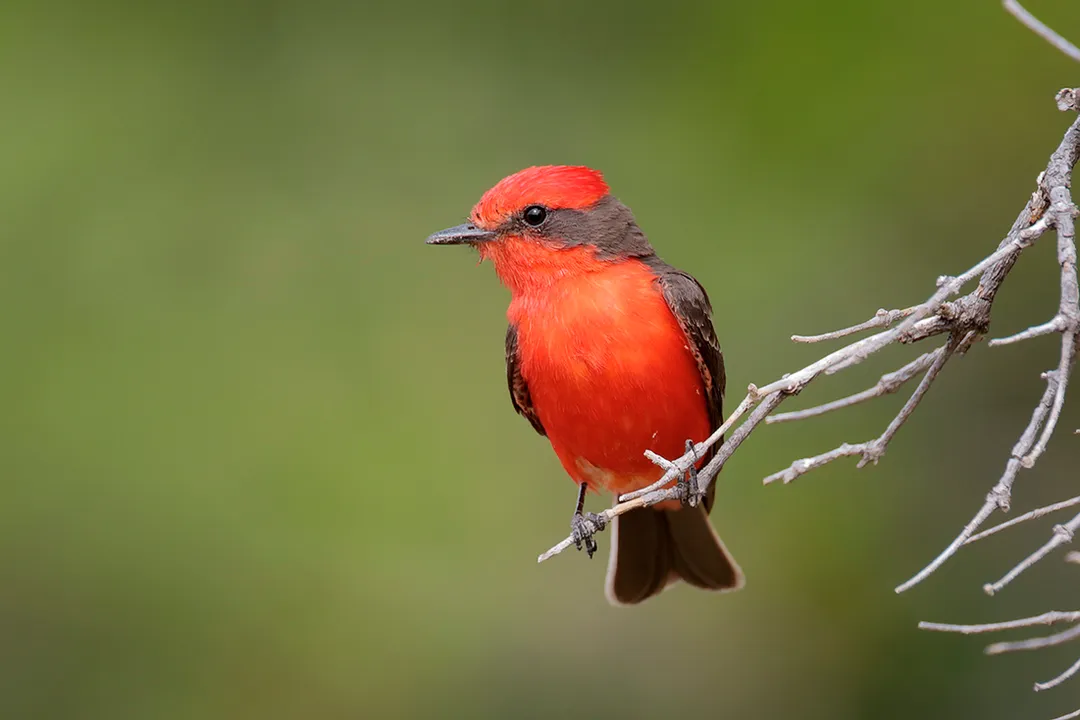
Vermilion Flycatchers exhibit fascinating social complexities, being socially monogamous while also engaging in both extra-pair copulation (EPC) and intra-specific brood parasitism. [3][4] This means that while a male and female form a pair bond, one or both may mate with neighbors, and females sometimes lay eggs in the nests of other Vermilion Flycatchers. [3][4] In one study, a significant percentage of offspring were found to result from these outside matings or from parasitic eggs. [3]
Nesting duties are clearly divided. The male’s primary role during incubation is provisioning the female, who solely handles sitting on the eggs. [3] Females build the nest, shaping a compact, shallow cup from small twigs, grass, and fine lining materials, often using spiderwebs to bind the structure and decorating the rim with lichen. [2][10] Nests are characteristically placed in the horizontal fork of a tree branch, usually between six and twenty feet high, though nests up to fifty or sixty feet have been recorded. [2][3][9] A typical clutch consists of two to four eggs, most commonly three, which are whitish and boldly spotted with brown or olive. [2][9][10] Once the altricial chicks hatch—born naked with closed eyes—both parents participate in feeding them until they fledge about 14 to 16 days later. [2][3][9] Females often begin building a second nest and raising another brood shortly after the first brood fledges, sometimes with the male tending the older young alone. [2][3] While nest reuse in the same season is uncommon (around 12% success rate), it does happen, possibly saving time and energy, though potentially increasing parasite load. [3]
# Vocal Display
The soundscape of the Vermilion Flycatcher is dominated by the male's performance, particularly during territory defense and courtship. [3][4] A common call note is a sharp pees or peet-peet. [2][10] However, their true songs are more elaborate. The perching song is described variously as a variable pit pit pit pidddrrrreeedrr or a ching-tink-a-le-tink, with the emphasis falling on the final syllable. [3] The most stunning vocalization is the flight song, delivered during aerial courtship displays where the male fluffs his feathers, flutters high into the air, and sings rapidly and repeatedly before swooping back to a perch. [2][3][6] In defending his territory, the male uses his song, often lengthened after nest construction, to communicate quality to females and threat level to other males. [3] An interesting observation in noisy environments, such as Mexico City, indicates that these birds adjust by singing louder and longer songs when exposed to greater ambient noise pollution. [3] Beyond vocalizations, males also employ non-vocal displays, such as fanning their tails, pumping them rapidly, and even snapping their beaks between songs, especially when challenging rivals or defending the nest. [2][3]
# Status and Threats
Globally, the Vermilion Flycatcher is assessed by the IUCN as a species of Least Concern (LC), due to its massive range and a population estimated to be in the millions—though one source suggests an estimate as low as 2 million. [2][3][10] Despite this broad status, conservation reports reveal a more nuanced picture across its territory. While populations in Arizona have shown an increasing trend, the Texas breeding population has been declining, and the species has become increasingly rare as a breeder in Southern California. [2][3][7]
The most significant limiting factor across its range is habitat destruction. [7][9] The primary destruction targets the open riparian woodlands they require. In the Lower Colorado River Valley, the combination of altered water management due to dams and the physical clearing of cottonwood-willow habitat has resulted in the near-total loss of breeding and foraging grounds for this species. [3][7] While the bird has adapted to nesting in suburban areas, these substitute habitats may not fully support long-term population health, particularly due to higher pressure from parasitic cowbirds. [3][7] The historical decline in California underscores this threat; while the overall range has expanded locally into new, sometimes drier areas, the core strongholds have suffered substantial losses in pairs due to habitat degradation. [7] The loss of the San Cristóbal flycatcher, a sister species in the Galapagos, which disappeared between 1987 and 2012, serves as a stark reminder of how quickly island or specialized populations can vanish when threatened by introduced diseases or habitat change. [3][4]
Related Questions
#Citations
Vermilion Flycatcher Overview, All About Birds, Cornell Lab of ...
Vermilion Flycatcher | Audubon Field Guide
Vermilion flycatcher - Wikipedia
[PDF] Vermilion flycatcher (Pyrocephalus rubinus)
Bird of the Month: Vermilion Flycatcher (Pyrocephalus rubinus)
Vermilion Flycatcher in Galapagos Islands - Quasar Expeditions
VERMILION FLYCATCHER | The Texas Breeding Bird Atlas
Vermilion Flycatcher - Facts, Diet, Habitat & Pictures on Animalia.bio
(species) pyrocephalus rubinus - Utah Natural Heritage Program ...
Vermilion Flycatcher - Tucson Bird Alliance