Willow Flycatcher Diet
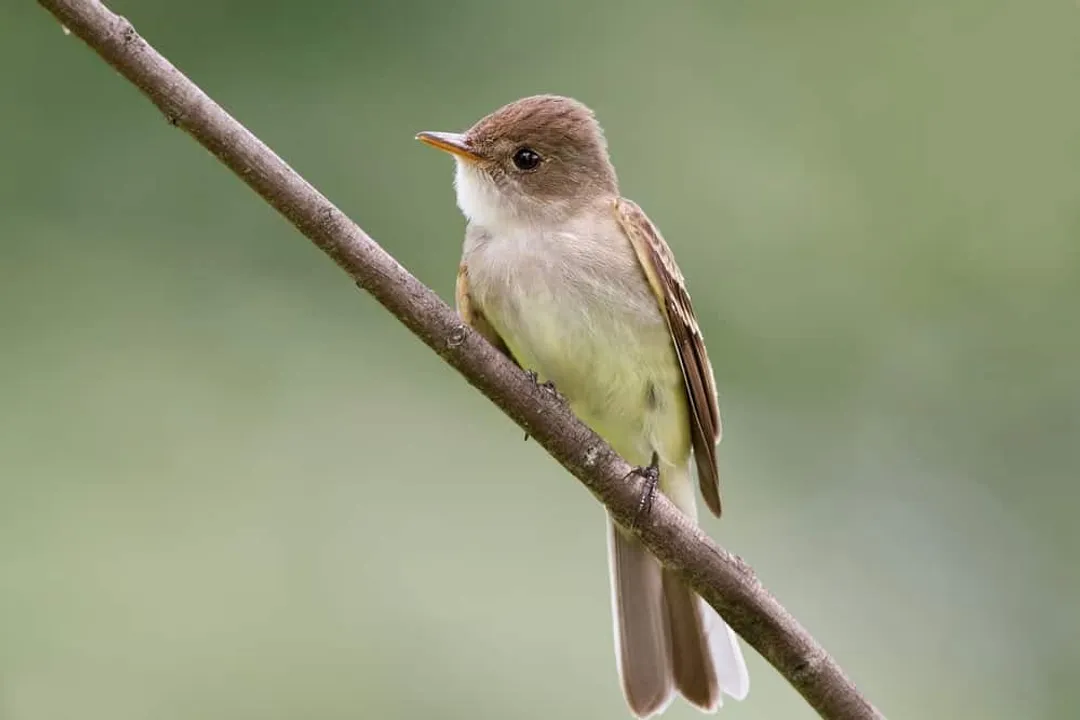
The Willow Flycatcher, a slender, alert inhabitant of thickets and dense streamside shrubs, sustains itself almost exclusively on the vast community of aerial and foliage-dwelling invertebrates. [1][3][9] As an insectivore, its survival through the demanding breeding season and subsequent migration hinges entirely on the success of its hunting forays. [3] While the specific menu can vary based on locale—ranging from the Great Basin to the Southwestern riparian zones—the fundamental requirement remains a steady intake of arthropods. [4][9]
# Insect Focus
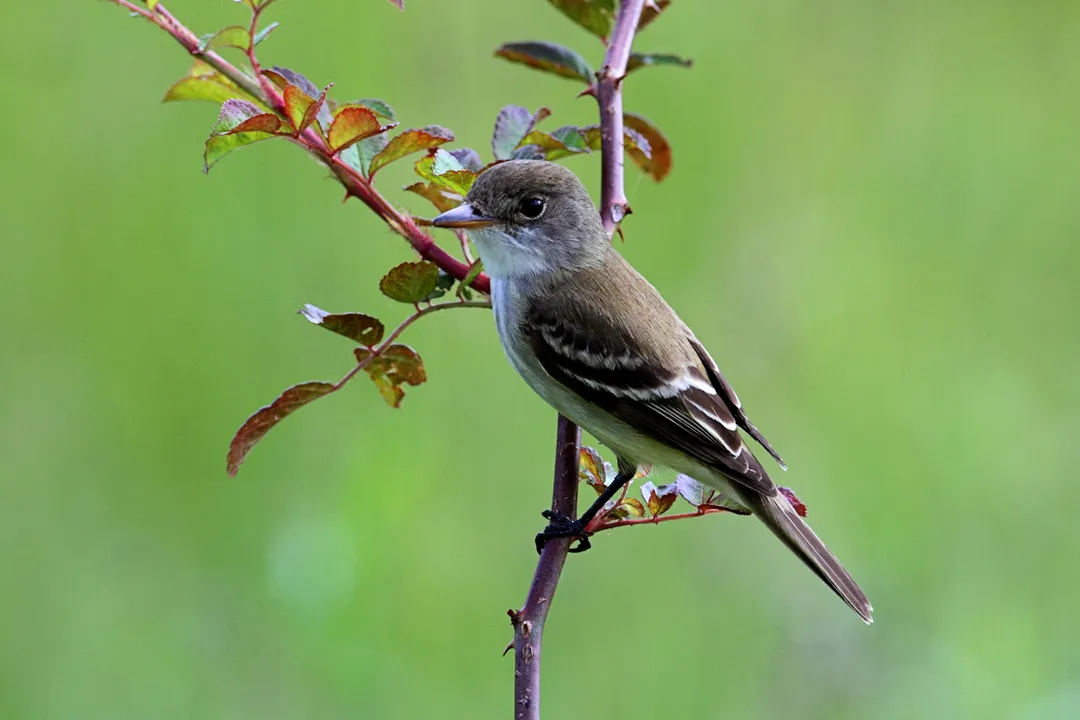
The vast majority of the Willow Flycatcher's sustenance comes from the insect world, though they readily consume spiders as well. [2][3][9] This general reliance means that the bird's presence or absence in a specific patch of habitat is often a direct indicator of the local insect biomass and diversity. [4] For an adult maintaining its own weight and provisioning young, efficiency in capturing these small targets is paramount. [7]
# Prey Classification
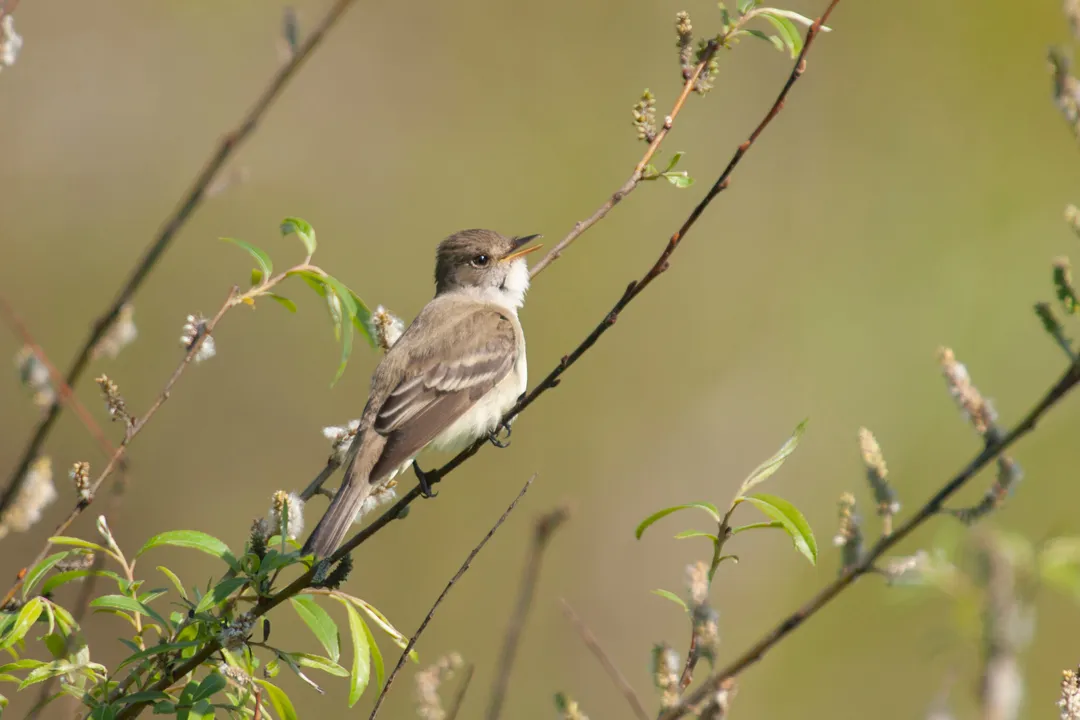
The diet is remarkably diverse, encompassing many of the common insect orders encountered within its shrubby environment. A breakdown of their typical prey reveals a broad appetite, though certain groups are favored, especially when feeding rapidly growing young. [6]
| Prey Type | Common Name | Potential Significance |
|---|---|---|
| Lepidoptera | Small Moths, Caterpillars | High importance, particularly soft-bodied larvae [6] |
| Diptera | Flies | Frequently cited as a major dietary component [5] |
| Hymenoptera | Wasps, Bees | Consumed, though perhaps less dominant than Diptera or larvae [2] |
| Coleoptera | Beetles | Included in the broader diet [2] |
| Hemiptera | True Bugs | Present in the insect intake [2] |
| Araneae | Spiders | A consistent, non-insect arthropod food source [2][3] |
Studies tracking the food delivered to nestlings, such as those conducted on the endangered Southwestern Willow Flycatcher, have provided sharp focus on these preferences. [4][7] For instance, research examining nestling diets often finds that caterpillars constitute the single largest category by frequency of delivery, followed closely by small moths and various types of flies. [6] This indicates that while the bird can handle harder-shelled prey like beetles for personal maintenance, the developmental needs of the chicks steer parental foraging toward softer, more easily digestible items. [6]
# Foraging Techniques
Willow Flycatchers are classic members of the tyrant flycatcher family, employing active aerial maneuvers to secure their meals. [1][3] Their typical hunting style involves sitting quietly on an exposed perch within the dense shrubbery, patiently scanning the surrounding air and foliage. [1][9] Once prey is spotted, the bird executes a short, rapid flight—known as sallying—to intercept the insect mid-air before returning to the perch to consume it. [1][3][9]
This sallying behavior is key to capturing fast-moving aerial targets like adult flies. [5] However, they are not exclusively aerial hunters. They will also engage in gleaning, which involves flying out briefly to pluck an insect directly off the surface of a leaf or twig before returning to the perch. [5] This gleaning action is likely how they efficiently harvest stationary caterpillars or resting spiders that might otherwise be missed during a quick aerial pass. [5] The specific mix of sallying versus gleaning throughout the day likely adjusts based on the relative abundance of flying versus resting prey in the immediate vicinity. [1]
# Nestling Requirements
The dietary demands placed upon breeding adults are intense, requiring them to switch their focus from personal caloric maintenance to the specialized needs of their rapidly growing offspring. [7] Chicks require food that provides high levels of protein and is easily broken down by their developing digestive systems. [6] This explains the strong parental preference for soft-bodied prey like caterpillars and small, newly emerged flies during the peak nestling period. [6] If observers note a sudden, concentrated effort by adults to snatch insects low to the ground or near the water's edge, it often correlates with delivering easily managed meals to the youngest mouths in the nest. [7]
When considering the sheer volume of food required to turn a tiny hatchling into a fledgling capable of migration, the nutritional quality becomes as important as the quantity. The adult bird cannot afford to spend time trying to process a large, heavily armored beetle for a chick; that time is better spent securing three or four manageable, high-protein caterpillars instead. [6] This selective pressure ensures that the quality of the local arthropod community directly dictates the success rate of the brood. For instance, if a local pesticide application has wiped out the soft-bodied larval stages but left harder-shelled beetles untouched, the flycatchers might experience lower fledging success because the parent birds cannot effectively feed the young the only prey remaining. [4]
# Seasonal Variation
While the bulk of dietary data centers on the breeding season when food consumption is highest due to reproductive demands, the diet shifts during migration and the non-breeding season. [4] As the flycatchers move south, the insect populations they rely on change drastically. [4] During these periods, the birds likely become less selective, consuming whatever arthropods are most readily available, which may include a higher proportion of spiders or slower-moving insects as the frantic nest provisioning is over. [9] The energetic needs of migration also require dense, high-calorie intake, meaning they still target flying insects but perhaps prioritize the most abundant swarms rather than the softest available prey items. [4] A key difference to note between the breeding and non-breeding diet is the sheer volume required; the need to feed multiple, growing chicks vastly outstrips the caloric requirements of a solitary adult during migration. [7]
# Habitat Influence
The Willow Flycatcher's specialized diet dictates its strict habitat requirements, which is why conservation efforts focus heavily on maintaining dense, healthy streamside vegetation. [1][4] A riparian zone that features a continuous understory of willows, alders, or dogwoods offers two critical elements: safe, low perches for hunting and a dense array of foliage where caterpillars and other slow-moving prey reside. [1][5] If the shrub layer is sparse or overgrown with non-native grasses, the insect density drops, forcing the flycatcher to spend more energy searching further afield for food, thereby reducing the time available for tending the nest. [4] Understanding this link—that the plant structure is the insect habitat—is the first step for anyone hoping to support this species in their local area. A healthy, diverse native shrub layer directly translates to a higher probability of finding soft-bodied insect larvae, the cornerstone of the flycatcher's breeding success. [6]
Related Questions
#Citations
Willow Flycatcher | Audubon Field Guide
[PDF] Life history account for Willow Flycatcher
Empidonax traillii (willow flycatcher) - Animal Diversity Web
[PDF] Food Habits of the Endangered Southwestern Willow Flycatcher
Southwestern Willow Flycatcher - Habitat Protection
Diet of Nestling Willow Flycatchers in Meadows of the Sierra Nevada
Food habits of the southwestern willow flycatcher during the nesting ...
Great Basin Willow Flycatcher - Nevada Department of Wildlife
Willow Flycatcher Bird Facts - Empidonax traillii - A-Z Animals