What management practice is cited as a major contributor to the decline of riparian habitat for western populations?
Answer
Water diversions for agricultural or municipal use that lower the water table.
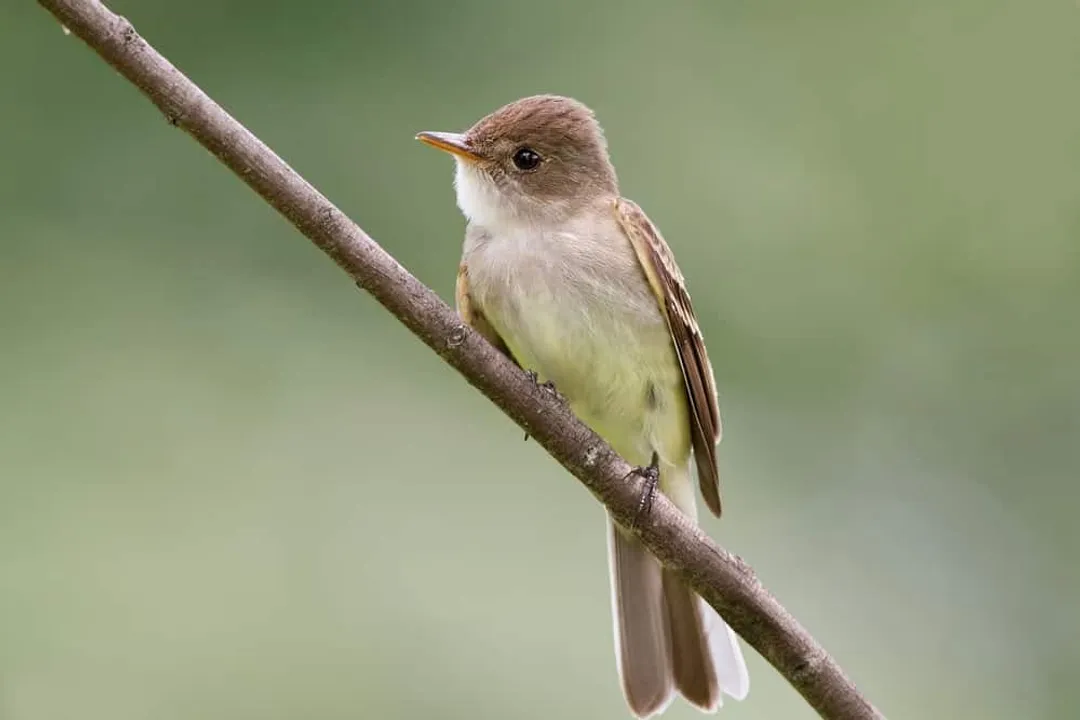
While the global conservation listing might suggest stability, populations in the arid western United States face acute, localized risks stemming mainly from human alteration of their essential habitat. The most significant pressure impacting the critical willow and cottonwood stands is related to water availability. When water is diverted from streams and rivers for agricultural irrigation or municipal supply, the local water table drops significantly. This desiccation causes the necessary dense, water-dependent plant communities that the flycatchers rely on for breeding cover to dry out and degrade, directly preventing successful nesting activities.
Related Questions
How does the Willow Flycatcher's two-part song, rendered as *fee-bee*, differ from the Alder Flycatcher's song?What specific field mark, though sometimes subtle, is crucial for identifying the Willow Flycatcher?What habitat structure is most strongly required by the Willow Flycatcher, influencing its presence?What sharp, clear call does the Willow Flycatcher give when it is not actively singing on its breeding territory?What is the primary method the Willow Flycatcher uses to procure its insect diet?What adornments are sometimes used on the outer surface of the Willow Flycatcher's nest structure?To which geographic regions do long-distance migrant Willow Flycatchers undertake their southward journey?What management practice is cited as a major contributor to the decline of riparian habitat for western populations?What is the typical clutch size range observed in the nests of the Willow Flycatcher?Which two specific plant species are Willow Flycatchers strongly associated with in California's moist, dense thickets?