Willow Flycatcher Evolution
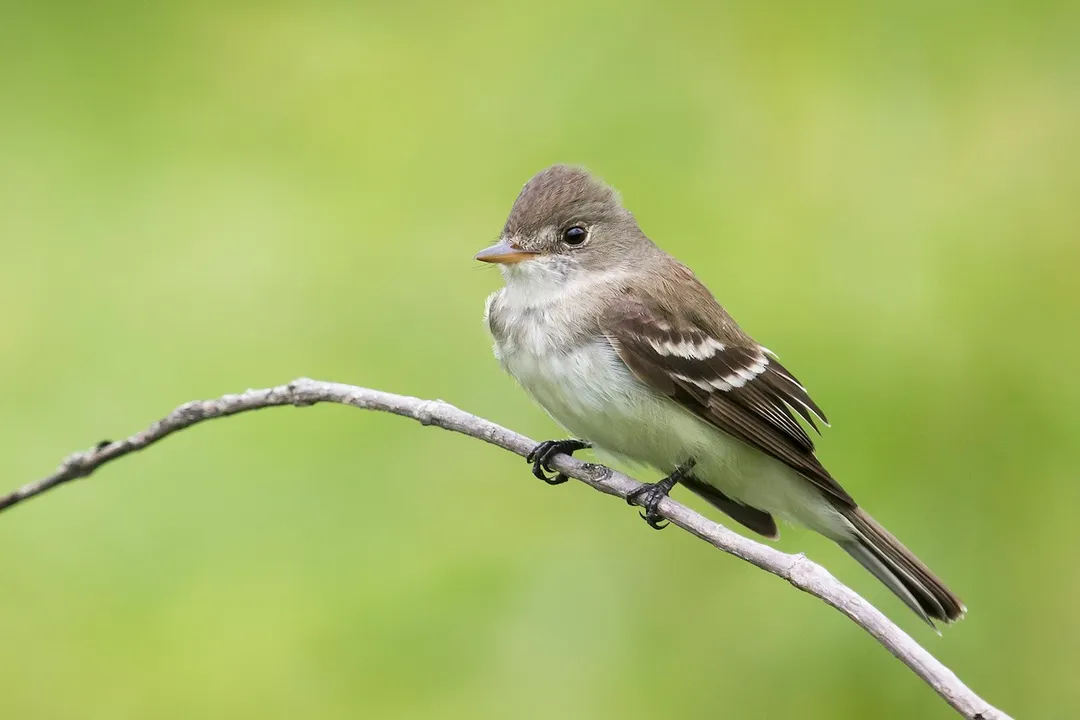
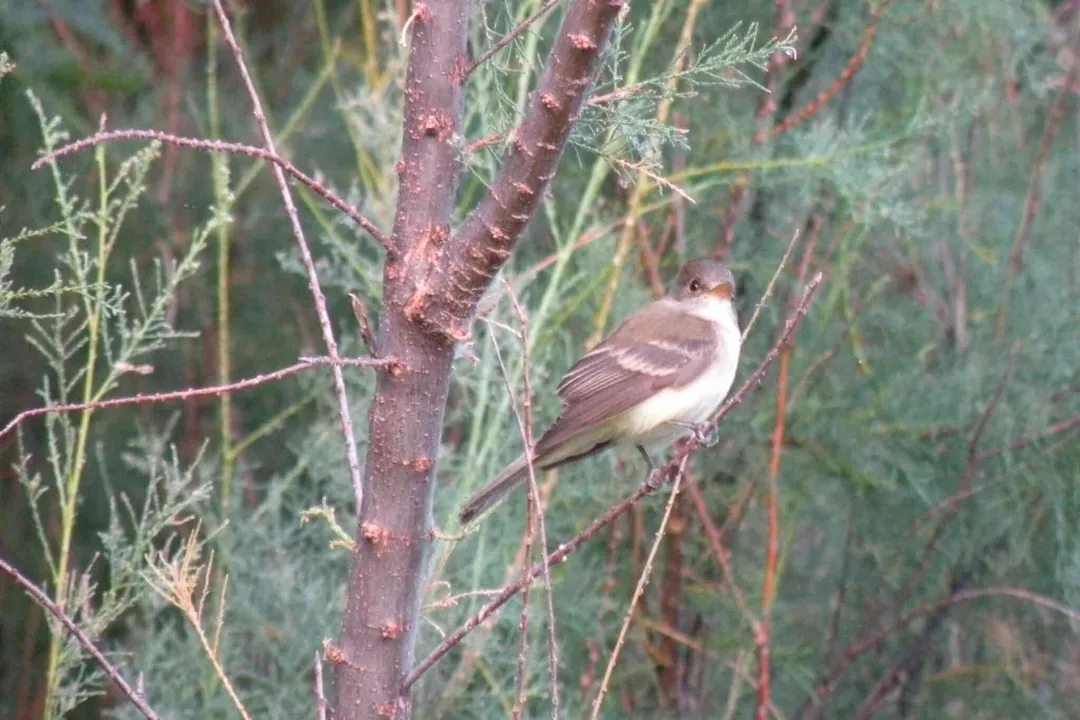
The Willow Flycatcher, a small songbird often recognized more by its descending “fee-bee” call than by a striking appearance, sits quietly at the epicenter of a major biological discovery regarding evolutionary speed. While its drab olive-green and white plumage might blend into the dense, shrubby habitats it favors, its genetic makeup is signaling a dramatic, ongoing story of adaptation in real time. This seemingly modest inhabitant of riparian corridors across North America is providing scientists with a rare, up-close look at how a species adjusts its very blueprint to cope with rapidly changing environmental conditions, specifically the accelerating shifts driven by climate change. [1][4][9]
# Small Bird Life
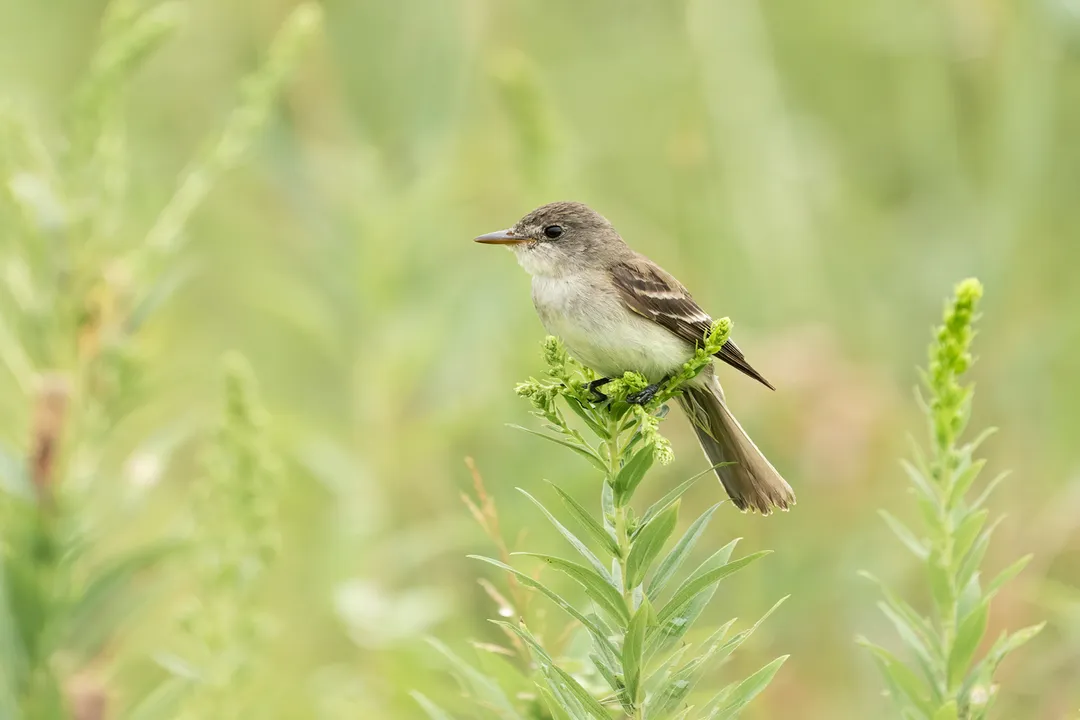
To appreciate the evolutionary drama unfolding within the Willow Flycatcher (Empidonax traillii), one must first understand its requirements. This is a bird of thickets, typically found near water sources—willow thickets, alder groves, and wet meadows—making its existence inherently tied to healthy riparian ecosystems. [2] They are Neotropical migrants, breeding across much of the northern United States and Canada and wintering in Mexico and Central America. [2][7] The species is divided into several subspecies, reflecting historical isolation and local adaptation across its wide range, though these distinctions are increasingly being viewed through a modern genetic lens. [8]
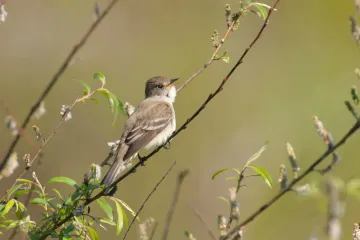
Physically, the Willow Flycatcher is small, measuring about 5.5 inches long. [2] Its features are subtle: an eye-ring that is often described as incomplete or weak, pale grayish-white underparts, and olive-green upperparts. [2] This visual subtlety contrasts sharply with the complexity of its song, which is key to distinguishing it from other close relatives in the Empidonax genus, often called the "Empidonax shuffle" when birders try to identify them visually. [2] Their diet consists almost entirely of insects, caught in short, rapid sallies from a low perch within the dense cover, a foraging strategy perfectly suited to the dense, brushy habitat they occupy. [2] In places like California, where they are a species of special concern or listed as threatened in certain regions, the loss or degradation of these specific streamside habitats presents an immediate existential threat, irrespective of the long-term evolutionary pressures. [6]
# Systematics Diversity
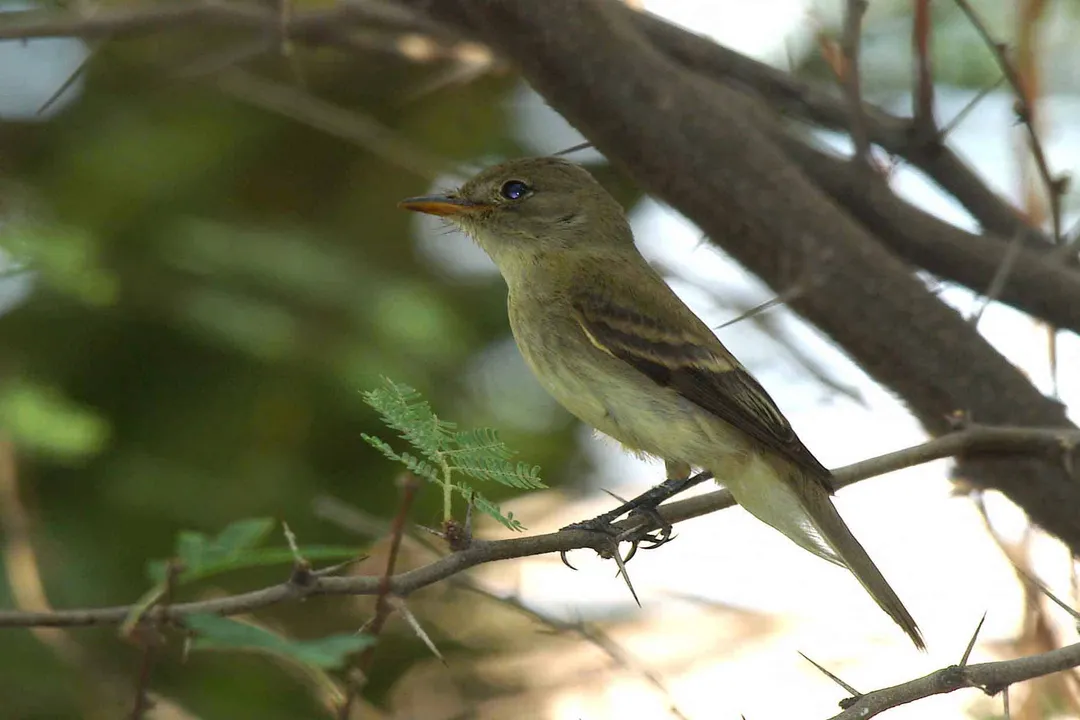
The historical classification of the Willow Flycatcher recognizes four primary subspecies, reflecting its broad North American distribution: E. t. brewsteri, E. t. traillii, E. t. extimus, and E. t. wrightii. [8] These distinctions were traditionally based on morphology—measurements of wing length, bill size, and subtle color variations—as well as slight differences in breeding location and migratory timing. [8] For instance, the western subspecies, wrightii, generally tends to breed at higher elevations than the nominate traillii found further east. [8] The presence of distinct, yet geographically separated, populations naturally suggests a history of evolutionary divergence, driven by geographic barriers and local environmental matching over millennia. [8]
However, modern genetic techniques are now challenging and refining these established boundaries. The classic view often portrayed these subspecies as relatively stable entities, each adapted to its specific region. [8] Recent research, particularly that focusing on genomic comparisons across their range, reveals a much more dynamic picture of population structure and gene flow, suggesting that the environmental pressures driving adaptation might be acting on genetic variation that transcends these neat, geographically defined boxes. [5] The differences in wing shape or bill size that define a subspecies may not be the only, or even the most important, adaptations under selection right now. [5]
# Climate Pressure
The primary evolutionary engine currently influencing the Willow Flycatcher is anthropogenic climate change. [1] As temperatures rise, the conditions that define the bird’s ideal breeding habitat are shifting geographically and temporally. [4] Willow Flycatchers are highly dependent on the specific vegetation structure provided by moist, dense shrubs, often at higher elevations in the West or in northern latitudes. [2][6] When the climate warms, the upper limits of their suitable breeding range are effectively moving upslope or northward, forcing populations to track these shifting thermal envelopes. [4][9]
This need to track suitable climate is creating a powerful selection pressure. Birds that arrive earlier or breed later in the season might have a better chance of successfully raising young before conditions become too hot or resources become scarce. [4] Likewise, birds that can establish successful territories in slightly warmer or drier conditions—or move their entire range at a faster pace than the habitat changes—are the ones whose genes are being passed on. [1][9] For a migratory species like the Willow Flycatcher, this pressure is twofold: adaptation must occur both on the breeding grounds (phenology, local tolerance) and potentially during migration or wintering, although the breeding ground adaptation is where much of the current scientific focus lies. [4]
# Genetic Adaptation Speed
The most compelling aspect of the Willow Flycatcher story is the rate at which genetic adaptation is being documented. Researchers have studied the bird’s genome to find specific markers, or genes, that are rapidly changing in frequency. [1][5] This is evolution happening not over hundreds of thousands of years, as is often inferred from the fossil record, but over the span of decades—essentially, within the lifetime of the historical period captured by contemporary tissue samples. [4]
Studies indicate that genetic changes linked to climate adaptation are appearing faster in this species than might be predicted based on typical rates of evolution observed in non-managed or non-anthropogenically stressed populations. [5] It appears that the intensity of modern climate change acts as a powerful, constant selective sieve, quickly filtering out individuals whose genetic makeup is poorly suited to the new thermal landscape. [1][9] The researchers found evidence that certain genetic variants associated with adaptation to warmer conditions have become much more common in southern populations, suggesting they are rapidly spreading through the gene pool. [5]
Consider the typical time scale. If we look at speciation events in the fossil record, they often span hundreds of thousands of years, showing incremental changes. The documented shift in the Willow Flycatcher’s genetic markers related to climate tolerance, however, seems compressed into less than a century. [4] This rapid genomic turnover suggests that when selection pressure is exceptionally strong and widespread, the evolutionary response can be surprisingly swift, providing a flicker of hope for the species' persistence. [9]
One interesting side effect of this rapid selection involves the very definition of the subspecies. If adaptation to local temperatures is the dominant pressure across the range, we might expect the genetic signatures of 'warm adaptation' to appear in high-elevation populations in Arizona and in low-elevation populations in Kansas, even if those populations belong to different traditional subspecies. [5] This suggests that the future structure of the species might be driven more by functional genetic clines (gradations of traits) related to temperature tolerance rather than neat geographical lines drawn decades ago.
It is fascinating to contrast this documented speed with what we know about other avian responses. Historically, adaptation to features like island isolation or new predator introductions resulted in measurable, but often slower, phenotypic shifts. The Willow Flycatcher’s current predicament forces evolution to act on traits directly linked to physiological tolerance (heat stress, timing of resource availability), which are often under tighter genetic control and can respond more immediately than, say, changes in beak morphology driven by long-term shifts in seed availability. [4] The observed phenomenon might represent a near-maximal rate of evolution possible for a complex, long-lived migrant species in response to a pervasive selective agent like global warming.
# Local Contexts and Selection
The impact of this broad evolutionary pressure is not uniform; it manifests differently depending on the local ecology of the breeding sites. Imagine two distinct breeding territories: one a high-elevation meadow in the Rocky Mountains, and the other a lowland stream corridor in the Midwest. In the Rockies, the primary driver might be the necessity for earlier snowmelt timing to match insect hatches at the higher altitude. [6] Birds genetically predisposed to initiate breeding earlier, even by just a few days, will secure better resources for their nestlings. Conversely, in the Midwest, where the absolute summer temperatures are already higher, selection might heavily favor variants conferring better resistance to thermal stress during peak daylight hours. If we could map the frequency of these specific genetic markers across the species' breeding range, we might expect to see a mosaic pattern—not just a simple north-to-south gradient, but hotspots of specific adaptive alleles correlating with local thermal extremes or the rate of local habitat change. [1] This spatial variation in selection pressure is what drives the complexity of the observed genetic landscape, making simple categorization difficult.
# Implications for Conservation
For conservation managers, the discovery of rapid evolution presents a complex challenge and, perhaps, an unexpected advantage. On one hand, it confirms the immediate threat: if a species cannot adapt quickly enough, localized extinctions are likely, especially where habitat fragmentation prevents populations from tracking suitable climate niches. [1][6] The birds need healthy, connected corridors to move their genes and themselves to new, viable areas. [9]
On the other hand, this rapid plasticity suggests the species possesses a greater inherent capacity to cope with the changes than previously assumed, provided the physical habitat remains available. [9] If a flycatcher population has already evolved genetic mechanisms to handle increased heat or earlier springs in a southern breeding location, those adaptive genes—if they can spread northward—offer a buffer for the northern populations that are just beginning to feel the stress. [5] Conservation efforts must therefore focus not just on protecting existing willow thickets, but on maintaining the genetic diversity that fuels this rapid adaptation, ensuring that the full spectrum of adaptive alleles remains present across the metapopulation. [5] Protecting a broad network of high-quality, diverse habitats across the migratory flyway becomes paramount, allowing different local environments to act as evolutionary testing grounds. [2]
The Willow Flycatcher, by responding so visibly in its genome to the pressures of the modern era, serves as a potent biological model. It underscores that evolution is not merely a phenomenon of deep time but an active, ongoing process that can be measured in years, not eons, when the environmental stakes are sufficiently high. [4] Observing this adaptation in action gives researchers empirical data on the speed of evolution under intense selection, information critical for predicting how other lesser-studied species might fare in a rapidly warming world.
Related Questions
#Citations
This endangered bird is evolving to adapt to climate change
Willow Flycatcher Life History
Willow Flycatcher
This songbird's genes may show how climate change has ...
Evolutionary potential mitigates extinction risk under climate ...
Life history account for Willow Flycatcher
WILLOW FLYCATCHER | The Texas Breeding Bird Atlas
Systematics - Willow Flycatcher - Empidonax traillii
A flicker of hope for an endangered flycatcher