Which sense is considered relatively poor in wombats, compelling them to rely on other faculties for navigation and awareness?
Answer
Eyesight.
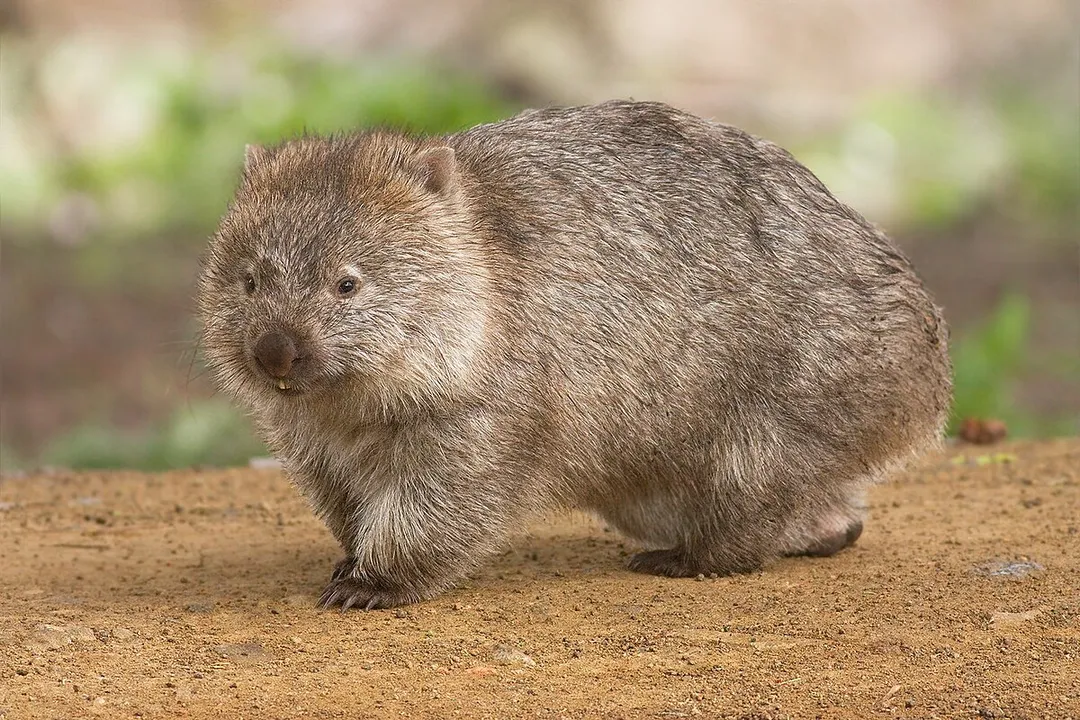
Wombats are primarily nocturnal and subterranean creatures, meaning their reliance on visual perception is diminished compared to terrestrial, diurnal animals. The text explicitly notes that wombats have relatively poor eyesight, which necessitates compensation through other heightened sensory organs. To successfully navigate their environment, locate preferred food sources, recognize conspecifics, and detect impending danger both above and below ground, they depend significantly more on their acute senses of smell (olfaction) and hearing (auditory perception).
Related Questions
How does the wombat utilize its cartilaginous plate for defense when inside its burrow?Why does the female wombat possess a backward-facing pouch (marsupium) unlike other marsupials?What characteristic allows wombat incisors to effectively handle tough, abrasive vegetation like grasses?Which structural feature on the forelimbs is central to the wombat's capability as an excavator?What is the primary digging biomechanical method employed by wombats, contrasting with some other burrowers?What key facial difference separates the Southern Hairy-nosed Wombat from the Bare-nosed Wombat?Which sense is considered relatively poor in wombats, compelling them to rely on other faculties for navigation and awareness?What structural trait makes a wombat's rear end crucial for defense against predators like dingoes?What trade-off is accepted in the wombat’s above-ground gait when considering its limb specialization?What characteristic of the Common Wombat's nose distinguishes it from the Southern Hairy-nosed Wombat?