What is the primary digging biomechanical method employed by wombats, contrasting with some other burrowers?
Answer
Their method is primarily brute-force scraping and pushing, aided by their low center of gravity.
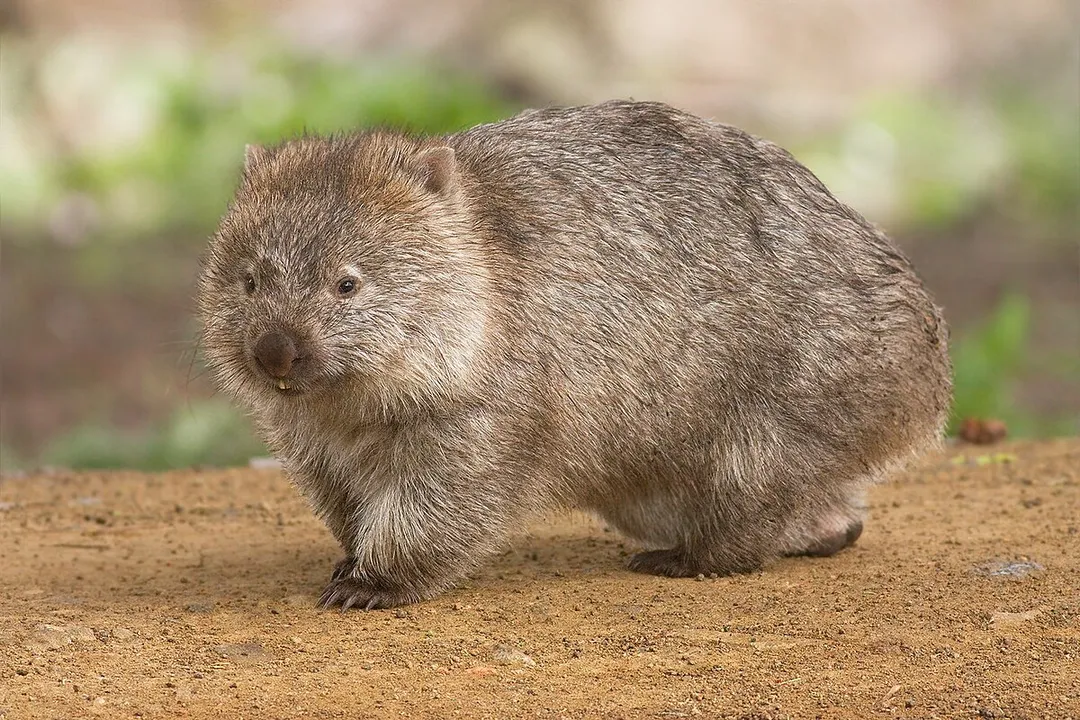
Wombats rely heavily on sheer upper-body strength and a low center of gravity to execute their excavation tasks. Unlike some other burrowing mammals that might utilize rotational movements or intricate shoveling patterns, the wombat's approach is centered on brute force. They rapidly dig using their powerful front paws to scrape and push the loosened material backward. This biomechanical choice appears to be an evolutionary adaptation optimized for the characteristics of Australian soils, prioritizing the rapid removal of large volumes of material over the delicate refinement of tunnel interiors.
Related Questions
How does the wombat utilize its cartilaginous plate for defense when inside its burrow?Why does the female wombat possess a backward-facing pouch (marsupium) unlike other marsupials?What characteristic allows wombat incisors to effectively handle tough, abrasive vegetation like grasses?Which structural feature on the forelimbs is central to the wombat's capability as an excavator?What is the primary digging biomechanical method employed by wombats, contrasting with some other burrowers?What key facial difference separates the Southern Hairy-nosed Wombat from the Bare-nosed Wombat?Which sense is considered relatively poor in wombats, compelling them to rely on other faculties for navigation and awareness?What structural trait makes a wombat's rear end crucial for defense against predators like dingoes?What trade-off is accepted in the wombat’s above-ground gait when considering its limb specialization?What characteristic of the Common Wombat's nose distinguishes it from the Southern Hairy-nosed Wombat?