How does the specialized dentition of Wombats counteract wear from their diet?
Answer
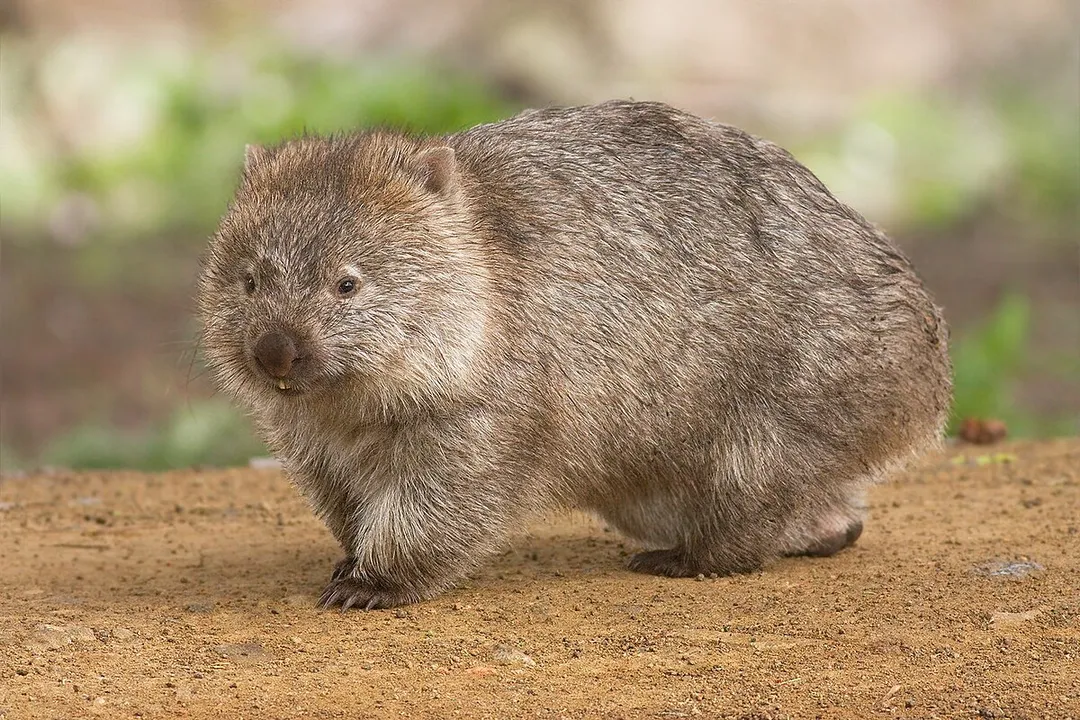
The teeth, including incisors and molars, lack roots and grow continuously
Wombats consume abrasive materials such as tough grasses, bark, and roots as part of their herbivorous grazing diet. To counteract the severe abrasive wear these fibrous materials cause on their chewing surfaces, their dentition shares a rodent-like characteristic: the teeth are rootless and constantly erupt from the jaw, ensuring that as the chewing surface wears down, new material pushes forward to maintain functional bite effectiveness.
Related Questions
To which marsupial are Wombats most closely related anatomically?What is the functional purpose of the female Wombat's rear-facing pouch?How does the specialized dentition of Wombats counteract wear from their diet?What is the primary defensive function of the Wombat's toughened rear hide?What is the maximum speed recorded for a Wombat over short, rapid bursts?What distinguishing feature characterizes the nose of the Bare-nosed Wombat (*Vombatus ursinus*)?What specific manipulative ability does the Bare-nosed Wombat possess in its forepaws lacking in Hairy-nosed Wombats?What specialized structure facilitates the Wombat's role as the world's largest burrowing animal?Where do Wombats typically prefer to establish their main shelter systems regarding landscape features?What are the physical characteristics of the claws equipping the Wombat's digging apparatus?What is the total count of teeth indicated by the Wombat's specified dental formula?