Wombat Physical Characteristics
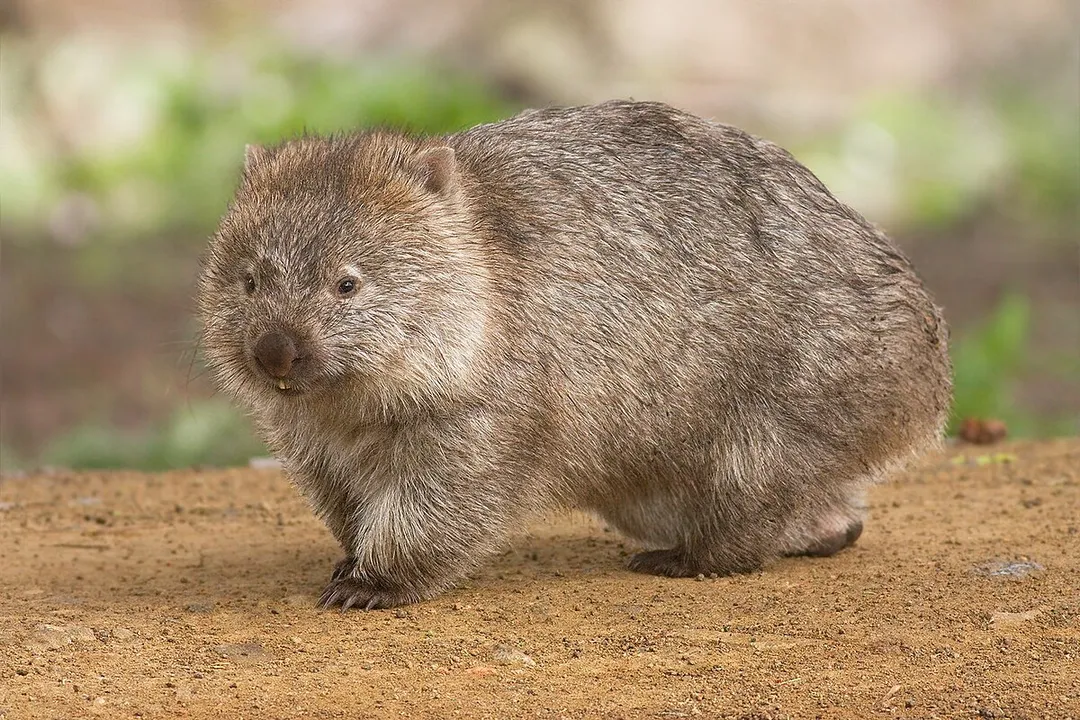
Wombats, those stout, low-slung marsupials native to Australia, possess a suite of physical characteristics perfectly tailored for their existence as expert burrowers. Often likened to small bears due to their sturdy appearance, they are, in fact, most closely related to koalas. These animals are highly adapted for a subterranean lifestyle, evident in nearly every aspect of their anatomy, from their powerful shoulders to their unique dental structure.
# Build and Size
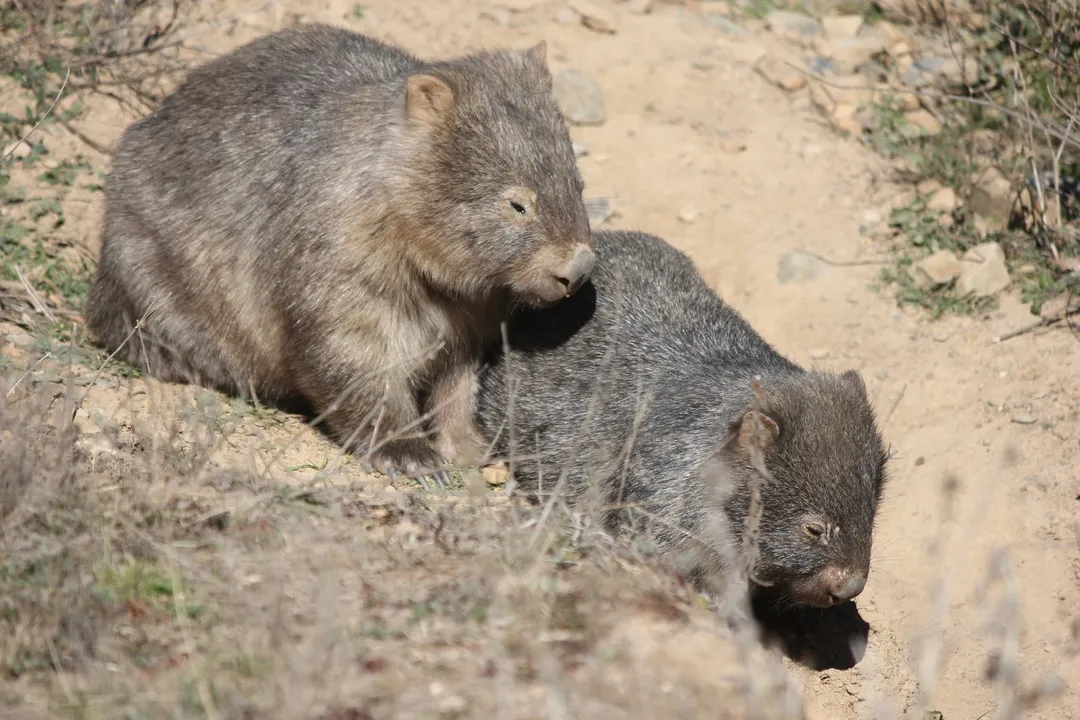
The general impression of a wombat is one of sheer muscular strength packed into a compact frame. They are defined as short-legged, muscular quadrupeds with a distinctively barrel-shaped body. Wombats claim the title of the world's largest burrowing animal, second only to certain kangaroo species among all marsupials in overall size.
Size metrics can vary slightly across the three extant species: the Common (or Bare-nosed) Wombat, the Southern Hairy-nosed Wombat, and the critically endangered Northern Hairy-nosed Wombat. Generally, they reach lengths of about 1 meter (or roughly 3.3 feet) from nose to the stub of their tail. Weights typically fall between 20 and 35 kilograms (44 to 77 pounds), though some measurements indicate weights reaching up to 36 kg. It is worth noting that the island subspecies of the Bare-nosed Wombat are generally smaller than their mainland counterparts.
Despite their deceptively slow, shuffling gait—often described as waddling—wombats are capable of surprising speed when necessary, clocking bursts of up to 40 kilometers per hour (about 25 miles per hour) over short distances. Their movement is built for efficiency over rugged terrain and rapid excavation, not long-distance travel.
# Species Distinctions Face and Fur
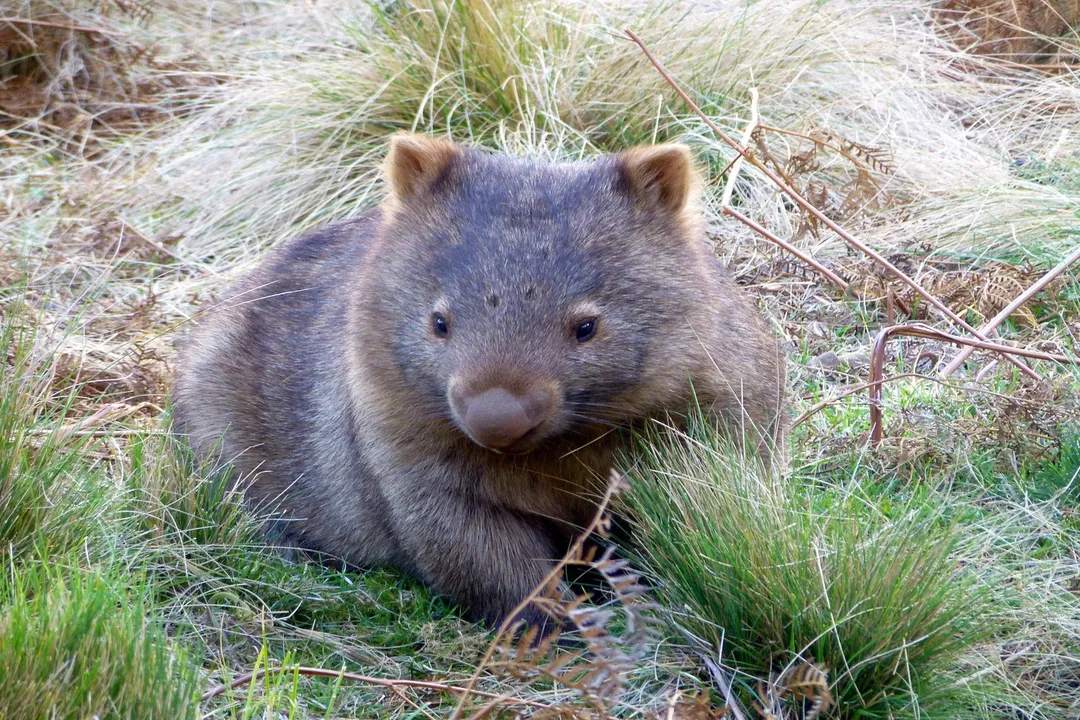
While all wombats share the fundamental robust body plan, distinct physical traits differentiate the Vombatus genus from the Lasiorhinus genus, particularly concerning the head and snout.
The most telling feature used to distinguish the Bare-nosed Wombat (Vombatus ursinus) is its large, naked nose covered in grainy skin. Conversely, the two hairy-nosed species, both belonging to the genus Lasiorhinus, have a muzzle that is covered with fine hairs. The Northern Hairy-nosed Wombat's nose is described as having long whiskers extending from its sides, which likely aids in nocturnal navigation. Furthermore, the hairy-nosed species tend to possess larger ears compared to the common wombat, which is characterized by short, slightly rounded ears.
Coat texture and color are also variable. The Bare-nosed Wombat often possesses coarse fur, whereas the hairy-nosed varieties typically have softer coats. Coloration across all species provides camouflage against the landscape, ranging from sandy brown or tan to grey or glossy black.
A feature common to the females across all species is the rear-facing pouch. This is a key physical adaptation for a digging mammal, as the backward opening prevents the developing joey and the pouch lining from becoming fouled with soil and debris during excavation.
# Digging Apparatus
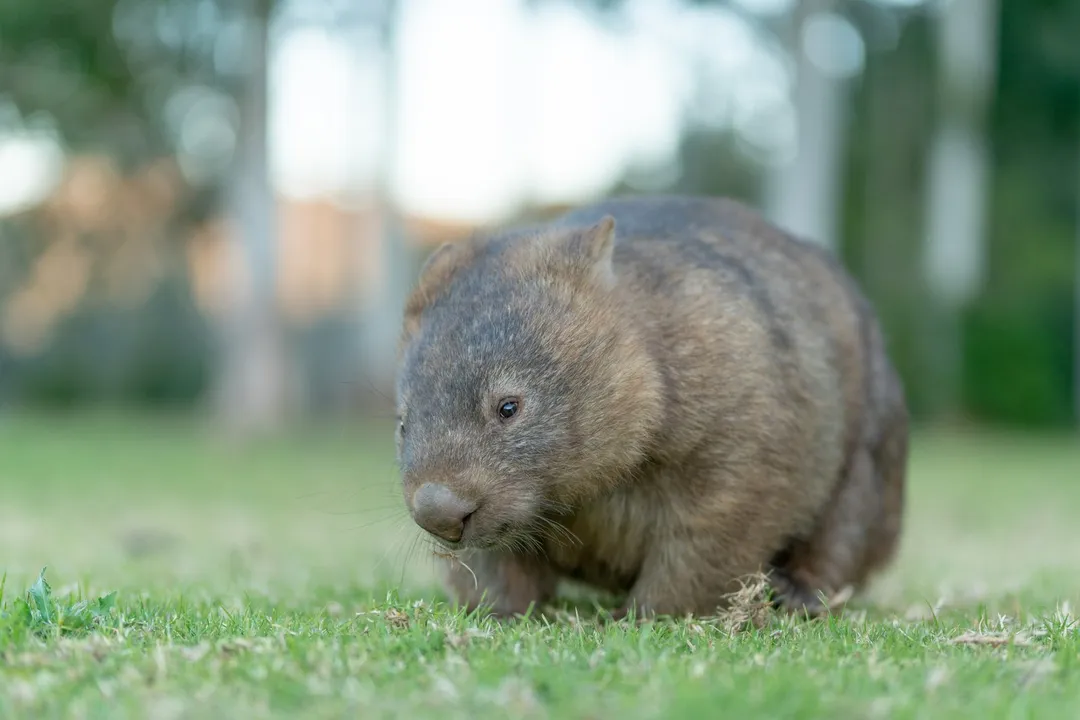
The wombat's status as the world's largest burrower is facilitated by its specialized limbs, shoulders, and claws. They possess short, muscular legs and powerful forearms, supported by exceptionally strong shoulder musculature that bears the brunt of the digging effort.
Both the front paws and hind feet are broad and equipped with five digits. Critically, these digits are armed with long, strong, and broad claws, perfectly engineered for tearing through tough soil and roots. Wombats use their forepaws for active digging and pushing material aside, while their hind legs assist in moving the excavated soil out of the burrow. They move primarily by walking on the soles of their feet, which are supported by thick pads.
Interestingly, there is a subtle functional difference in the forepaws between the major groups. The Bare-nosed Wombat's front paws are noted as being quite dexterous, allowing them to grasp vegetation for feeding, and they even possess the ability to climb due to this dexterity. However, the Hairy-nosed Wombat cannot form a fist with its front paw, restricting its ability to pick up and manipulate objects in the same way. This difference suggests that while both species are phenomenal excavators, the Common Wombat has developed a marginally more versatile forelimb structure for non-burrowing tasks, such as ascending small obstacles or manipulating bulky food items before ingestion.
# Internal and External Armor
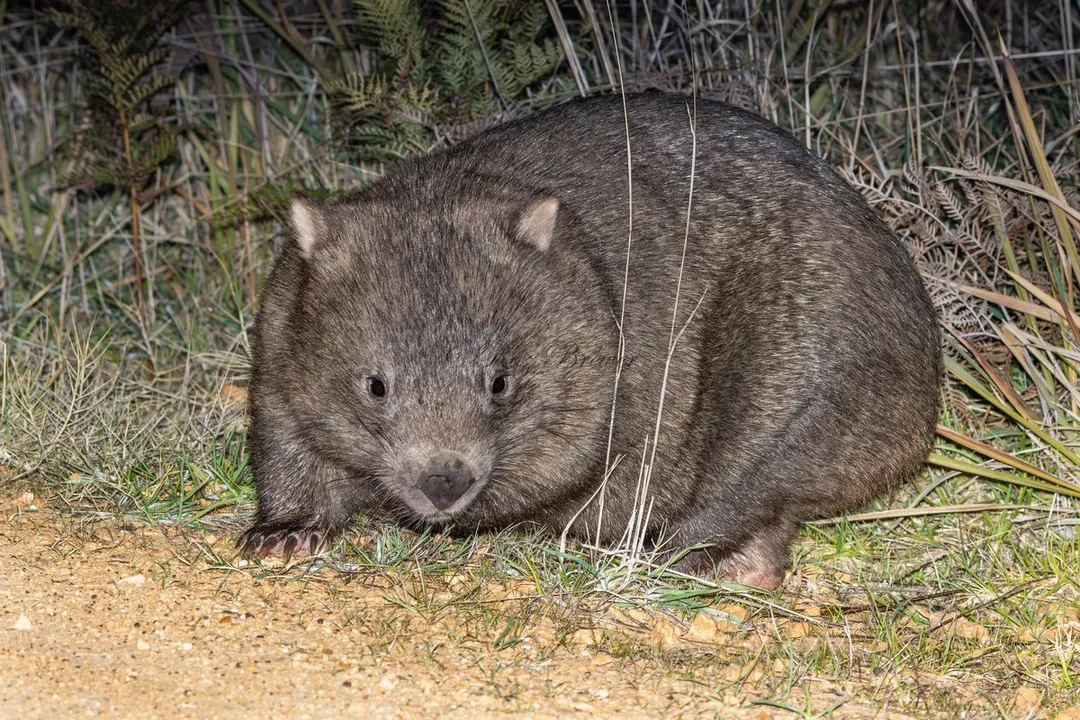
Beyond the physical tools for construction and defense, wombats carry specialized structures internally and externally that support their diet and protect them from predators.
Their dentition is highly specialized for their herbivorous, grazing diet, which includes tough grasses, bark, and roots. Like rodents, all wombat teeth, including their incisors and molars, lack roots and grow continuously. This ever-growing structure is necessary to counteract the severe abrasive wear incurred from gnawing tough, fibrous vegetation. The dental formula confirms this rodent-like arrangement: 1.0.1.4 over 1.0.1.4, totaling 24 teeth.
Perhaps the most well-known physical adaptation is the toughened rear hide. The posterior region of the wombat's body is shielded by extremely thick, hard skin, much of which is composed of cartilage. This feature functions as a protective shield. When a wombat retreats into its burrow while under attack, it wedges its rump against the tunnel roof or wall, effectively blocking entry. Although popular stories suggest they crush predators' skulls by using their powerful legs to smash the intruder's head against the roof, solid evidence for this specific action is lacking. However, the sheer force generated by their powerful legs combined with the unyielding nature of their rump makes them formidable defenders in confined spaces.
Considering the soil coloration observed on some individuals, one might make an observation about the environment itself. A Bare-nosed Wombat whose coarse coat is stained noticeably red may have recently excavated or spent significant time near iron-rich clay slopes. Given that wombats prefer to establish their main shelters on slopes above creeks and gullies for good drainage, this staining can act as a visual indicator of recent burrowing activity in that specific soil type, reflecting their innate preference for well-drained terrain for their complex tunnel systems.
Related Questions
#Citations
Wombats (Facts & Photos) - Bush Heritage Australia
Wombat - Wikipedia
Bare-nosed Wombat - The Australian Museum
Physical Characteristics of the Wombat - Wombania
Wombats | Native animals - Environment and Heritage
Wombat Fact Sheet | Blog | Nature - PBS
Lasiorhinus krefftii (northern hairy-nosed wombat) | INFORMATION
Southern Hairy-nosed Wombat - Columbus Zoo