Which environmental feature do Black-tailed Rattlesnakes often prefer for cover and thermal regulation?
Answer
Large, sun-warmed boulders or rock piles
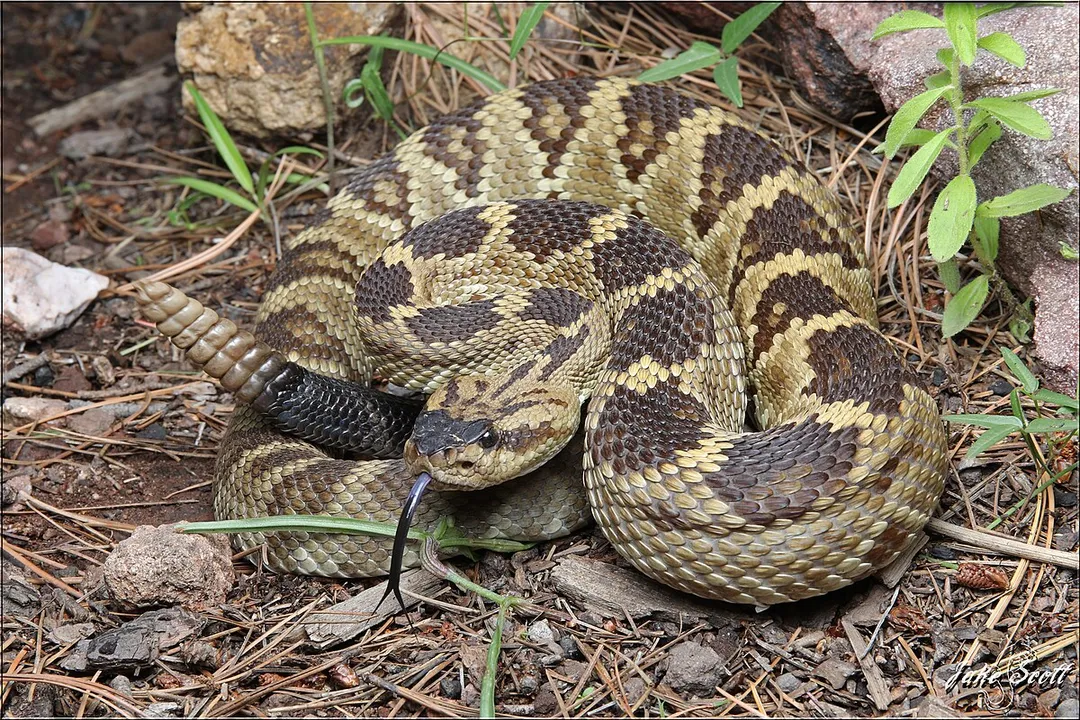
The Black-tailed Rattlesnake exhibits specific behavioral associations with topographical features in its preferred habitats. While they inhabit varied elevations across rocky terrain, foothills, and mountains, a practical observation for identification involves noticing their tendency to congregate near large boulders or established rock piles. These geological features serve a dual purpose: they provide excellent, safe cover, helping the snake utilize its camouflage, and they function as crucial sites for thermal regulation, allowing the ectothermic reptiles to bask and maintain optimal body temperature, particularly contrasted with their secretive hunting habits at night.
Related Questions
What characteristic coloration defines the tail of mature Black-tailed Rattlesnakes?What distinct feature is often present on juvenile *Crotalus molossus* but fades in adults?What primary category describes the venom composition of *Crotalus molossus*?Which environmental feature do Black-tailed Rattlesnakes often prefer for cover and thermal regulation?What reproductive strategy is characteristic of *Crotalus molossus*?The body coloration of *C. molossus* demonstrates considerable what?Which states are specifically mentioned as home to populations of *Crotalus molossus*?What constitutes the main component of the Black-tailed Rattlesnake's diet?What defensive action precedes striking if a Black-tailed Rattlesnake feels cornered?What anatomical feature distinguishes pit vipers like *C. molossus* from non-venomous constrictors?