What kind of rattlesnake has a black tail?
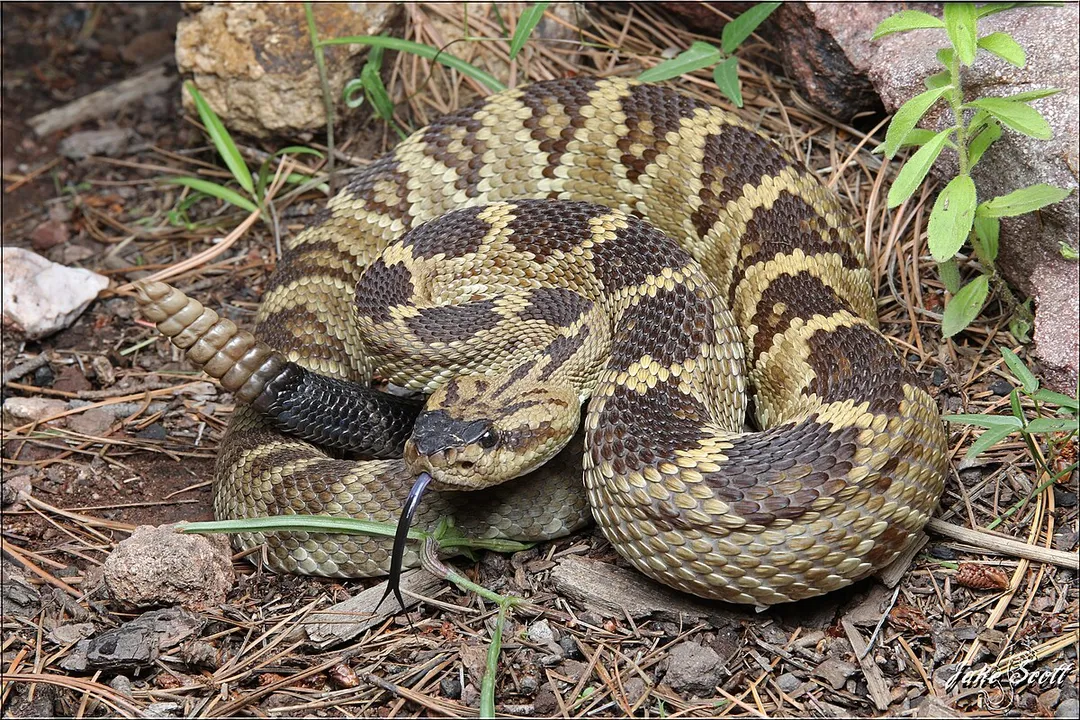
The question of which rattlesnake sports a black tail immediately requires narrowing the focus, as this common description applies to two distinct groups found in different parts of North America. The name often points to the Western Black-tailed Rattlesnake, scientifically classified as Crotalus molossus, which ranges through the southwestern United States and Mexico. [1][2] However, one must also consider the Eastern Black-tailed Rattlesnake, which is technically a subspecies of the Timber Rattlesnake, Crotalus horridus. [4] Understanding which snake one is observing often comes down to geography—are you in the deserts and mountains of Arizona, New Mexico, or Texas, or are you perhaps in the eastern half of the continent?[1][4]
# Western Focus
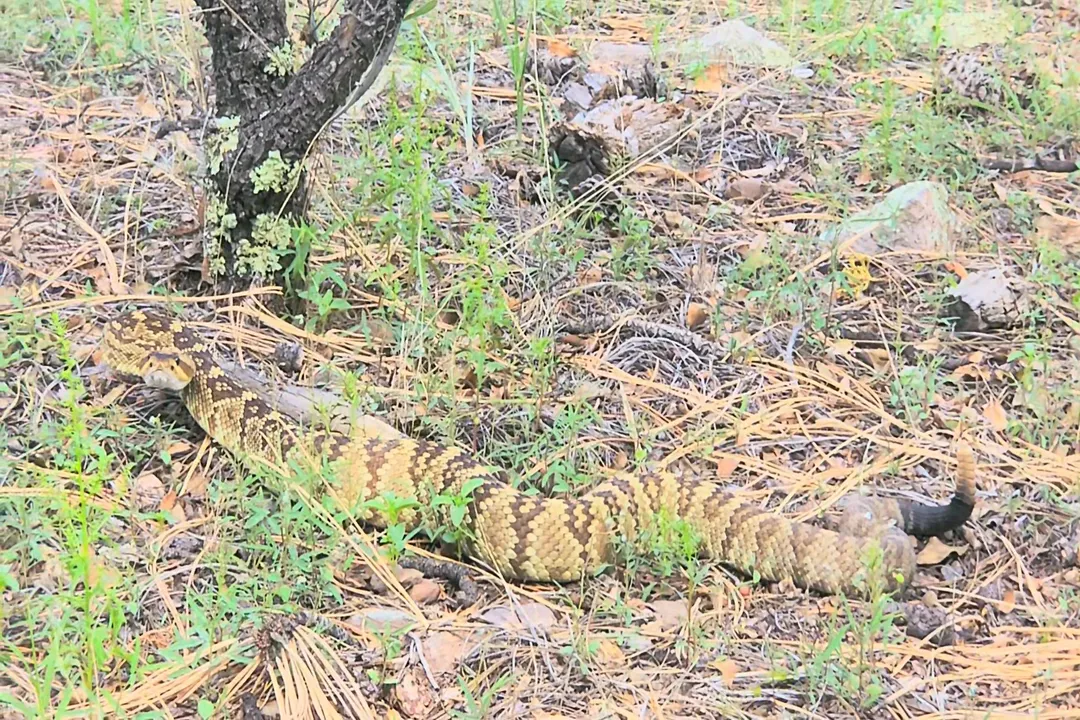
The Crotalus molossus complex is widely distributed across the American Southwest, inhabiting regions like Arizona, New Mexico, southern Nevada, Utah, Colorado, and parts of Texas and California. [1][7] In places like Arizona, they are frequently encountered, inhabiting habitats ranging from deserts to high-elevation mountains. [2][6] When people in these regions refer to a black-tailed rattlesnake, they are almost certainly referring to C. molossus. [2][8]
This species is recognized by several physical characteristics that distinguish it from other sympatric rattlesnakes, such as the Mojave or Western Diamondback. [1][2] They are generally stout-bodied snakes. While coloration can vary significantly depending on the subspecies and local environment—ranging from gray and olive to brownish-red—the tail provides the most reliable identifier when dealing with this group. [1][6]
# Tail Identification
For Crotalus molossus, the tail itself is uniformly black, extending from the rattle down to the vent. [1] This black coloration is a key field mark. In contrast to many other rattlesnakes where the tail may be banded, checkered, or fade into the body color, the tail of the C. molossus is distinctly dark. [1][7] Furthermore, the head of C. molossus often appears solid colored or has minimal markings compared to the heavily patterned heads of some relatives, although individuals can show a dark stripe running from the eye toward the jaw angle. [2] Juveniles often present a more distinct pattern that may become less obvious as they age. [7]
When looking at the rattle itself, the terminal segment, the part preceding the actual keratinous rattles, is also black. [6] This contrasts with the rattles of some other species where the rattle segments might be lighter or change color progressively. [1] A helpful way to conceptualize the difference is that for the Western Black-tailed Rattlesnake, the black is usually clean and solid on the tail, whereas other species might have tails that are heavily banded with black, or the black may only be present on the very tip near the rattle, not encompassing the entire tail length. [1][8]
# Eastern Contrasts
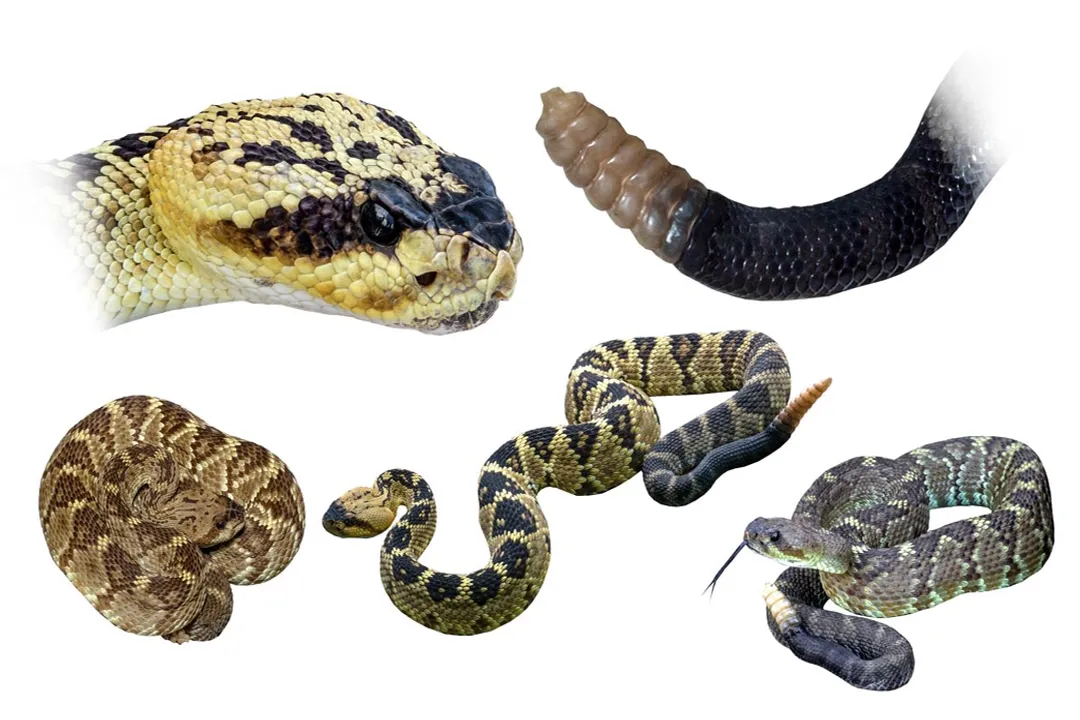
The common name can be confusing because a distinct population exists in the eastern United States that also carries the name: the Eastern Black-tailed Rattlesnake. [4] This snake is not a close relative of C. molossus; rather, it is a subspecies of the Timber Rattlesnake, Crotalus horridus. [4]
While both snakes share the descriptor "black-tailed," their appearance, location, and typical habitats diverge significantly. [1][4] Crotalus horridus generally inhabits forests and rocky areas throughout the eastern and midwestern United States. [4] The C. horridus subspecies known for the black tail typically has a dark, often black, tail that contrasts sharply with its typically yellow or brownish body pattern. [4] The body pattern itself is usually more pronounced, often featuring dark, chevron-like crossbands against a lighter ground color. [4] This banding is usually much more evident than the patterns seen on many C. molossus individuals, especially those from desert regions. [1][4]
If you encounter a rattlesnake with a black tail in, say, the dense deciduous forests of Pennsylvania or the mountainous regions of the Appalachians, it is far more likely to be the Crotalus horridus subspecies than Crotalus molossus, which does not occur there. [4] A good mental note for field identification is to immediately place the observation within the correct biogeographic zone; if you are west of the Great Plains, C. molossus is the likely candidate; if you are east of the Mississippi River or in the deep mid-Atlantic states, C. horridus is the focus. [1][4]

# Distinguishing Features Table
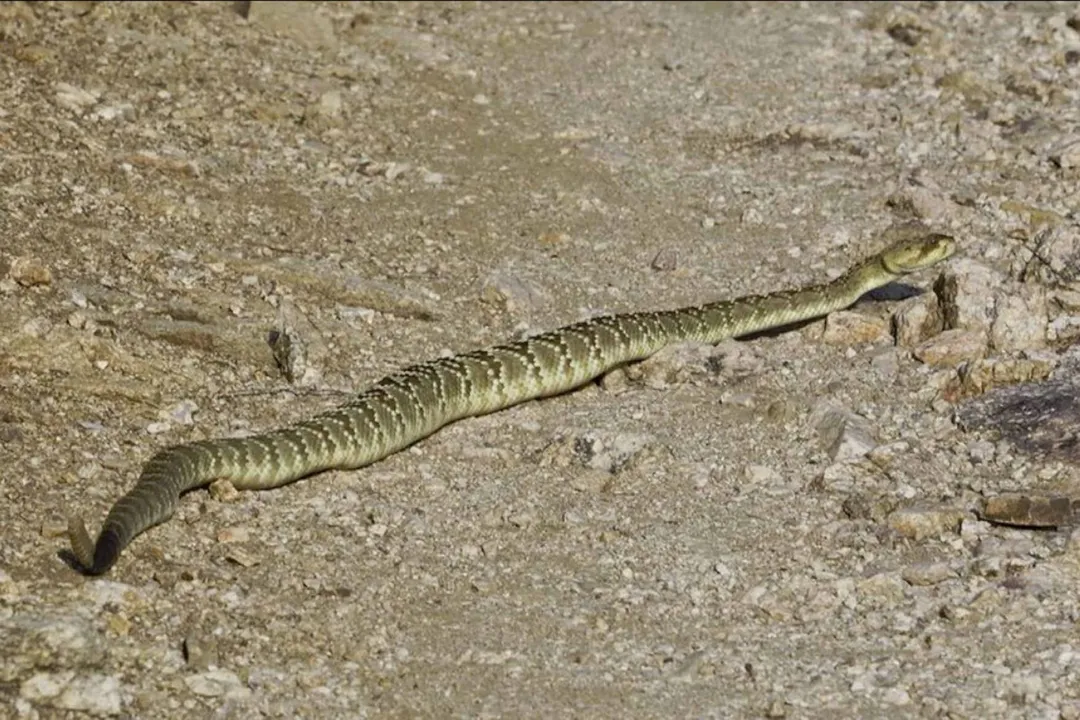
To assist in distinguishing these commonly confused snakes based on the characteristics provided, here is a comparison focusing on the two primary snakes bearing the name:
| Feature | Western Black-tailed (C. molossus) | Eastern Black-tailed (C. horridus subspecies) |
|---|---|---|
| Primary Range | Southwestern US, Mexico [1][2] | Eastern and Midwestern US [4] |
| Tail Color | Uniformly black from vent to rattle tip [1][6] | Black tail, often sharply contrasting with body [4] |
| Body Pattern | Can be solid or faintly patterned; browns, grays, olives [1][2] | Pronounced dark crossbands (chevrons) [4] |
| Rattle Base | Terminal segment before the rattle is black [6] | Varies, but the tail structure is key [4] |
# Habitat and Behavior in the Southwest
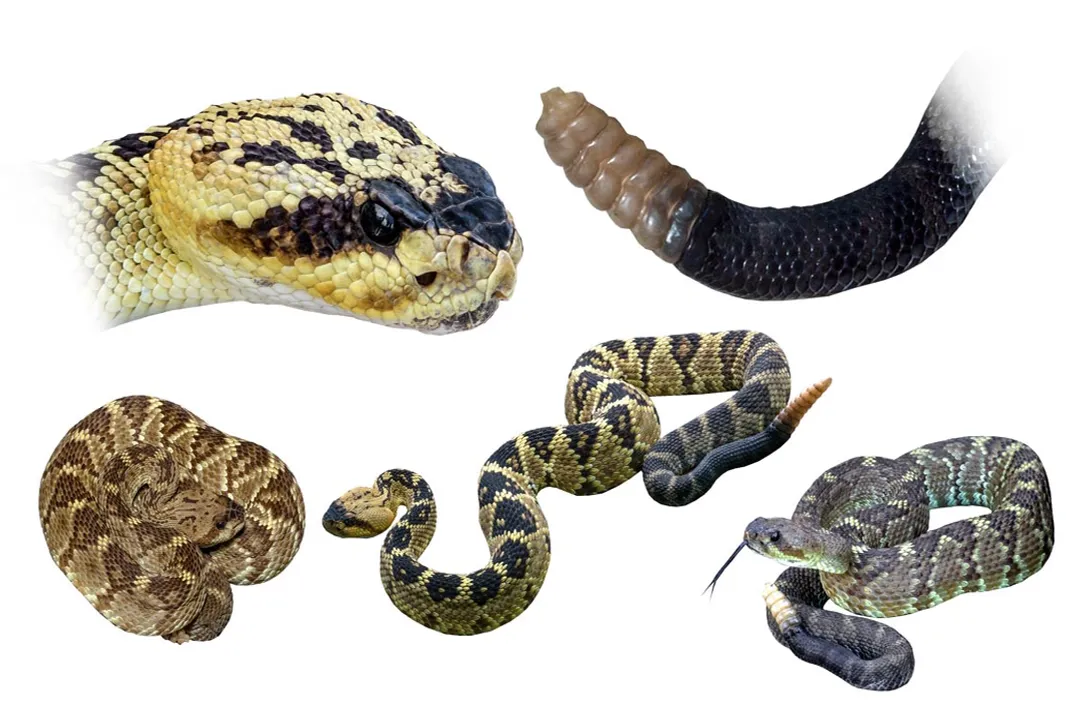
Focusing back on Crotalus molossus, their adaptability is noteworthy. In Arizona, they can be found from near sea level up to elevations around 7,000 or 8,000 feet, often favoring rocky hillsides, canyons, and riparian areas. [2][6] They are generally considered a relatively sedentary species compared to some desert dwellers, often utilizing the same general area for extended periods. [8] They are known to bask in the sun, frequently retreating to rock crevices or under brush for cover when disturbed or when the temperature rises too high. [2]
Sources indicate that they are often nocturnal or crepuscular, particularly during the hottest parts of the summer, though they can be seen moving during the day, especially in cooler months. [2][6] When threatened, like most rattlesnakes, they will employ their namesake adaptation—the rattle—as a warning. [8] In certain areas, like those around Tucson, C. molossus is one of the most commonly identified rattlesnakes encountered by the public. [6]
# Rattle Variability and Black Tails
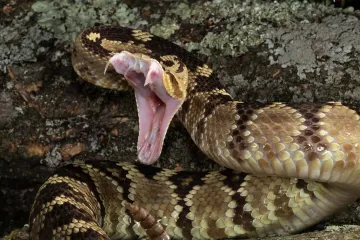
While the tail color is a primary identifier, it is important to remember that the rattle itself is not always uniformly colored, even on the C. molossus. The body of the snake is uniformly dark from the vent to the rattle, but the keratinous segments that make up the actual rattle can sometimes be lighter or may show color transitions as the snake grows and replaces them. [1][7] A snake that is identified as C. molossus based on its range and the solid black coloration of the tail leading up to the rattle should still be treated with caution, regardless of the exact shade of the oldest keratin segments at the very end. [8]
One interesting observation often noted in populations where pattern variation is high is that individuals whose bodies are very pale or heavily mottled can sometimes have tails that appear banded from a distance simply due to shadow or moisture, but upon closer inspection, the scales transition cleanly to solid black. [2] When observing potential C. molossus in the field, focusing on the transition point—the scale row just preceding where the rattle begins—is more informative than focusing solely on the texture or slight color variation of the final two or three rattle segments, as the body pattern fades abruptly into the solid black tail color. [6]
It is also worth noting that even within the C. molossus species, there are regional variants, such as Crotalus molossus molossus found in New Mexico, which shares the characteristic dark tail. [7] This consistency in the tail serves as a strong indicator across the species' broad range, provided the location confirms you are not in Eastern horridus territory. [1][4] If someone posts a picture online asking for identification in a Southwestern state, and the tail is clearly black, the expert consensus often leans heavily toward C. molossus unless significant, high-contrast banding is present across the entire dorsum. [5][9]
#Videos
The venomous Black-tailed rattlesnake of Arizona. Crotalus molossus
Related Questions
#Citations
Black-tailed rattlesnake - Wikipedia
BLACK-TAILED RATTLESNAKE Crotalus molossus
The venomous Black-tailed rattlesnake of Arizona. Crotalus molossus
Eastern Black-tailed Rattlesnake
2 different Black-tailed Rattlesnakes (Crotalus molossus) in two days ...
Black-Tailed Rattlesnake - Sabino Canyon Volunteer Naturalists
Crotalus molossus - New Mexico Herpetological Society
Snakes of Arizona / Northern Blacktailed Rattlesnake
Anyone know what snake this is? I know it's a diamondback but I can ...