What are the characteristics of a black-tailed rattlesnake?
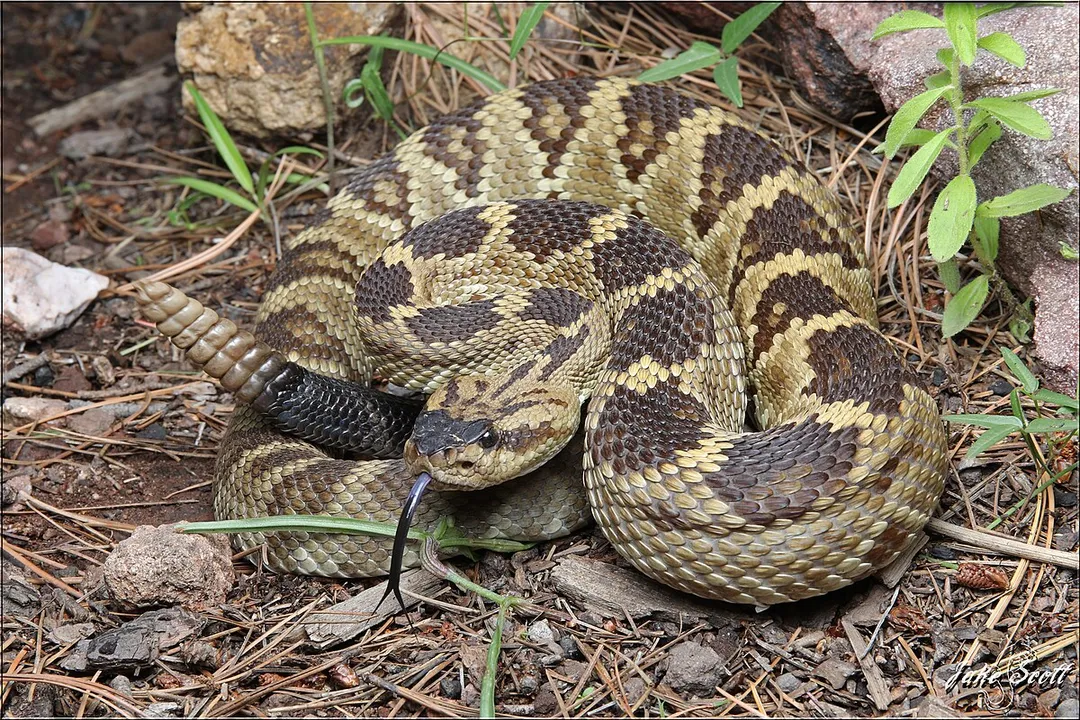
The Black-tailed Rattlesnake, scientifically known as Crotalus molossus, represents a significant and widespread group of venomous pit vipers inhabiting the arid and semi-arid regions of the southwestern United States and Mexico. [1][3] These snakes are often encountered by hikers, residents, and naturalists across their varied range, making a clear understanding of their physical characteristics and behaviors vital for safe coexistence. [5][6] They are not a single monolithic entity but rather a species encompassing several recognized subspecies, each adapted to its specific locale within the broader arid landscape. [1]
# Size Coloration
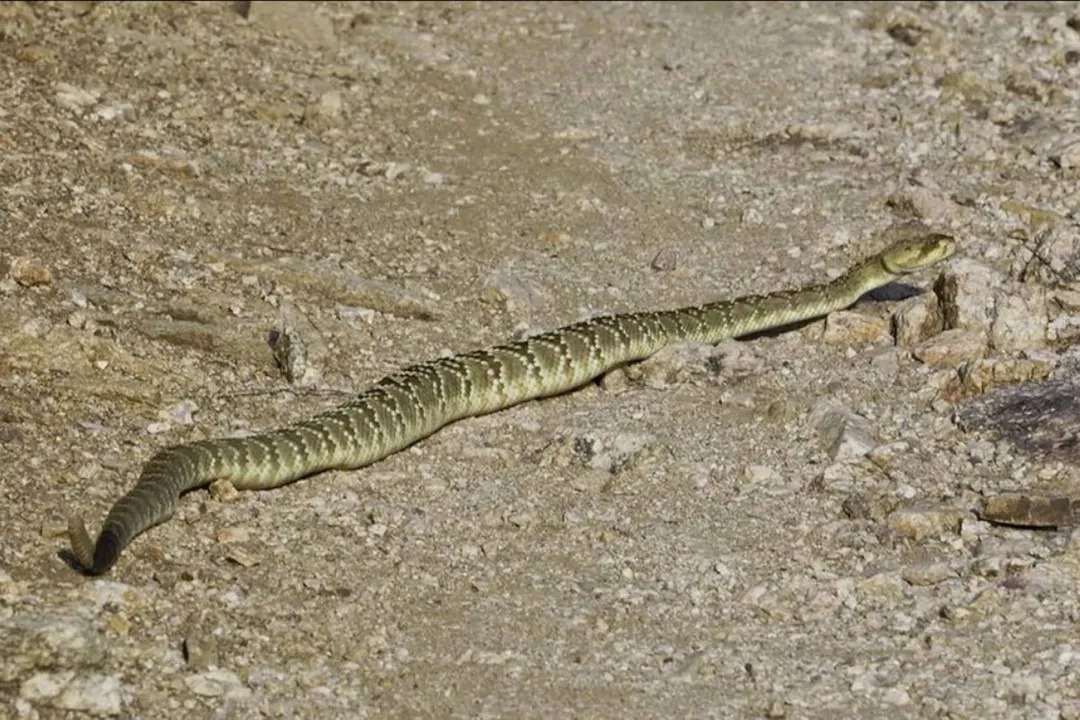
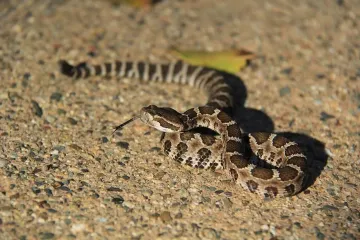
Adult Black-tailed Rattlesnakes typically measure between two and four feet in length, though individuals exceeding the four-foot mark are certainly documented. [1][5] Perhaps the most defining feature, and the source of its common name, is the tail coloration of mature specimens: it is usually a solid black or very dark gray. [1][3][7] This contrasts somewhat with the rest of the body, though overall color patterns can be confusingly variable. [5]
The body coloration itself offers little in the way of a reliable identifier across the entire species range, as C. molossus exhibits considerable chromatic plasticity. [1][5] Shades range significantly, including various tones of gray, brown, and even blackish hues. [1][5] Dark crossbands, often shaped like chevrons, are present on many individuals, but these bands can be faint or substantially obscured by the snake's overall dark ground color, especially in the darker subspecies. [1][5]
A useful distinction, especially for field identification, lies in observing juveniles. Young snakes frequently display a noticeable reddish or rust-colored stripe running down the center of their dorsal surface. [1][5] While their tail tips are black, the segment immediately preceding the rattle often retains banding, unlike the solid black tail seen on older adults. [1] Like all pit vipers, they possess a broad, triangular-shaped head that clearly distinguishes them from non-venomous constrictors, and their eyes feature vertical elliptical pupils. [3][5]
It is interesting to note that relying solely on the solid black tail can be tricky when trying to distinguish between subspecies or even when encountering a juvenile that hasn't fully darkened. For instance, in areas where the range of the Arizona Black Rattlesnake (C. m. aurifer) overlaps with other populations, you might find individuals that are heavily mottled dark gray, where the tail isn't jet black but a very deep charcoal, illustrating the subtle but important differences in appearance across the species. [1] This variability suggests that knowing the specific subspecies common to a local area is far more useful than relying on a single color trait alone.
# Subspecies Distribution
The species Crotalus molossus is divided into several recognized subspecies, each occupying distinct geographic niches throughout the American Southwest and extending into Mexico. [1] This subdivision explains much of the color variation observed in the field. [1]
Key recognized subspecies include:
- C. m. molossus: The Mexican West Coast Rattlesnake. [1]
- C. m. aurifer: Known as the Arizona Black Rattlesnake, commonly found throughout much of Arizona. [1]
- C. m. lucifer: The Southern Pacific Rattlesnake. [1]
- C. m. osbornei: Referred to as the Rock Rattlesnake. [1]
The distribution footprint is expansive. Populations exist across Arizona, New Mexico, Texas, Utah, Colorado, and even parts of California and Nevada. [1][5][6] South of the border, their range continues into various Mexican states. [1] This wide distribution means that someone hiking in the mountains near Phoenix is likely encountering a different local variant than someone visiting Big Bend National Park, even though both are correctly identified as Black-tailed Rattlesnakes. [6]
# Where Found
The preferred environmental settings for this rattlesnake are strongly tied to topography and climate. They thrive in a variety of settings, generally favoring rocky terrain, foothills, and mountainous areas. [1][5][6] While they can be found in true deserts, they often prefer the slightly cooler, more vegetated slopes above the flat, scorching desert floor. [6]
Their ability to inhabit varied elevations means they are well-suited to the diverse terrain of the Basin and Range provinces. [5] For instance, they are associated with the rocky canyons and scrubland environments typical of New Mexico and Arizona high deserts. [6][8] A practical observation for those spending time in known Black-tailed Rattlesnake territory is to pay special attention when navigating areas near large, sun-warmed boulders or rock piles. While they are active hunters, these features provide excellent cover and thermal regulation spots. Knowing this tendency allows for a focused awareness in areas offering both shelter and basking opportunities, which is a good practice when actively surveying, contrasting nicely with their secretive habits when hunting at night. [5][6]
# Defensive Habits
When confronted by a potential threat, the Black-tailed Rattlesnake generally exhibits a non-confrontational temperament compared to some of its more notoriously aggressive cousins. [1][5][7] Their first line of defense is usually to remain still, relying on their camouflage to avoid detection. [5] If that fails, they will typically retreat if a path is available. [1]
However, if they feel cornered, backed against a rock, or physically stepped upon, they will readily defend themselves with a strike. [7] Before striking, they will issue the characteristic warning sound from their rattle. [1] Although they possess the rattle, some accounts note that they may not always deploy it, especially if startled rapidly. [7] It is crucial for outdoor enthusiasts to remember that the absence of a rattle sound does not equate to the absence of danger with this species. [1][7]
# Diet Reproduction
As carnivorous reptiles, Black-tailed Rattlesnakes play an important role in regulating local fauna populations. [9] Their diet is primarily composed of small mammals. This includes various species of mice, rats, and ground squirrels, which form the bulk of their caloric intake. [1][5] They are also known to consume lizards and, on occasion, birds or amphibians, showing some flexibility depending on prey availability in their specific microhabitat. [1][5]
Reproduction in C. molossus follows the pattern common to many pit vipers: they are viviparous, meaning the young develop internally within the mother and are born live, rather than hatching from eggs. [5] The gestation period typically lasts about five to six months. [5] Litters are usually delivered during the late summer or early fall months. [5] The size of these litters can vary, often depending on the size and health of the mother snake. [5]
# Venom Profile
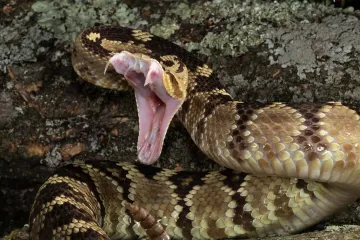
Like all rattlesnakes, Crotalus molossus possesses venom delivered via hinged fangs. [1] The venom composition is primarily hemotoxic. [1] This means that the venom acts largely upon the blood vessels and tissues, causing significant localized pain, swelling, and potentially leading to tissue necrosis if left untreated. [1][5]
While their bite requires immediate and serious medical attention, the venom of the Black-tailed Rattlesnake is generally considered less dangerously potent than the venom of species like the Mojave Rattlesnake or the massive Eastern Diamondback Rattlesnake. [5] Despite this relative comparison, any bite from a venomous snake must be treated as a medical emergency requiring prompt professional care. [5] This is especially true considering that the exact composition and toxicity can vary between subspecies, meaning one should never assume a bite is minor based on general species information. [1]
# Field Identification Notes
For those learning to differentiate snakes in the field, comparing the black-tail to other regional look-alikes is helpful. While the head shape is a strong indicator of a pit viper, the body patterns can sometimes mimic those of harmless species in low light or from a distance. [5] Recognizing the juvenile rust stripe mentioned earlier, combined with the typical habitat preference for rocky, transitional zones between desert scrub and pine woodlands, helps narrow down the identification probability in regions like Arizona or New Mexico. [1][6] If you observe a snake with this general coloration actively hunting small mammals near a rocky wash, you are highly likely looking at a Black-tailed Rattlesnake, warranting respectful distance.
Related Questions
#Citations
Black-tailed rattlesnake - Wikipedia
BLACK-TAILED RATTLESNAKE Crotalus molossus
Black-tailed rattlesnake | Description, Venom, Range, Bite, Baby ...
Black-tailed rattlesnakes are a less-known species among most ...
Crotalus molossus (Black Tailed Rattlesnake) - Animal Diversity Web
Crotalus molossus - New Mexico Herpetological Society
Western Black-Tailed Rattlesnake Pointers: ~ Crotalus molossus
Black-Tailed Rattlesnakes
Black-Tailed Rattlesnake - Sabino Canyon Volunteer Naturalists