White-Tailed Eagle Physical Characteristics
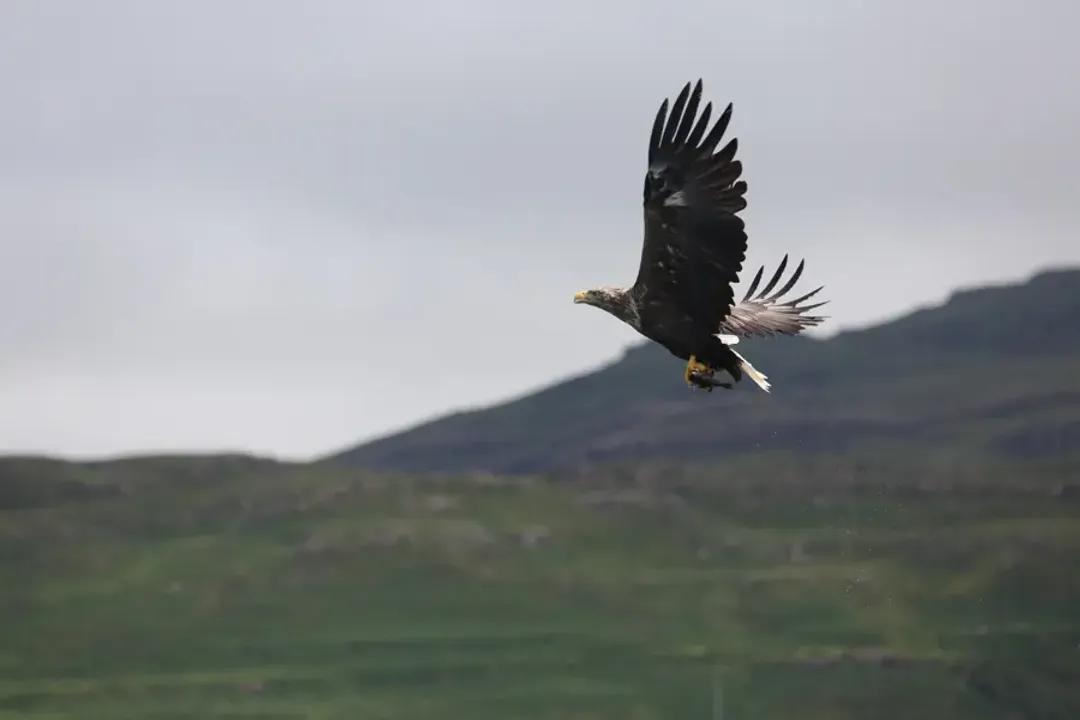
The White-tailed Eagle, often cited as one of Europe’s largest birds of prey, possesses a collection of physical attributes that immediately declare its dominance in the skies and along coastlines. [1][5] Its sheer size is perhaps its most immediate characteristic, establishing it as a magnificent sight for any observer, whether on land or viewing from a boat. [2][5] When comparing this species to others in the raptor family, its impressive wingspan truly sets it apart, allowing for effortless soaring over vast stretches of water and land. [1]
# Immense Span
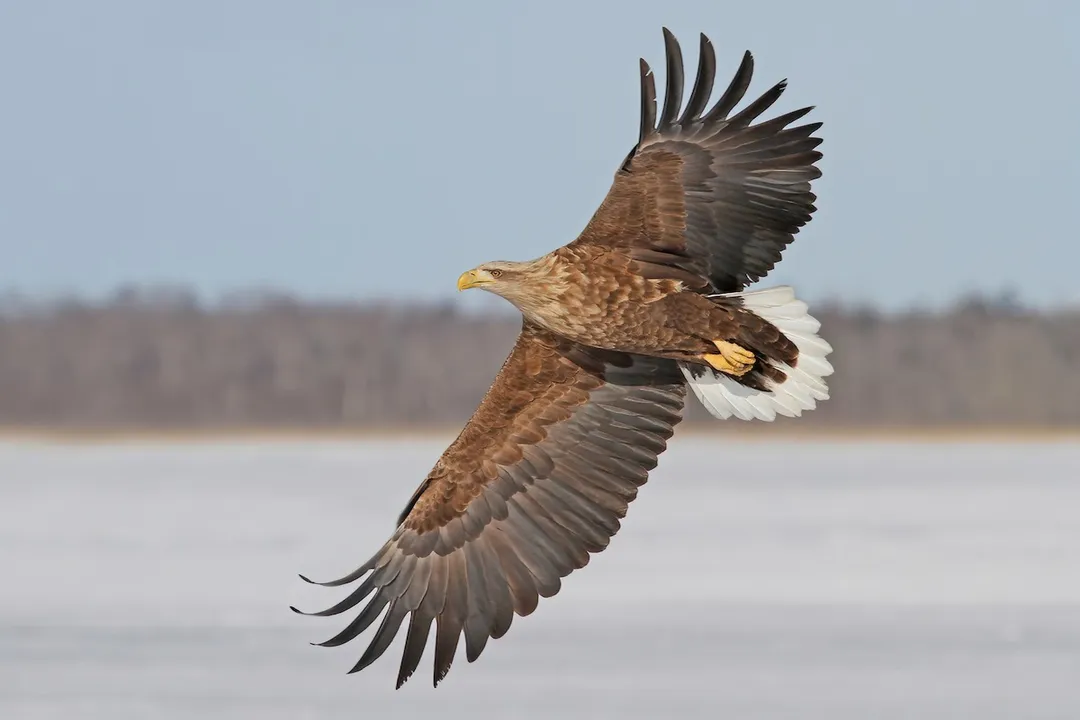
The sheer magnitude of the White-tailed Eagle is difficult to overstate. Its wingspan frequently reaches impressive figures, stretching up to 2.45 meters across. [1] This considerable breadth is essential for its lifestyle, enabling long-distance flights and efficient gliding while scanning for prey below. [1] In terms of length, the bird typically measures between 70 and 92 centimeters from the tip of its beak to the end of its tail. [1]
Weight distribution within the species shows a distinct pattern common among many raptors: the females are noticeably larger and heavier than the males. [1] A typical adult male might weigh in the range of 3 to 5.5 kilograms, whereas the female is substantially bulkier, often weighing between 4 and 6.5 kilograms. [1] This size disparity means that while both sexes are formidable hunters, the female carries a greater physical heft, which can sometimes translate into advantages in securing larger prey or holding claim over a nesting site against rivals. [1] Considering this weight variance, a bird weighing 6 kg is carrying over 20% more mass than a lighter male, a significant difference in the aerial world where every ounce counts for efficient flight. [1]
# Adult Markings
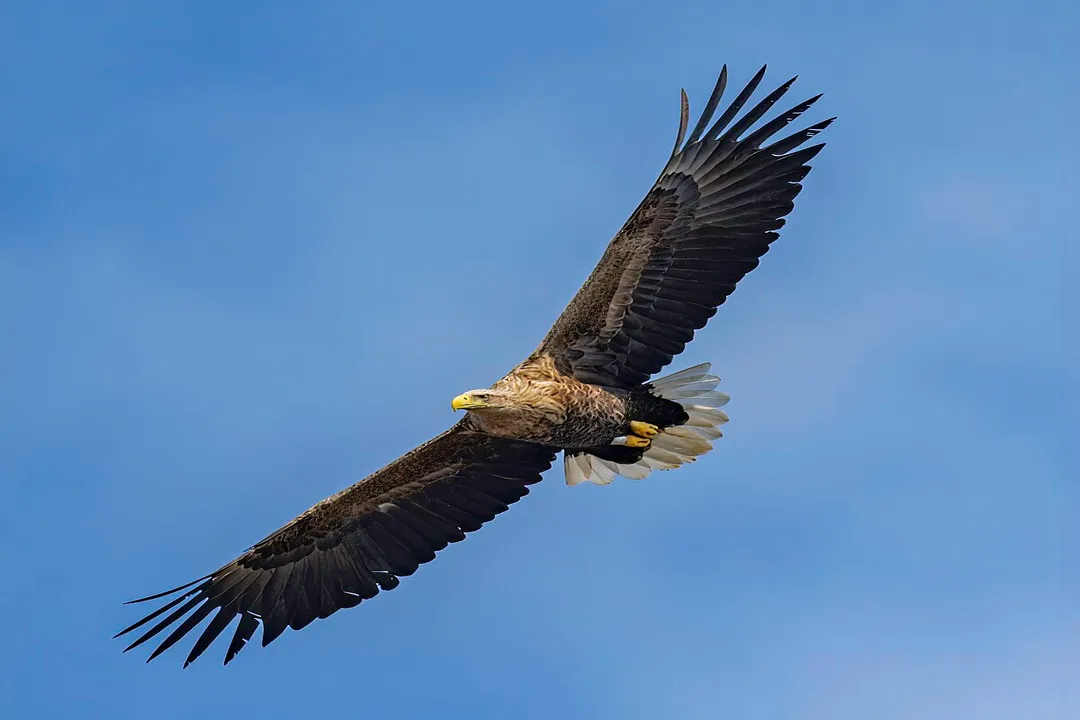
The plumage of a fully mature White-tailed Eagle is a study in deep, earthy tones, punctuated by one key feature that gives the bird its name. [1][5] The upper parts, including the back and upper wings, are generally a dark brown color. [1] However, the undersides often appear somewhat paler brown than the upper surface. [1]
The head and neck area frequently exhibit a lighter shade of brown, sometimes appearing almost buff or straw-colored, which contrasts subtly with the darker body plumage. [5] This lighter feathering on the head is a trademark feature that observers look for when distinguishing adults. [1] The most unmistakable characteristic, present in mature birds, is the tail itself: it is entirely white, contrasting sharply against the darker body when seen in flight or perched. [1][5] This white tail is the definitive marker that signals full maturity has been reached, a transition that takes several years. [1]

# Juvenile Look
Distinguishing a young White-tailed Eagle from a mature one is a key skill for birdwatchers, as their physical appearance undergoes a significant transformation during their maturation period. [1] Juveniles possess plumage that is generally much darker than that of the adults. [1] Their overall color tends towards a more uniform, deep brown, often exhibiting more mottling across their feathers compared to the cleaner appearance of the adults. [1]
Perhaps the most striking difference in their early life is the tail: unlike the stark white appendage of the adult, the juvenile tail is wedge-shaped, dark, and typically barred with lighter coloration. [1] This dark tail remains until the bird attains full adult plumage, which can take four to five years. [1] Furthermore, the bill and eyes of a young eagle are also different; where the adult sports a brilliant yellow bill and iris, the juvenile initially has a dark bill and dark brown eyes. [1] This gradual shift in eye color, from dark to bright yellow, mirrors the physical maturation of the rest of the plumage over those initial years. [1]
# Head Features

The head of the White-tailed Eagle hosts features that speak to its predatory nature and strength. [1] The bill is substantial—large, powerful, and conspicuously hooked at the tip, perfectly adapted for tearing flesh. [1] This beak is colored a vibrant yellow in sexually mature adults. [1] Correspondingly, the iris, or the colored part of the eye, is also a bright, striking yellow in adults, providing excellent visual contrast against the dark head feathers. [1]
The development of these features is a slow process. For instance, the bill may not achieve its full, bright yellow coloration until the bird is approaching full maturity, sometimes remaining darker or dusky in its earlier years. [1] This combination of a massive, hooked yellow beak and piercing yellow eyes gives the adult bird a truly formidable appearance, signaling an apex predator. [1]
# Lower Body
Below the body, the legs and feet of the White-tailed Eagle are built for gripping and carrying. [2][5] The legs are unfeathered down to the top of the foot, leaving the lower section bare and distinctly yellow in color. [1] The feet themselves are exceptionally large and powerful, equipped with long, sharp talons designed to secure and dispatch prey found near the water's surface or on the ground. [2][5] These yellow feet are a consistent feature in adults, contrasting with the generally dark leg feathers closer to the body. [1] The strength contained within these feet is necessary to handle fish, seabirds, or small mammals that make up their diet. [2]
# Visual Comparison Table
To clearly delineate the primary physical differences across life stages, it helps to lay out the key markers side-by-side.
| Feature | Adult | Juvenile (First Year) |
|---|---|---|
| Tail | Solid White [1][5] | Dark, wedge-shaped, barred [1] |
| Bill Color | Bright Yellow [1] | Dark/Dusky [1] |
| Iris Color | Bright Yellow [1] | Dark Brown [1] |
| Plumage | Dark brown, paler head/neck [1][5] | Uniformly darker, often mottled [1] |
| Size | Fully grown (up to 6.5 kg) [1] | Smaller, still growing [1] |
This transition from the drab, dark-tailed juvenile to the striking, white-tailed adult highlights a significant investment of time and energy in development. [1] It is interesting to consider that for the first few years, the young eagle must navigate the world relying on camouflage and stealth while possessing an incomplete physical toolkit, often resembling other large, dark raptors until its white tail emerges fully. [1] Successfully reaching maturity requires surviving predation threats and food scarcity during this protracted development phase where definitive species recognition—both by potential mates and by other eagles—is less obvious.

# Subtle Variations
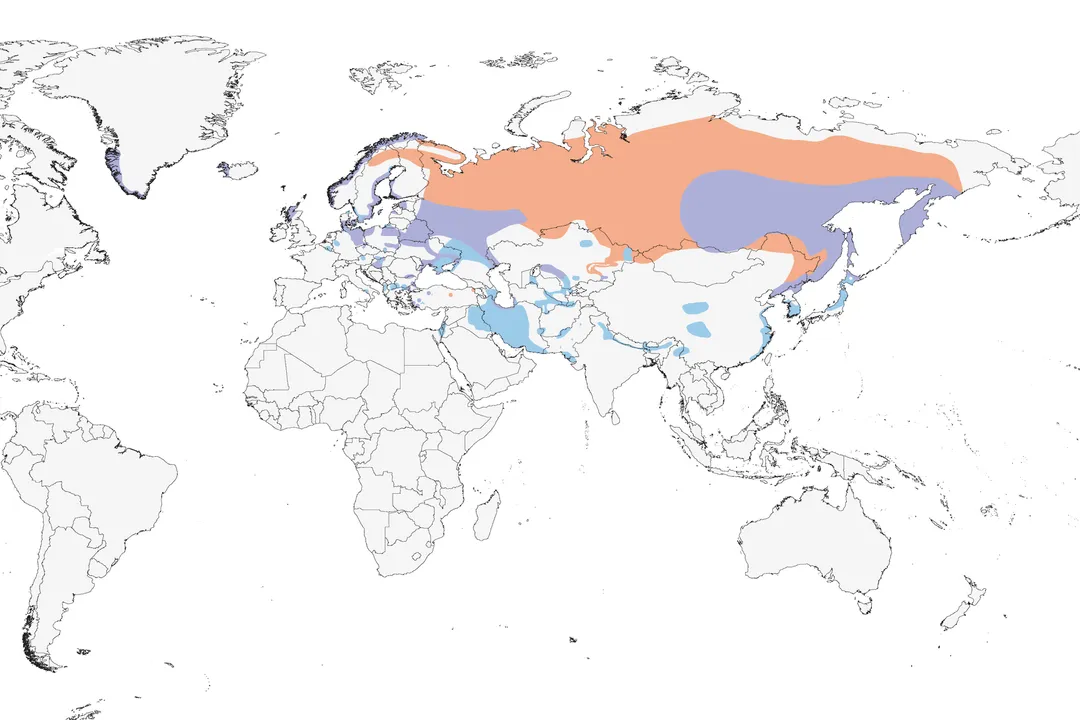
While the general blueprint for the White-tailed Eagle is consistent across its range—from Scotland to Asia—minor variations in size and shade do occur, often influenced by geography and food availability. [1][5] For instance, birds inhabiting northern latitudes or areas with colder climates sometimes exhibit slightly larger dimensions overall, a phenomenon known as Bergmann's Rule, although specific data comparing weights across the entire subspecies range is less commonly cited than the general adult/juvenile split. [1]
The intensity of the brown in the plumage can also be subject to environmental factors. Eagles living in consistently wet or cloudy environments might show slightly duller feather tones compared to those in sunnier regions, though the core pattern remains. [1] The bill and foot coloration, while described as yellow, can range from a duller, more orangey-yellow in younger adults to a vivid, deep chrome yellow in prime breeding condition. [1] These subtle shifts in hue are often indicators of the bird’s age, health, and breeding readiness, providing experienced observers with more information than just the basic species identification features. [1] The physical characteristics, therefore, are not static portraits but rather a spectrum that reflects the bird’s history and current physiological state.
# Flight Profile
Although not strictly a static physical characteristic, the way the bird carries its massive body in the air is directly dictated by its physical structure. [1] When flying, the White-tailed Eagle holds its wings broad and flat, with the primaries—the longest feathers at the wingtips—spread like distinct fingers. [1] This contrasts with the more sharply angled wings often seen in falcons or the deeply bowed wings of some other large eagles. [1] This broad, flat profile is optimized for soaring and gliding, allowing the bird to ride thermals and air currents with relatively little effort, conserving the energy derived from its heavier body mass. [1] The bird's relatively short, fanned tail, even when white, acts as a rudder, providing stability during maneuvering close to the ground or water surface when preparing for a strike. [1]
Related Questions
#Citations
White-tailed eagle - Wikipedia
White-Tailed Eagle Facts | Haliaeetus Albicilla - RSPB
White-tailed Sea-eagle | The Peregrine Fund
Information about White Tailed Eagles - Facebook
Sea Eagle Elucidation: 5 Essential White-Tailed Eagle Facts
White-tailed eagle - Réserve zoologique de la Haute-Touche
White tailed eagle (Haliaeetus albicilla) | Forestry and Land Scotland
White-tailed Sea Eagle facts - Glengarriff Nature Reserve
White-tailed Eagle Haliaeetus albicilla - Birds of the World