What defensive action precedes striking if a Black-tailed Rattlesnake feels cornered?
Answer
Issuing the characteristic warning sound from its rattle
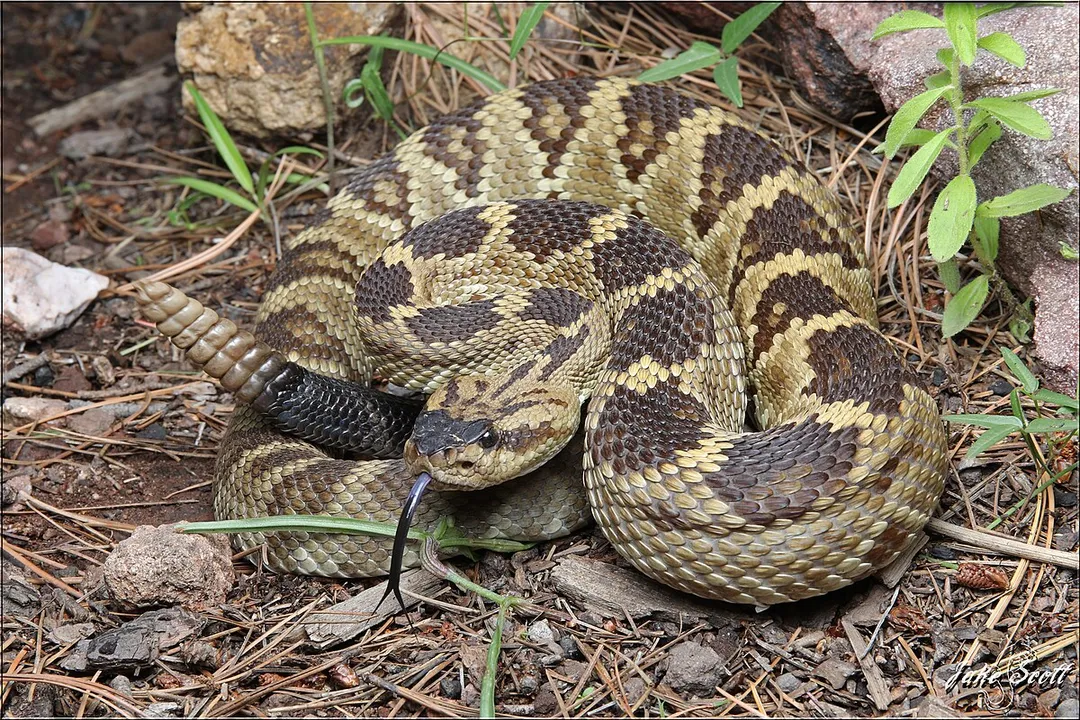
When physically cornered, trapped against a rock, or suddenly stepped upon, the Black-tailed Rattlesnake will transition from passive defense to active self-protection via a strike. However, prior to deploying its venomous bite, it typically utilizes its namesake feature to signal danger. This warning involves vibrating the segments of its rattle to produce a distinct warning sound. It is important to note that relying solely on hearing this sound is risky, as accounts indicate that the snake may not always deploy the rattle, especially if the startle is sudden.
Related Questions
What characteristic coloration defines the tail of mature Black-tailed Rattlesnakes?What distinct feature is often present on juvenile *Crotalus molossus* but fades in adults?What primary category describes the venom composition of *Crotalus molossus*?Which environmental feature do Black-tailed Rattlesnakes often prefer for cover and thermal regulation?What reproductive strategy is characteristic of *Crotalus molossus*?The body coloration of *C. molossus* demonstrates considerable what?Which states are specifically mentioned as home to populations of *Crotalus molossus*?What constitutes the main component of the Black-tailed Rattlesnake's diet?What defensive action precedes striking if a Black-tailed Rattlesnake feels cornered?What anatomical feature distinguishes pit vipers like *C. molossus* from non-venomous constrictors?