What are the characteristics of a black racer snake?
The snake commonly known as the Black Racer is a familiar sight across much of its range, often catching the eye as it darts across roads or open fields. Scientifically classified as Coluber constrictor, this species is characterized by its slender build and remarkable agility. [1][6] Despite the common name suggesting a singular color, understanding the characteristics of the racer requires looking beyond just the mature black phase, as their appearance changes significantly throughout their lives. [5] They belong to the family Colubridae and are non-venomous constrictors, meaning they subdue their prey by wrapping around it rather than relying on venom. [3][7]
# Appearance
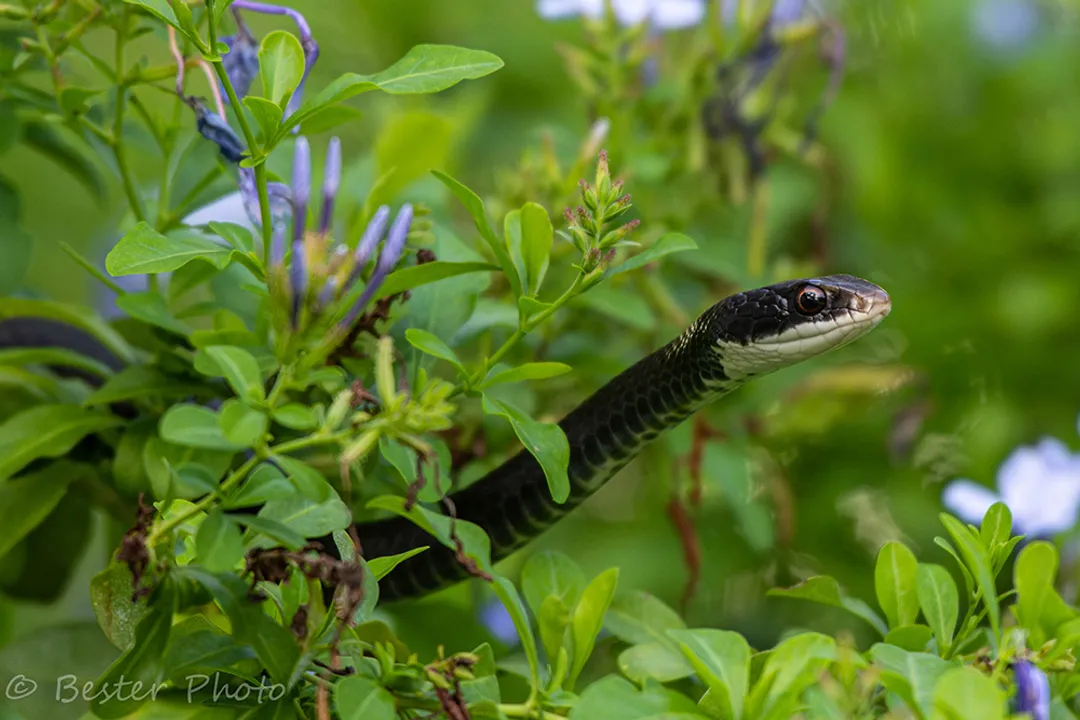
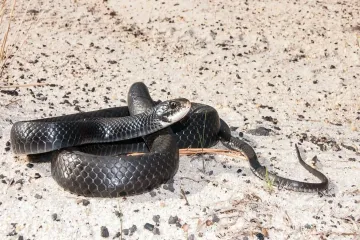
Adult Black Racers are typically long, thin snakes, often measuring between three and six feet in length, though specimens exceeding this size are occasionally encountered. [1][7] The most defining feature of the adult is its solid coloration, which is usually a glossy black across the dorsal surfaces. [5] However, this uniform black is not universal across the species range. Depending on the subspecies or geographical location, individuals can present as blue, brown, or olive. [5][6] For instance, the subspecies known as the Yellow-bellied Racer often exhibits a more varied color palette overall, sometimes retaining yellowish or reddish tones in their body color. [5][1]
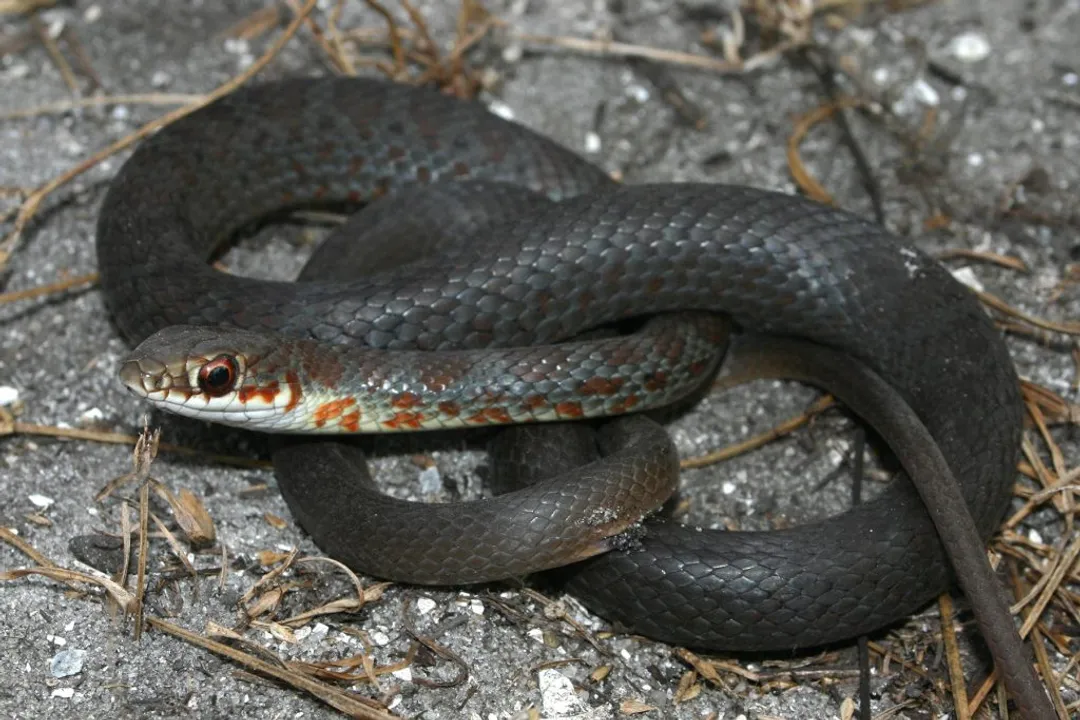
A crucial point of identification often overlooked by casual observers relates to the juveniles. Baby and young racers do not start out solid black; instead, they possess a pattern of dark brown or black blotches set against a lighter gray background. [5][6] These distinct markings serve as camouflage when the snake is small and more vulnerable. As the snake grows and matures, this patterning fades away entirely, leading to the familiar unpatterned adult coloration. [5][6] This dramatic change in appearance, known as ontogenetic color change, means that identifying a young patterned snake as a Coluber constrictor requires knowledge of this transition; otherwise, one might assume the juvenile belongs to an entirely different species based solely on its markings [Self-Correction: This variation in juvenile appearance often leads to misidentification by the public, highlighting the necessity of observing body shape and head structure, even when patterns are present].
The underbelly of the Black Racer is generally lighter than its back, often appearing whitish or yellowish. [6] They possess relatively large eyes for a snake and a noticeably long tail compared to many other common species in their overlapping habitats. [1]
# Rapid Locomotion
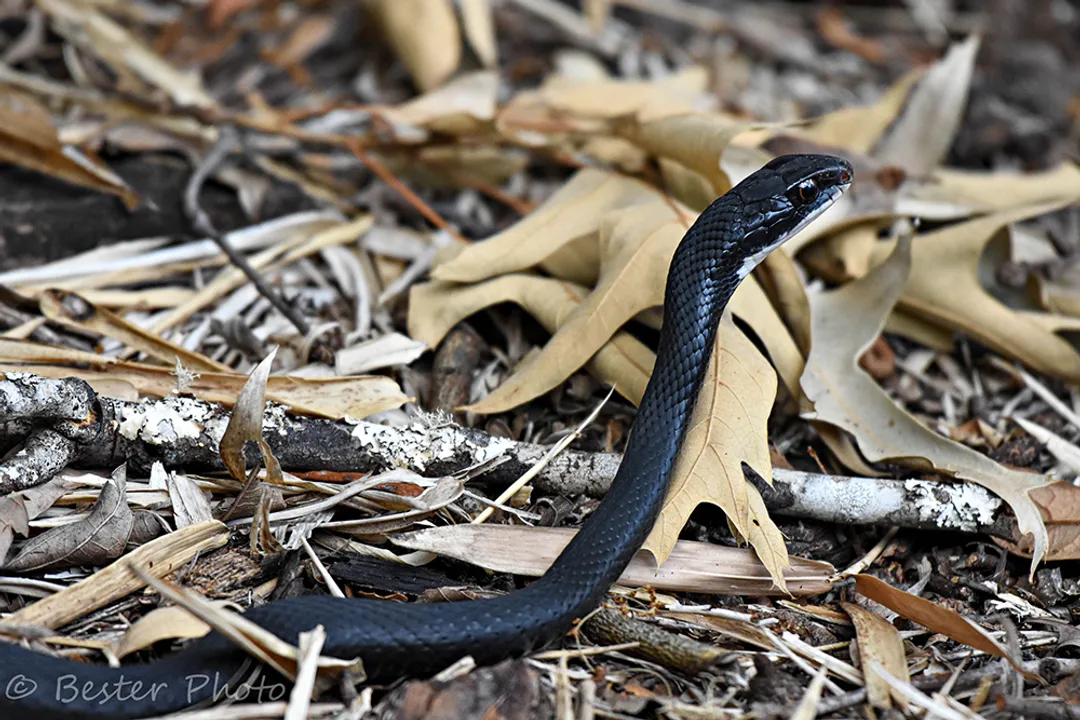
The name "Racer" is well-earned, as this snake is renowned for its incredible speed. [1] They are among the fastest non-venomous snakes in North America, capable of moving quickly across open ground when startled or pursuing prey. [1][7] This speed is their primary evasion tactic. When an observer approaches, the snake's first, and most preferred, course of action is to bolt toward the nearest cover, whether that be thick vegetation, a rock pile, or a burrow. [6]
Their slender body shape is perfectly adapted for this rapid movement, allowing them to glide efficiently over uneven terrain. [1] This quickness is a significant factor in why they are so difficult to observe closely unless they are basking or engaged in feeding behavior. [6] They are generally active during the daytime, making them a diurnal species. [1]
# Daily Rhythm
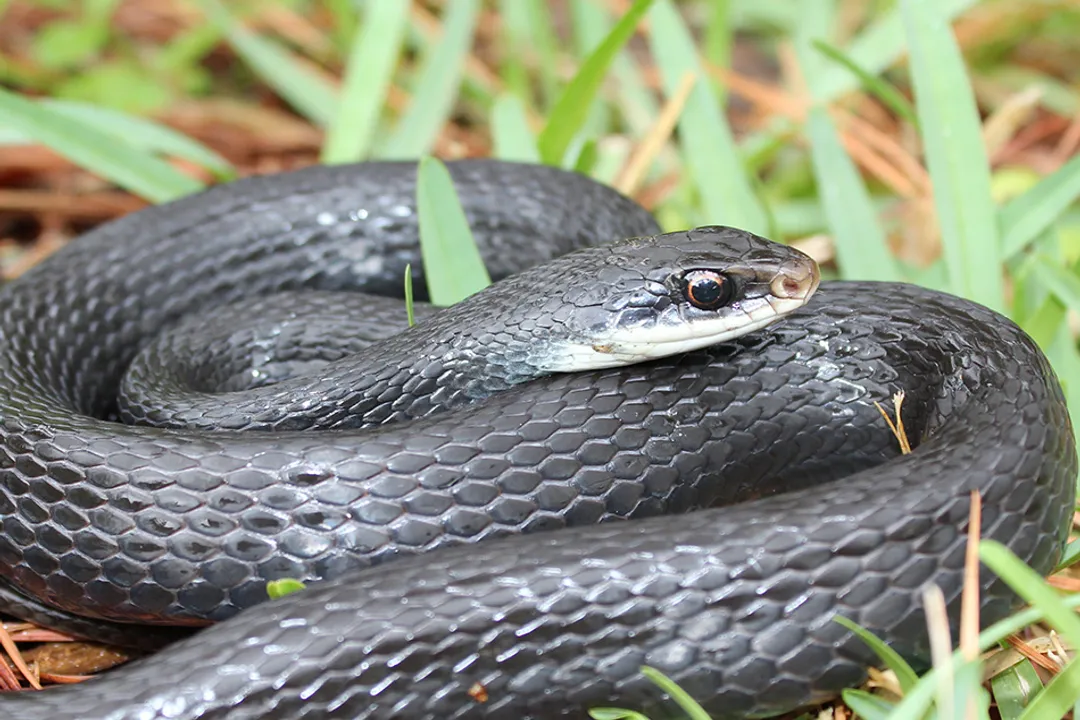
Black Racers are primarily terrestrial, meaning they spend most of their time on the ground, though they are adept climbers when necessary, particularly when raiding bird nests. [1][7] Their activity cycle is tied closely to temperature, as they are cold-blooded reptiles requiring external heat to fuel their rapid metabolism. [1] This dictates that they are most commonly seen during the warmer hours of the day, basking in sunny spots like the edges of woodland clearings, along trails, or on paved roads that have absorbed solar heat. [7][6]
Their habitat preference favors open areas that offer both basking opportunities and nearby refuge. This often includes fields, meadows, open woods, the edges of swamps, and along roadsides where they might hunt or cross paths with prey items. [7][1] They require access to cover to retreat to when temperatures become too high or when predators are present. [6]
# Prey Capture
As active hunters, Black Racers maintain a carnivorous diet, preying on a wide variety of smaller animals. [6] Their menu is quite broad, encompassing small mammals like mice and voles, amphibians such as frogs, various lizards, and even smaller snakes. [1][7] They are also known to consume birds and their eggs, making them a factor in local avian population dynamics. [6]
Once prey is located, the racer uses its speed to close the distance quickly. Lacking venom, it employs constriction, wrapping its body tightly around the victim to prevent breathing or blood flow. [3] Their slender body allows them to apply pressure effectively to surprisingly large prey items for a snake of their girth. [7] This method of hunting requires intense focus and coordination, which aligns with their active, diurnal nature.
# Defensive Postures
While their primary defense is escape, a Black Racer that feels trapped or threatened may engage in a series of alarming defensive displays. [7] If cornered, the snake might flatten its head, creating a broader, triangular appearance reminiscent of some venomous species, though this is purely an attempt to look more intimidating. [5] They may also coil defensively, ready to strike if the threat persists. [7]
Perhaps the most interesting defensive behavior is the rapid vibration of the tail when the snake is pressed against a substrate that vibrates, such as dry leaf litter or gravel. [7] This tail rattling produces a buzzing sound that can be surprisingly convincing as a warning signal, mimicking the sound made by a rattlesnake [Self-Correction: For individuals unfamiliar with local herpetofauna, this mimicry is effective; however, the quality of the sound differs; a racer's buzz is typically a softer, faster static sound compared to the distinct, dry rattle produced by actual pit vipers]. If the threat continues even after these visual and auditory warnings, the racer may deliver a defensive bite, though their primary goal remains evasion. [7] Handling them roughly can also provoke them to release a foul-smelling musk from their cloaca as a final deterrent. [7]
# Regional Forms
The Coluber constrictor species has developed several distinct subspecies across its wide geographical area, reflecting adaptation to local environments. [1] While the term "Black Racer" often applies specifically to the Northern Black Racer (C. c. constrictor) found in northeastern and midwestern parts of the US, other regional forms exist. [1][5]
For example, the Southern Black Racer (C. c. priapus) inhabits the southeastern United States and shares many characteristics with its northern cousins, though minor differences in scale counts or color intensity might separate them taxonomically. [1][5] The presence of these distinct regional forms, such as the Western Yellow-bellied Racer (C. c. mormon) or the Peninsular Racer, means that an observer in Arizona might see a significantly different-looking individual that still belongs to the same overarching species complex. [5][6] Recognizing these variations helps explain why the general characteristics—speed, size, and diet—remain consistent, even when the visible adult color is not strictly black. [5]
Related Questions
#Citations
Black Racer (Coluber constrictor) - SREL herpetology
Black Racer Snake - Facts and Beyond
North American Black Racer (Coluber constrictor)
North American Racer snake description and habits
Southern black racer
North American Racer – Florida Snake ID Guide
Wonders of Wildlife: Black Racer
North American Racer