What distinct feature is often present on juvenile *Crotalus molossus* but fades in adults?
Answer
A noticeable reddish or rust-colored stripe down the dorsal center
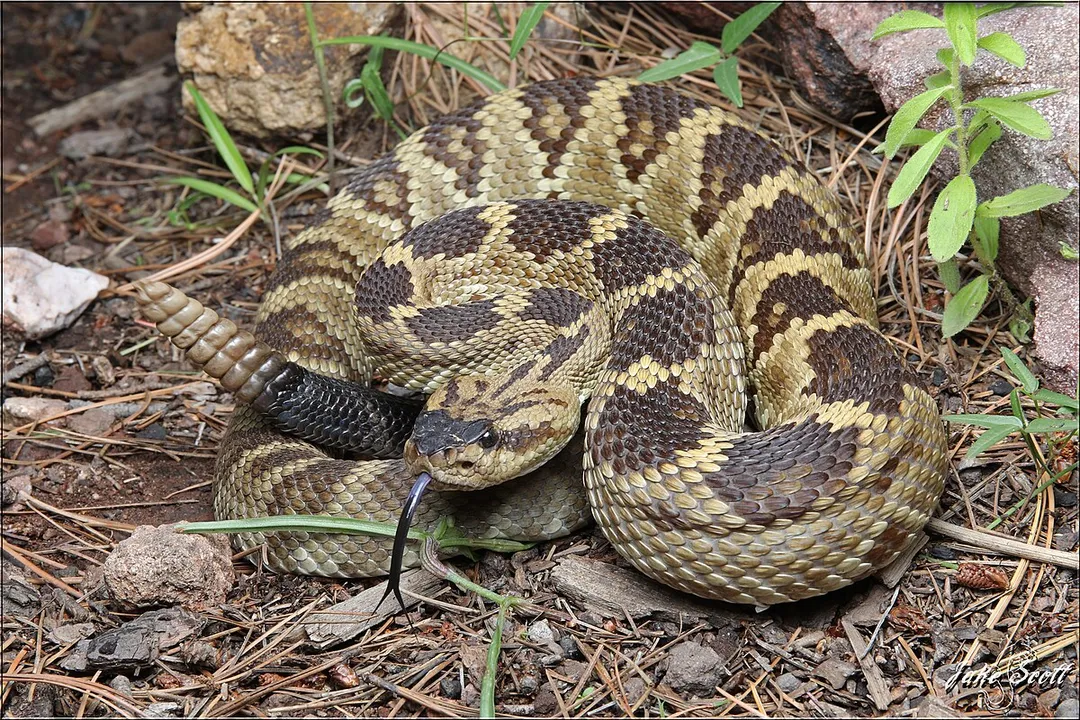
Juvenile Black-tailed Rattlesnakes possess a key identification marker that helps distinguish them from adults and other species. Young snakes frequently display a clear, longitudinal stripe running down the center of their dorsal surface, which is described as being reddish or rust-colored. This specific marking is not typically retained by older, mature specimens, whose body patterns become obscured by darker ground colors or increased mottling. Recognizing this youthful trait, along with the fact that their tail tips are black but may still show banding immediately before the rattle, is useful for field identification.
Related Questions
What characteristic coloration defines the tail of mature Black-tailed Rattlesnakes?What distinct feature is often present on juvenile *Crotalus molossus* but fades in adults?What primary category describes the venom composition of *Crotalus molossus*?Which environmental feature do Black-tailed Rattlesnakes often prefer for cover and thermal regulation?What reproductive strategy is characteristic of *Crotalus molossus*?The body coloration of *C. molossus* demonstrates considerable what?Which states are specifically mentioned as home to populations of *Crotalus molossus*?What constitutes the main component of the Black-tailed Rattlesnake's diet?What defensive action precedes striking if a Black-tailed Rattlesnake feels cornered?What anatomical feature distinguishes pit vipers like *C. molossus* from non-venomous constrictors?