White-tail deer Physical Characteristics
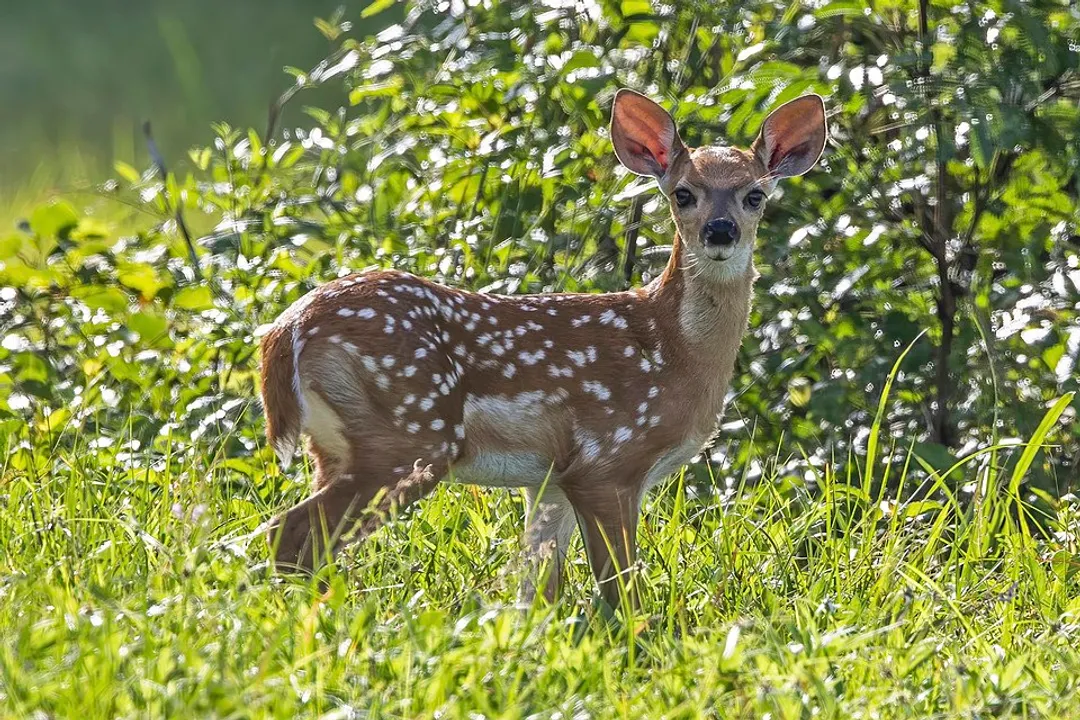
The white-tailed deer, scientifically known as Odocoileus virginianus, presents a fascinating study in mammalian adaptation, with physical traits finely tuned to thrive across diverse North American environments. Its common name immediately points to the most recognizable feature, but the animal's overall build, coloration, and specialized sensory organs are equally key to its survival success. Understanding these physical characteristics offers deep insight into how this species has become one of the continent’s most widespread and numerous large mammals.
# Size Variation
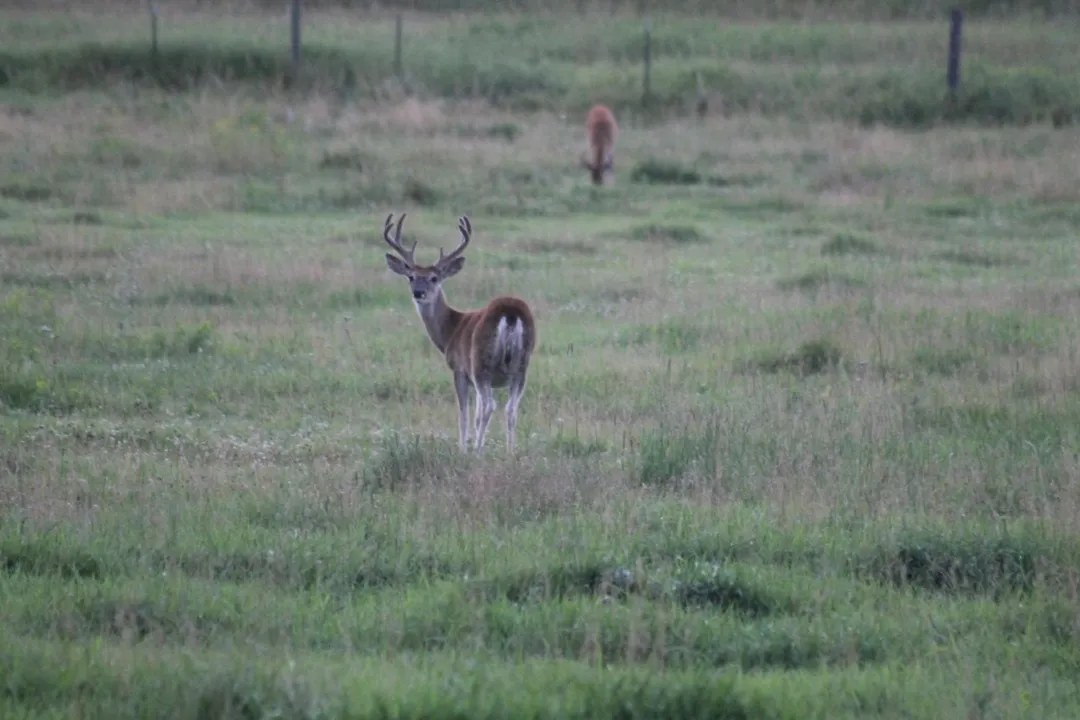
The sheer variability in size among white-tailed deer is remarkable, heavily influenced by geography, available nutrition, and, of course, sex. Generally, the male of the species, the buck, is notably larger and heavier than the female, the doe.
In terms of height, an adult deer typically stands between 3 to 3.5 feet tall at the shoulder, which translates to roughly 36 to 42 inches. While this range is fairly consistent across many populations, environmental factors can push the extremes. For instance, deer in the northern extremes of their range, where winters are harsher and food resources can be scarcer seasonally, often exhibit larger body mass than their southern counterparts.
Weight is where the differences become most pronounced. A healthy adult doe often weighs in the neighborhood of 100 to 150 pounds. Bucks, however, carry significantly more bulk. While an average adult buck might weigh between 150 and 250 pounds, exceptionally large specimens, particularly mature bucks in northern climates like the upper Midwest or Canada, can easily surpass 300 pounds. This robust build in northern deer is an essential adaptation, allowing them to better withstand deep snow and prolonged periods of low food availability during winter months.
An interesting observation often noted by wildlife managers is the relationship between summer and winter weight. Deer generally enter the breeding season, or "rut," in the autumn at their peak condition after months of feeding on lush summer vegetation. As the rut progresses and winter sets in, their energy expenditure rises dramatically while food quality drops, leading to a noticeable reduction in body mass before the cycle begins anew in the spring.
# Coat and Coloration
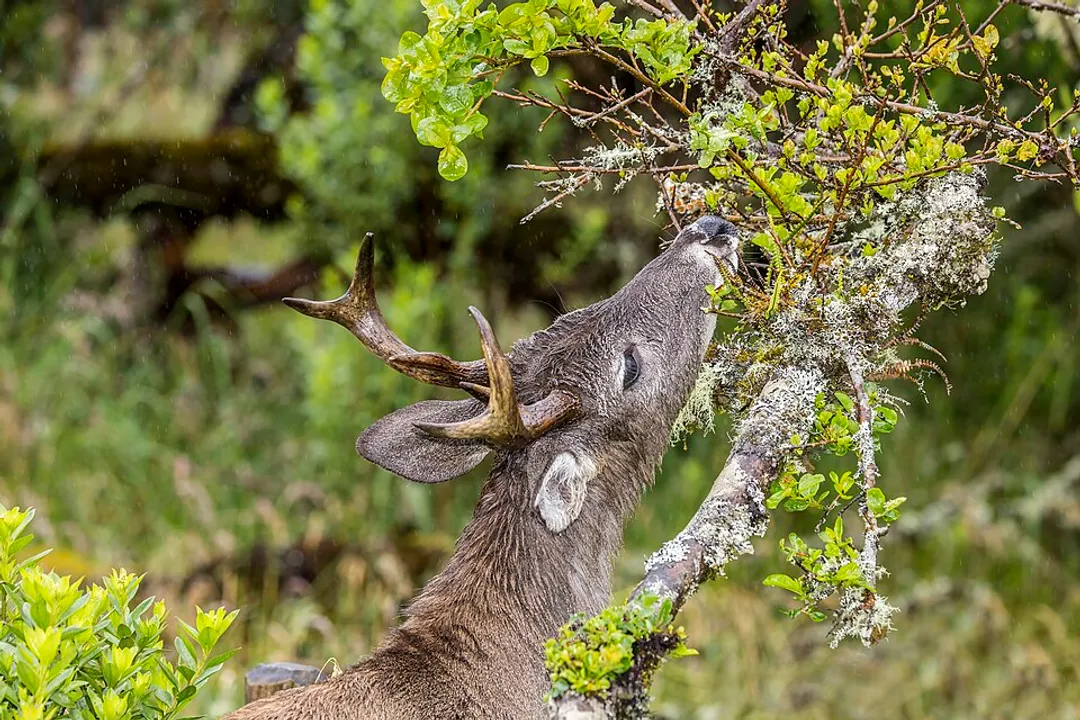
The deer's coat serves as both a camouflage system and a vital insulator, changing significantly between the warm and cold seasons. This seasonal molt is a critical physical characteristic for thermoregulation and concealment.
The summer coat is typically a bright, reddish-brown or cinnamon color. This warmer tone blends exceptionally well with the green and brown hues of summer foliage, providing excellent concealment in woodlands and fields. The hairs of the summer coat are short and relatively smooth.
As temperatures drop, the deer undergoes a transformation into its winter pelage. The winter coat is noticeably different: the color shifts to a duller grayish-brown or blue-gray, offering superior camouflage against the muted backdrop of leafless trees and snow. These winter hairs are longer, thicker, and often hollow, trapping air to create a highly effective insulating layer against the cold. This change is more than just a color shift; it is a significant physiological adjustment for survival. Observing the precise timing of this molt can offer local ecologists an informal barometer for incoming seasonal severity.
# Fawn Markings
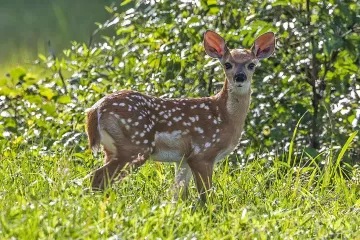
The characteristic look of a newborn white-tailed deer is perhaps one of the most endearing aspects of the species. Fawns are born possessing a distinct coat pattern composed of bright white spots scattered across a reddish-brown base coat. This dappled pattern provides superior camouflage in the forest understory, mimicking the way sunlight filters through leaves onto the forest floor, thereby hiding the vulnerable young from predators. A newborn fawn can weigh anywhere from 4 to 8 pounds at birth. This camouflage is so effective that it is often recommended that observers, if they find a fawn lying still, leave it undisturbed, as its best defense is remaining motionless and relying on its coat. Typically, these white spots are gradually lost as the fawn develops, with the characteristic adult coat emerging around three to five months of age.
# The Signature Tail
The namesake feature, the white-tail, gives the species its common name and functions as a critical signaling device. When the deer is calm or moving normally, the tail appears brown on top and sometimes only shows a narrow white fringe underneath.
However, when the deer is alarmed, startled, or fleeing, the behavior of the tail changes dramatically—this is known as "flagging". The deer raises its tail erect, revealing the broad, entirely white underside. This sudden flash of white against the woods serves as an unmistakable signal to other nearby deer that danger is present, warning them to flee as well. The tail can be held straight up like a flag when the deer is running rapidly. This visual cue is highly effective across distances and through dense cover, demonstrating a sophisticated communication method built into their physical structure.

# Antlers and Head Gear
Antlers are exclusively found on the male white-tailed deer and are a key physical trait of the buck, though they are technically shed and regrown annually rather than being true horns. They are made of bone, and during the spring and summer growing season, they are covered in a soft, blood-vessel-rich skin known as "velvet". Once the antlers are fully developed, usually by late summer or early autumn, the velvet dries and is shed in a process called "rubbing," which scrapes the velvet off against trees and bushes.
The structure of the antlers is quite specific. The main beam of the rack generally curves forward over the face. From this main beam, the points, or tines, usually project upward. While the number of points can vary significantly—sometimes growing unevenly or even appearing asymmetrical—the overall growth pattern is characteristic of the species. Bucks typically begin shedding their antlers in late winter or early spring, usually between January and March, depending on local conditions and the buck’s age and health.
One aspect that influences antler development is the deer's age and nutrient intake. A mature, healthy buck will generally produce a larger, more complex rack than a younger buck, provided both have access to similar quality forage during the antler-growing period. A quick reference guide for the general public attempting to estimate a buck's age based on antler mass alone can be misleading, as poor nutrition one year can result in a smaller rack despite the deer being biologically older.
| Feature | Typical Male (Buck) Range | Typical Female (Doe) Range |
|---|---|---|
| Shoulder Height | 38–42 inches | 36–40 inches |
| Weight (Mature) | 150–250+ lbs | 100–150 lbs |
| Coat Color (Winter) | Grayish-brown/Blue-gray | Grayish-brown/Blue-gray |
| Antlers | Present seasonally | Absent |
| [1][4][5][7] |
# Sensory Apparatus
Survival in the wild depends heavily on detection, and the white-tailed deer possesses highly developed senses of hearing and smell, often compensating for visual limitations in thick cover.
The deer's ears are large and capable of rotating almost 180 degrees independently of each other. This independent movement allows the deer to pinpoint the exact direction of a sound source without moving its head, which could betray its presence. They can detect a very wide range of frequencies, making them highly alert to subtle noises that humans might miss, such as the snap of a twig or the rustle of leaves.
Equally crucial is the deer's sense of smell. Their olfactory system is significantly more acute than that of humans, allowing them to detect danger, locate food sources, and communicate with other deer through scent marking over considerable distances. This sense is paramount in navigating their environment and avoiding predators.
While their hearing and smell are exceptional, their vision is also adapted to their crepuscular and nocturnal habits—they are most active at dawn and dusk. They have large eyes positioned on the sides of their heads, granting them an expansive field of view to detect movement across a wide area. This lateral placement, however, results in a small area of binocular vision directly in front of them, meaning they have poorer depth perception when looking straight ahead compared to predators.
# Internal and Dental Characteristics
As a member of the order Artiodactyla, the white-tailed deer is a ruminant. This means its digestive system is specially adapted for breaking down tough, fibrous plant matter like grasses and twigs. Internally, this adaptation manifests as a four-compartment stomach, allowing for cud-chewing (regurgitating and re-chewing partially digested food) to maximize nutrient absorption.
Their dental structure reflects this herbivorous diet. Like all true deer, they lack upper incisor teeth. Instead, they possess a hard, bony plate against which their lower incisors press when clipping vegetation. Their dental formula is similar to that of cattle. The wear patterns on their lower molars are often used by biologists as a tool for estimating age in harvested or deceased specimens, as tooth progression provides a rough timeline of the deer's lifespan. Observing the dental structure confirms their role as specialized grazers and browsers within their habitat.
# Locomotion and Physicality
The overall physical design of the white-tailed deer emphasizes agility and speed, necessary traits for escaping predation in varied terrain. They are capable runners, able to reach speeds of up to 30 miles per hour. More impressive is their stamina and jumping ability. A deer can maintain a consistent speed of about 15 miles per hour for long distances and can leap over obstacles with ease. They commonly clear fences up to 6 feet high and can jump obstacles several feet in height without appearing to exert great effort. This physical prowess allows them to navigate dense brush, cross streams, and escape danger quickly. Their hooves are cloven, providing good traction on various surfaces, though they can struggle slightly on extremely slick ice without proper purchase.
Related Questions
#Citations
White-tailed deer (Odocoileus virginianus) - National Park Service
White-tailed Deer - Cosley Zoo
White-tailed deer - Wikipedia
Physical Description - White-tailed Deer Illinois: deer ecology
White-Tailed Deer | Colorado Parks and Wildlife
White-Tailed Deer - BioKIDS
White-tailed Deer - Kansas Mammal Atlas
NJDEP| Fish & Wildlife | Biology of the White-Tailed Deer - NJ.gov
Interesting facts about white-tailed deer biology - Facebook