Where might pupae of *Endrosis sarcitrella* be found after leaving the primary feeding site?
Answer
Behind picture frames or in the crevices of window frames
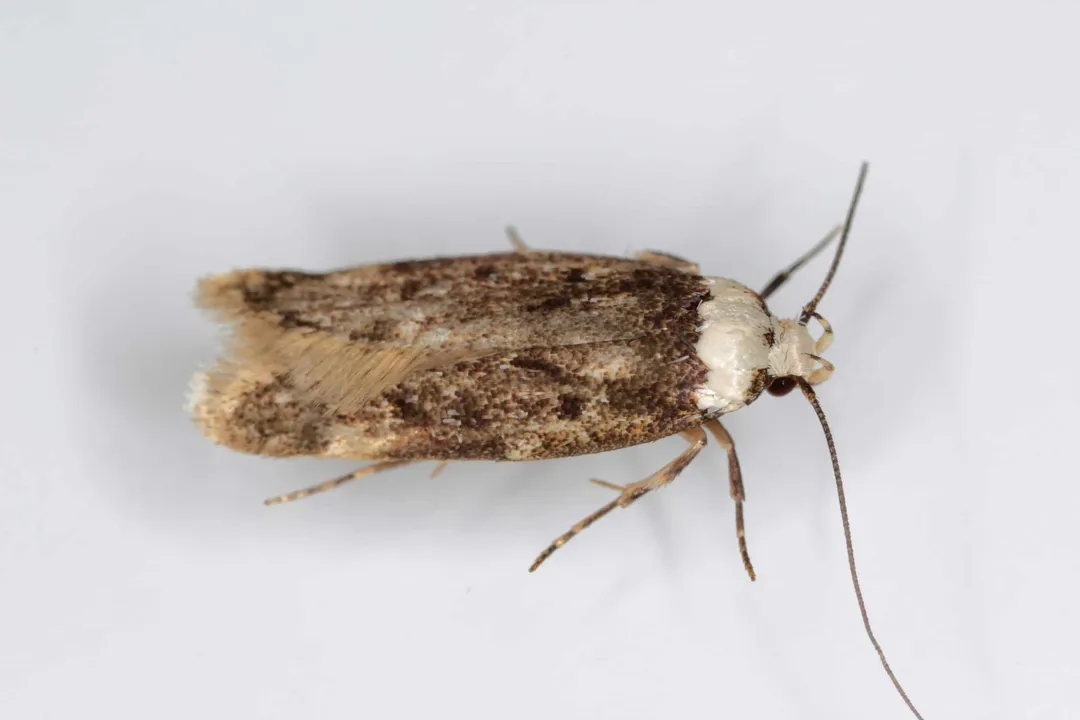
When the larvae of the White-shouldered House Moth complete their feeding period and prepare for the pupal stage, they instinctively move away from their primary food source to locate a secure, secluded spot nearby for protection. These locations must offer seclusion from light and temperature fluctuations. Consequently, one might discover pupae or pupal casings in unexpected yet sheltered locations adjacent to the infestation zone, such as tucked behind picture frames hanging on the wall, or settled within the tight crevices found in window frames. This movement pattern explains why signs of infestation (like casings) sometimes appear slightly removed from the actual food cache.
Related Questions
Which continents document the widespread presence of *Endrosis sarcitrella*?Where might *Endrosis sarcitrella* larvae develop within hidden void spaces inside a structure?Besides stored grains and wool fibers, what surprising component feeds *Endrosis sarcitrella* larvae?What environmental factor, besides food presence, defines the moth's location density?Where might pupae of *Endrosis sarcitrella* be found after leaving the primary feeding site?Which outdoor sites serve as potential bridging points between the environment and the home interior?If larval casings or webbing are observed in Zone 2, what does this imply about Zone 1?How does the diet of *Endrosis sarcitrella* larvae differ from that of *Hofmannophila pseudospretella*?Which life stage of the White-shouldered House Moth is characterized as the destructive one indoors?What general concept dictates where *Endrosis sarcitrella* establishes its larval colonies?