What environmental factor, besides food presence, defines the moth's location density?
Answer
Lack of disturbance near that food source
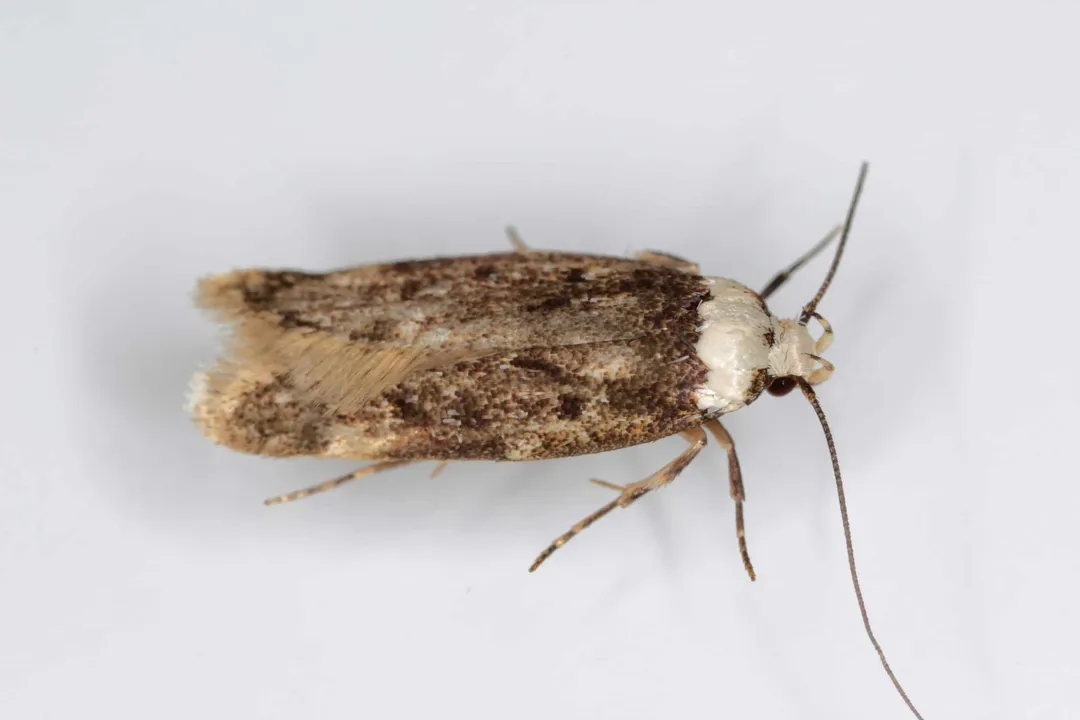
While the availability of organic food sources is fundamental to establishing a colony, the success and density of the White-shouldered House Moth population are critically linked to consistent environmental stability. Areas that are regularly cleaned, dusted, or exposed to significant physical movement lead to a sharp drop in population, even if food remains present. Conversely, spots that experience intermittent, light cleaning, such as the back of a utility closet or seldom-used storage areas, become highly prone to infestation. The constant lack of disturbance near accessible food allows larvae to feed, develop, and pupate without interruption, fostering a stable, hidden colony.
Related Questions
Which continents document the widespread presence of *Endrosis sarcitrella*?Where might *Endrosis sarcitrella* larvae develop within hidden void spaces inside a structure?Besides stored grains and wool fibers, what surprising component feeds *Endrosis sarcitrella* larvae?What environmental factor, besides food presence, defines the moth's location density?Where might pupae of *Endrosis sarcitrella* be found after leaving the primary feeding site?Which outdoor sites serve as potential bridging points between the environment and the home interior?If larval casings or webbing are observed in Zone 2, what does this imply about Zone 1?How does the diet of *Endrosis sarcitrella* larvae differ from that of *Hofmannophila pseudospretella*?Which life stage of the White-shouldered House Moth is characterized as the destructive one indoors?What general concept dictates where *Endrosis sarcitrella* establishes its larval colonies?