What percentage of Yellow-Eyed Penguin dives are typically classified as benthic dives targeting the seafloor?
Answer
90%
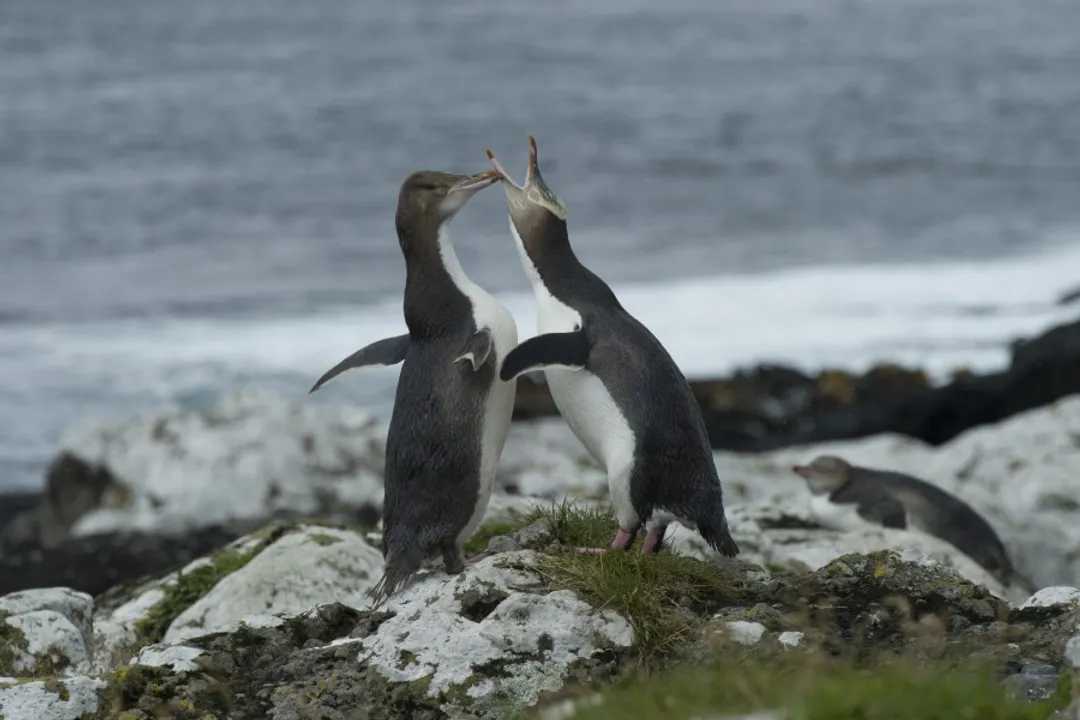
The Yellow-Eyed Penguin exhibits a strong behavioral adaptation toward bottom feeding, which influences its overall energy expenditure and ecological success. Up to 90% of the dives undertaken by these birds are categorized as benthic dives. This means the penguins are actively maneuvering along or near the seafloor to search for their prey, which predominantly consists of demersal fish species inhabiting the ocean floor.
Related Questions
What is the Māori name for the Yellow-Eyed Penguin and what is its species classification?Which fish species replaced Red Cod as the dominant prey item for Hoiho since the 1990s?What percentage of Yellow-Eyed Penguin dives are typically classified as benthic dives targeting the seafloor?How does the size of consumed Blue Cod generally compare to the Red Cod typically eaten by penguins?In local marine habitats where the seafloor consists of coarse sand and gravel, what dominates the Hoiho diet?What percentage of the total food intake for immature Yellow-Eyed Penguins is made up of cephalopods like squid?What is the maximum recorded depth capability for a Yellow-Eyed Penguin foraging dive?Why is the substitution of Red Cod by Blue Cod nutritionally detrimental to the Hoiho?When observed pursuing jellyfish aggregations, what specific prey item are Yellow-Eyed Penguins actually targeting?What proportion of the entire *Megadyptes antipodes* population resides in the subantarctic island strongholds?