Yellow Cobra Diet
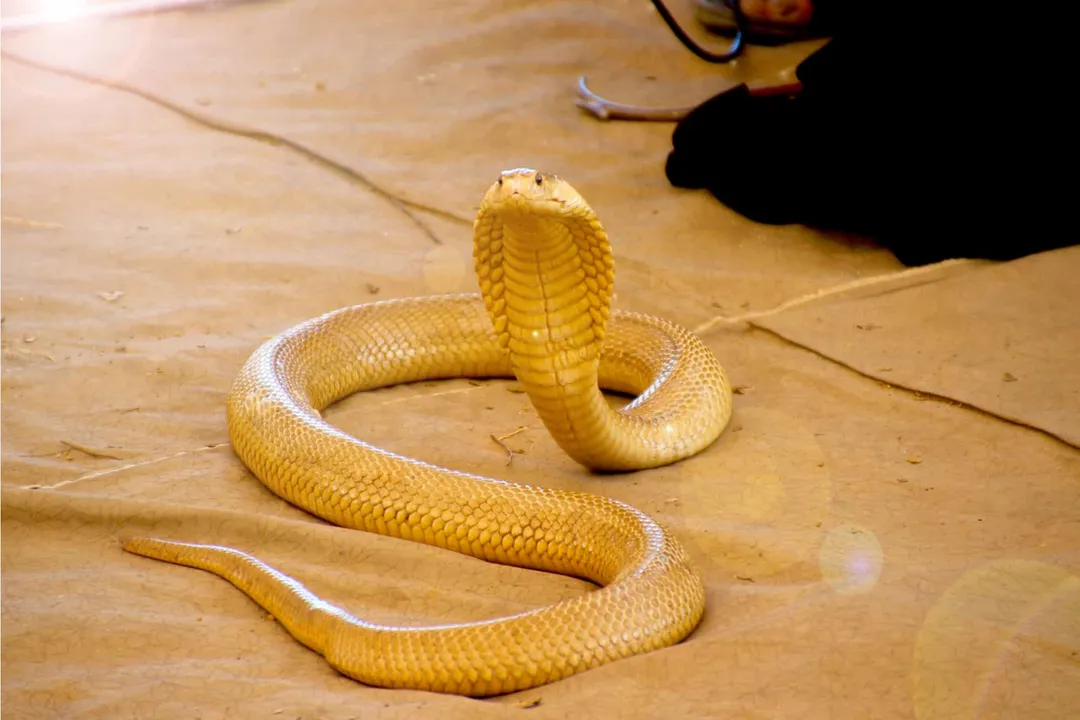
The Yellow Cobra, more formally known as the Cape Cobra (Naja nivea), is a highly venomous reptile endemic to southern Africa, frequently earning its reputation through its potent neurotoxic venom. However, understanding what this snake eats reveals a creature defined not just by danger, but by remarkable dietary adaptability across its diverse range, spanning arid savannas, fynbos, and even semi-urban environments. The very color variation that gives it the name "yellow cobra"—ranging from deep black to golden brown—may hint at the varied environments shaping its menu. The striking yellow variation, common in the Kalahari Desert populations, might offer superior camouflage against the sun-baked terrain where many of its primary food sources reside.
# Generalist Hunter
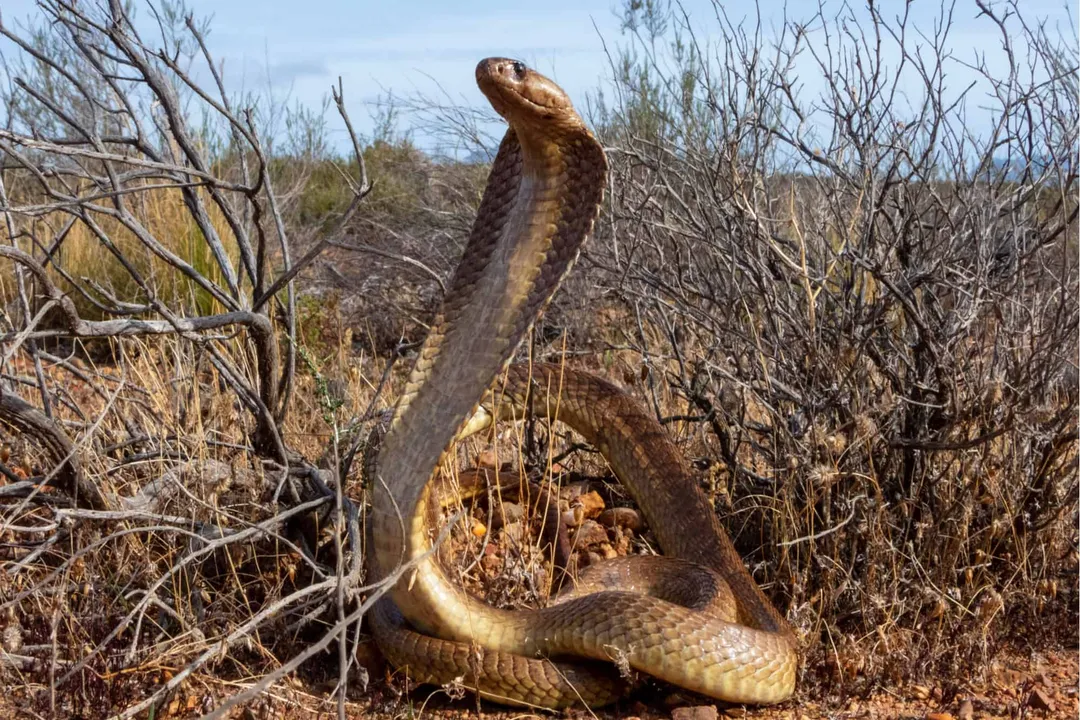
The Cape Cobra operates as a definitive feeding generalist. This classification is key to understanding how Naja nivea maintains a 'Least Concern' conservation status despite habitat encroachment; it simply adjusts its menu based on local abundance. It is an opportunistic carnivore, actively foraging throughout the day, as it is primarily a diurnal species. Only during extreme heat might its activity shift to crepuscular hours, allowing it to hunt when the sun’s intensity lessens. While largely terrestrial, its agility allows it to climb trees and shrubs when necessary to pursue aerial or arboreal meals. This flexibility in hunting style—ground-based pursuit complemented by climbing—is supported by its keen eyesight, which it uses to spot prey from a distance.
# Staple Prey Items
At the foundation of the Cape Cobra’s diet are small, readily available vertebrates. Rodents consistently rank as the most frequently consumed item across multiple accounts. In areas where human habitation or farming brings snakes into closer proximity with people, this preference makes the Cape Cobra a significant natural controller of pest populations.
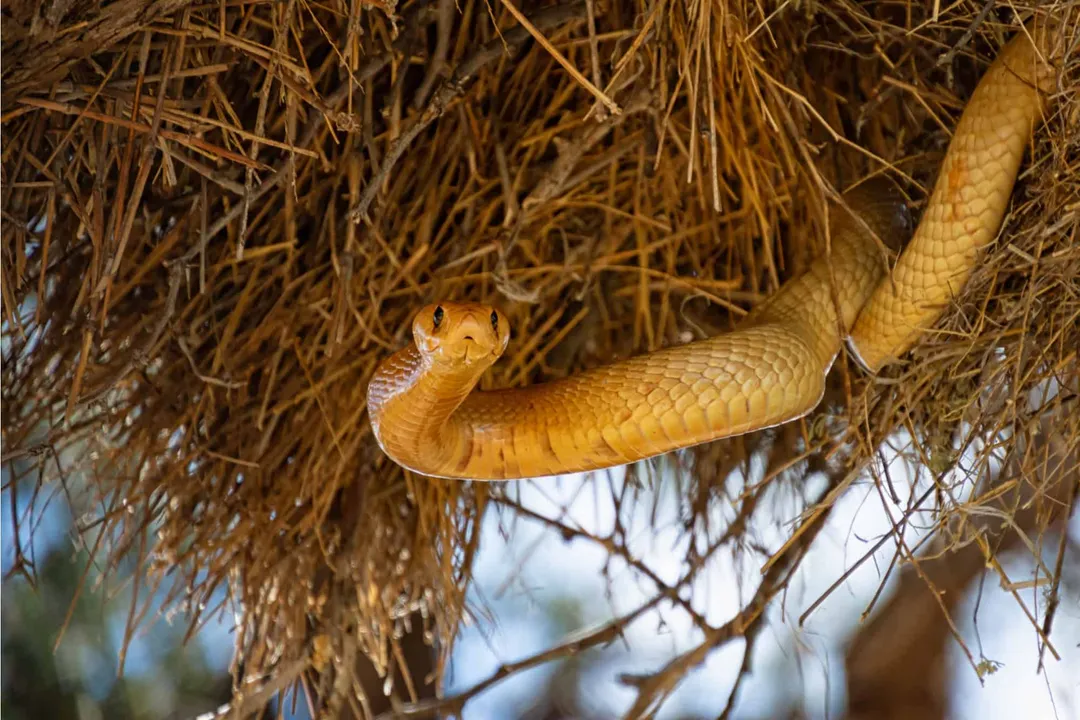
Following rodents, birds form another crucial component. The cobra's climbing ability plays a direct role here, allowing it to systematically rob the communal nests of Sociable Weavers in regions like the Kalahari. This behavior provides a concentrated source of high-protein meals—both eggs and nestlings—in otherwise arid settings.
Beyond these mainstays, the snake consumes a broader spectrum of animals:
- Lizards
- Amphibians such as frogs and toads
- Other Snakes
The inclusion of other snakes in the diet highlights a predatory dominance. A fascinating element of this predatory pattern is the documented tendency toward cannibalism, where Cape Cobras are known to consume the young of their own species. This internal predation, while perhaps morbid sounding, functions as a highly specialized form of resource management within localized populations.
# Scavenging Behavior
What truly sets the Cape Cobra apart from many other snake species is its willingness to engage in scavenging. While predation is the primary mode of obtaining food, Naja nivea has been observed feeding on carrion. Researchers studying populations at De Hoop noted instances of the snakes feeding on road-killed reptiles, specifically mentioning two separate occasions involving deceased snakes: a Psammophylax rhombeatus (spotted slug eater) and a Psammophis notostictus (karoo whip snake). This scavenging habit suggests a pragmatic approach to sustenance, ensuring energy intake even when live prey is scarce, which is a significant advantage in the harsh desert and semi-desert habitats it occupies.
# Dietary Statistics
To grasp the practical impact of this varied diet, specific data from a long-term observation period can be illuminating. A study conducted at De Hoop between October 2004 and March 2006 provided a percentage breakdown of recorded prey items for the Cape Cobra population there. Examining these proportions offers a clearer picture of local feeding emphasis:
| Prey Category | Percentage of Diet | Notes |
|---|---|---|
| Rodents | 31% | The largest single dietary component observed |
| Other Snakes | 20% | Reflecting significant ophiophagy |
| Carrion | 16% | Demonstrates scavenging importance |
| Birds | 11% | Likely including nest raids |
| Lizards | 11% | A steady source of smaller prey |
| Conspecifics | 11% | Direct evidence of cannibalism |
It is interesting to note the nearly equal weighting given to birds, lizards, and cannibalism in this specific dataset, suggesting that when primary rodent availability is balanced, the cobras diversify intensely rather than relying heavily on one secondary source. In environments where food sources are unpredictable, this level of dietary flexibility is a powerful survival tool. It means that advising on controlling one pest, like rodents, might not entirely remove the snake's incentive to remain in an area if birds or other snakes are also present.
# Predator Mitigation
While the Cape Cobra is an apex predator in many scenarios due to its venom, it is not without its own threats, which in turn indirectly shapes its need to eat constantly. Young cobras, measuring around 30 to 40 cm upon hatching, are particularly vulnerable to a wider array of predators. These include meerkats, smaller mongoose species, various birds of prey (raptors), and even crows. Adult cobras face larger adversaries, notably honey badgers, known for their tough hides and immunity to the venom, as well as larger mongooses and birds like the secretary bird and snake eagles.
Because of the constant threat to its young, and the high energy demands of producing potent venom, maintaining a high intake of prey—even scavenging—is essential for survival and growth. If you live near areas where these snakes are prevalent, understanding their secondary food sources is practical. For instance, if you notice a high density of Cape Cobras near a farm, you can assume they are benefiting from both the rodent issue and, perhaps, unmanaged poultry or nesting bird populations in outbuildings. Reducing accessible bird nests or securing poultry areas might offer a slight behavioral disincentive for the cobra to linger, though their need for rodents is likely the primary draw. While the snake prefers to avoid human contact, its diet actively draws it into human-modified landscapes.
Related Questions
#Citations
Cape cobra
Cape Cobra - Facts, Diet, Habitat & Pictures on Animalia.bio
Yellow Cobra Animal Facts - Naja nivea
Cape cobras: Key facts about physical characteristics ...
Cape Cobra | Creatures of the World Wikia - Fandom
Yellow Cobra Facts & Photos
Cape cobra