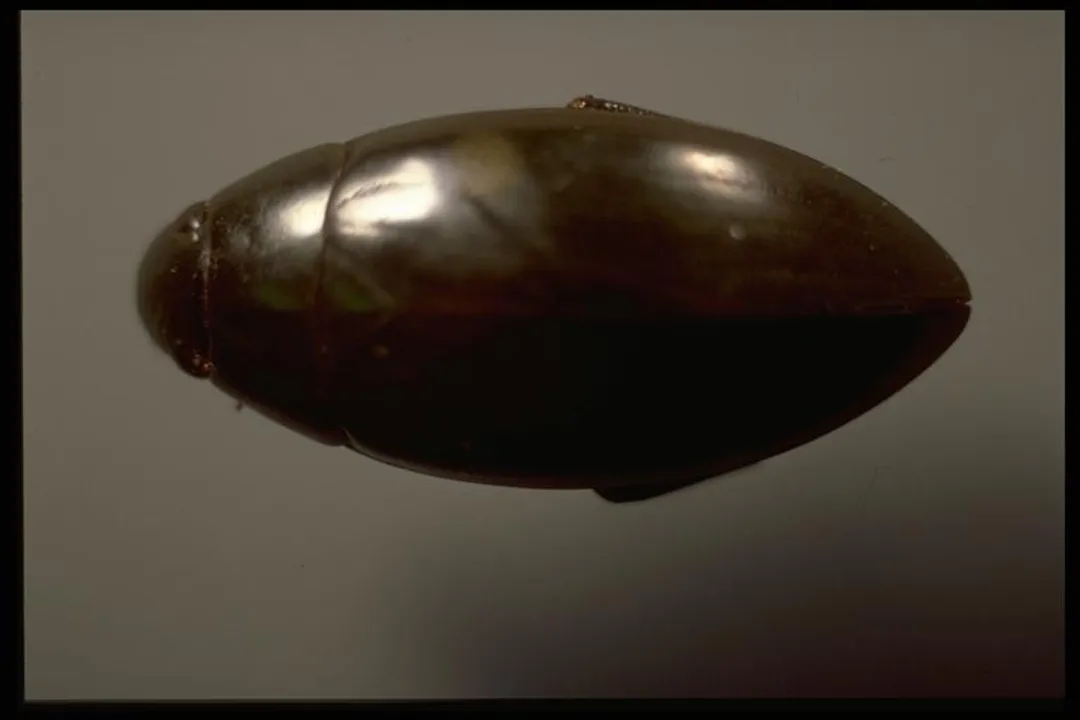
What visual observation signals the trapped air mechanism in the Giant Water Scavenger Beetle?
A bright, silvery sheen underneath the dark wing covers
The process of respiration for many aquatic beetles, including the Giant Water Scavenger Beetle, involves trapping a layer of air beneath the tightly closed elytra when they surface for replenishment. When observing a Giant Water Scavenger Beetle utilizing this mechanism underwater, the trapped air bubble becomes visually apparent against the beetle's typically dark coloration. This film of air refracts light, causing it to manifest as a noticeable, bright, silvery sheen visible directly beneath the hard, dark surface of the wing covers. This distinct visual cue is a direct result of the physical gill function, where the trapped air facilitates the necessary gas exchange of oxygen and carbon dioxide.