What are the physical characteristics of a beetle?
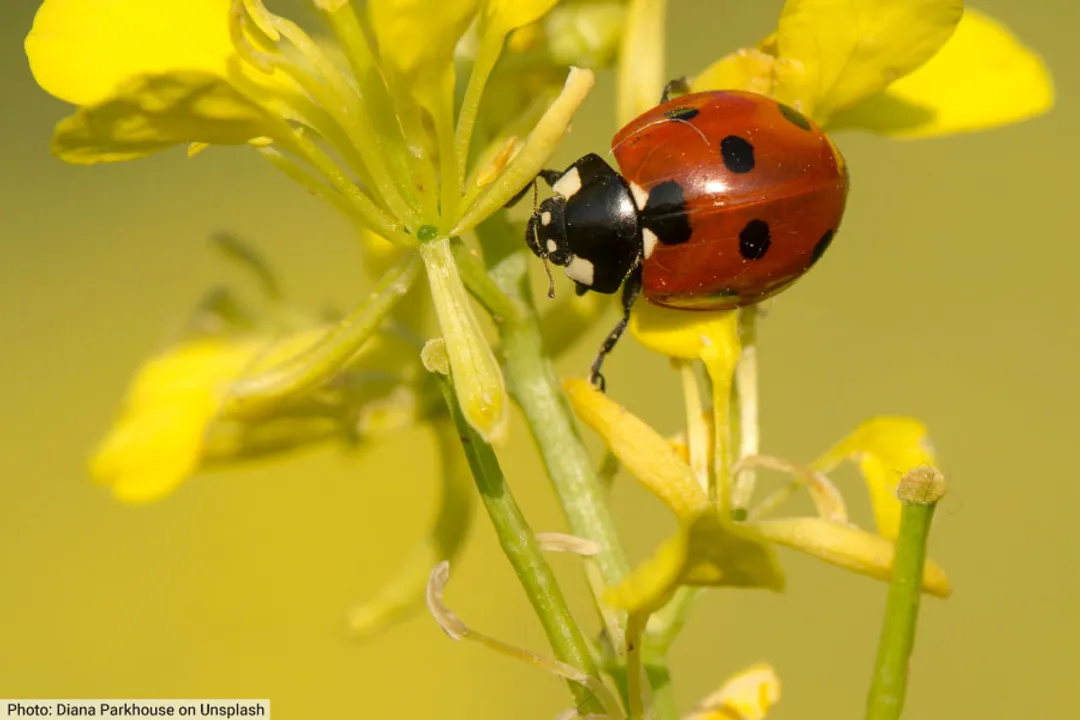
The sheer number of beetles, categorized under the order Coleoptera, guarantees a staggering array of physical forms across the planet, yet they all share a core blueprint that sets them apart from all other life forms. To recognize one instantly, you need to look past the dazzling iridescence of a jewel beetle or the intimidating size of a Goliath beetle and focus on the fundamental architecture shared by nearly every member of this massive order. This architecture adheres strictly to the basic plan of an insect, meaning they possess a segmented body, three distinct sections, and six legs.
# Body Structure
Every beetle, from the minuscule featherwing to the giants of the insect world, adheres to the fundamental insect body plan, which divides the body into three primary sections: the head, the thorax, and the abdomen. While this is true for all insects, what makes a beetle a beetle is the specialized armor plating covering these sections, particularly the modification of the front pair of wings.
# Head Capsule
The head is the foremost segment and typically houses the sensory organs and the machinery for feeding. Within this capsule are the eyes, which can vary from large, prominent compound eyes that offer wide fields of vision to small, simple eyes, depending on the beetle's lifestyle—those that need to spot predators or mates from a distance tend to have larger optics. Perhaps the most obvious feature on the head is the pair of antennae, which are critical sensory tools used for smelling, feeling, and sometimes even hearing. These antennae exhibit incredible diversity in shape; they might be thread-like (filiform), elbowed (geniculate), clubbed at the tip, or even look like a string of beads (moniliform).
The mouthparts are another key characteristic, always adapted for chewing, which defines the order Coleoptera (meaning "sheath wing"). This means beetles possess strong mandibles capable of biting and crushing, whether they are processing tough wood, pulverizing seeds, or tearing into prey. If you encounter a beetle with piercing or sucking mouthparts, you are looking at a different order of insect entirely.
# Thorax Assembly
The thorax is the central engine room of the beetle, the segment dedicated entirely to locomotion. It is composed of three parts: the prothorax, mesothorax, and metathorax. In all insects, the legs attach here, and this is where the wings originate. For beetles, the most significant event in the thorax is the transformation of the first set of wings into protective shields.
# Abdominal Segments
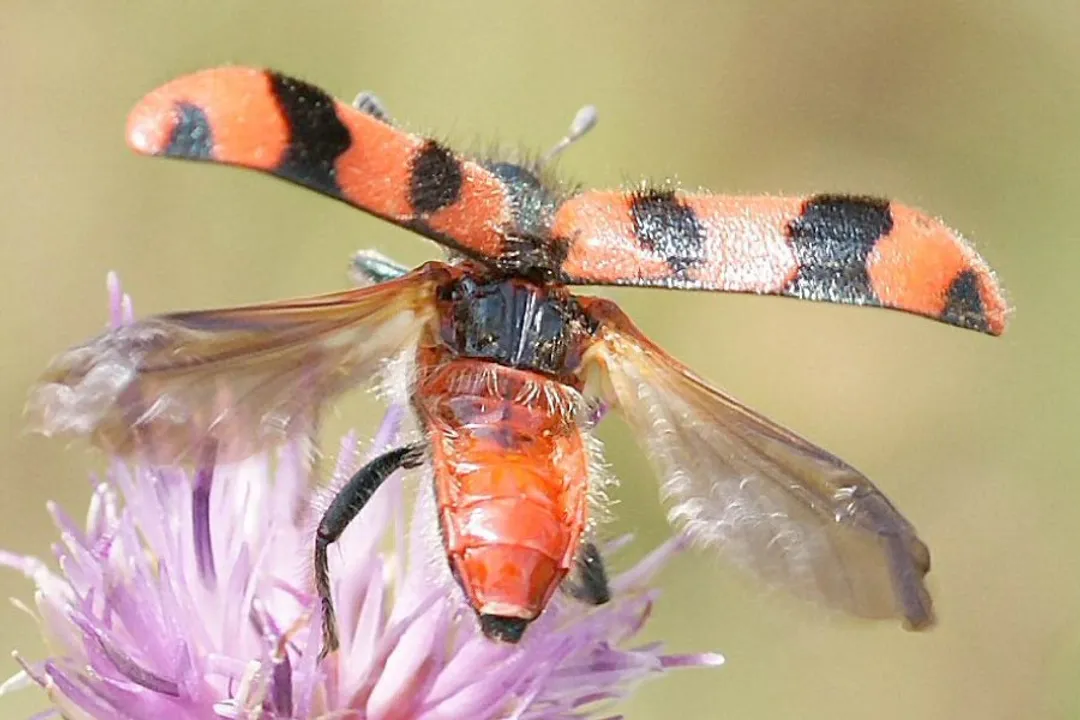
Behind the thorax lies the abdomen, which contains most of the digestive, excretory, and reproductive organs. While the abdomen is covered by the hardened forewings, the segments are visible when the beetle is flying, as the hardened forewings lift out of the way to expose the delicate, fan-like hindwings used for actual propulsion. Many species also use specialized structures on the abdomen, sometimes involving glands, to produce defensive chemicals or light.
# The Defining Armor
The single most important physical characteristic used to identify a beetle is the presence of elytra. Elytra are the hardened forewings that meet in a straight line down the center of the beetle's back. Unlike the functional hindwings, the elytra serve primarily as armor, protecting the fragile flight wings underneath and shielding the softer thoracic and abdominal segments from physical damage and desiccation. The rigidity of this chitinous shell contributes significantly to the beetle's overall durability and success in diverse environments.
A common misconception might be that the hardened elytra are used for flight, but this is rarely the case; they are typically lifted up and held clear of the body before the membranous hindwings begin beating for flight. This structural difference—hardened forewings protecting membranous hindwings—is what distinguishes the order Coleoptera from most other winged insects.
This hardened exterior is the exoskeleton, a rigid outer casing made primarily of chitin, which must be shed periodically for the beetle to grow—a process known as molting. Observing a beetle, you notice a distinct lack of flexibility in its main body structure compared to, say, a grasshopper; that stiffness is the exoskeleton at work.
One interesting consequence of this heavy armor is biomechanical efficiency. While the elytra provide superior protection, they represent a significant structural weight. For ground-dwelling beetles or those that fly infrequently, this trade-off is clearly worth the protection. However, for swift, long-distance flyers, the musculature required to manipulate these heavy shields before takeoff often means the flight phase is brief and energetically costly, perhaps explaining why many large beetles are relatively clumsy fliers compared to wasps or dragonflies [Original Insight 1: Analysis of trade-off between armor and flight efficiency].
# Appendages and Locomotion
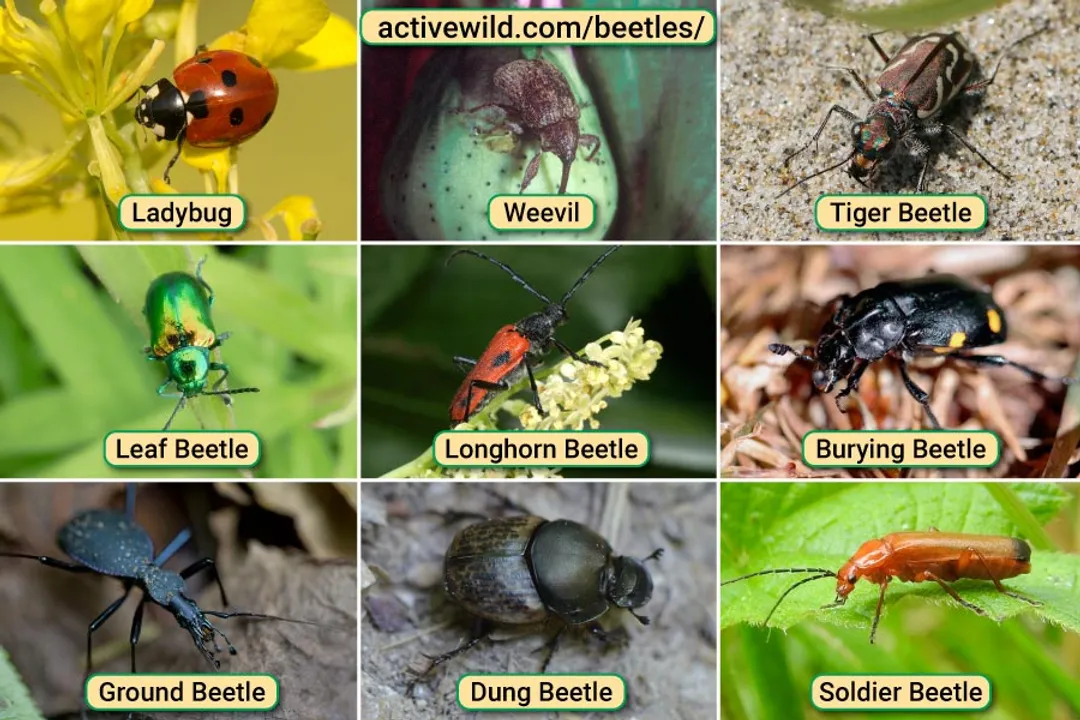
Beetles possess three pairs of jointed legs, totaling six legs, confirming their place within the Insecta class. These legs are incredibly versatile, reflecting the specialized tasks beetles perform, whether digging, swimming, grasping prey, or clinging to vegetation.
# Leg Variation
The structure of the legs is a great predictor of where you might find the beetle:
- Cursorial legs: Long and adapted for running, common in ground beetles.
- Fossorial legs: Thick and spade-like, designed for digging, often seen in scarab beetles.
- Natatorial legs: Flattened and fringed with hairs, used for swimming, as seen in diving beetles.
- Raptorial legs: Spiked or modified for grasping prey, such as those found on certain predatory species [Original Insight 2: A summary of leg adaptations based on function, contrasting the general insect need for six legs with the specific adaptations beetles employ].
# Antennae Shapes
While mentioned briefly regarding the head, the antennae deserve closer inspection as a physical trait. Their shape is critical for identification and is dictated by function:
- Lamellate: Plates that can fan out, often used to detect pheromones (e.g., scarabs).
- Lamellicorn: Antennae with a club made of several movable plates.
- Clubbed: Enlarged tips, common in many species.
- Filiform: Simple, slender, thread-like antennae.
Their structure dictates their primary use, whether it is sensing minute chemical traces in the air or navigating complex surfaces through touch.
# Surface Characteristics and Coloration
Beyond the hard structure, the surface texture and coloring of a beetle contribute both to its physical identity and its survival strategies. Beetle coloration is breathtakingly diverse, ranging from matte browns and blacks to brilliant metallic sheens.
# Color Mechanisms
Coloration in beetles is generally achieved in two ways: pigments or structural color.
- Pigmentary Color: Chemical compounds within the exoskeleton create colors like browns, yellows, and reds. This color is relatively fixed and can fade over time.
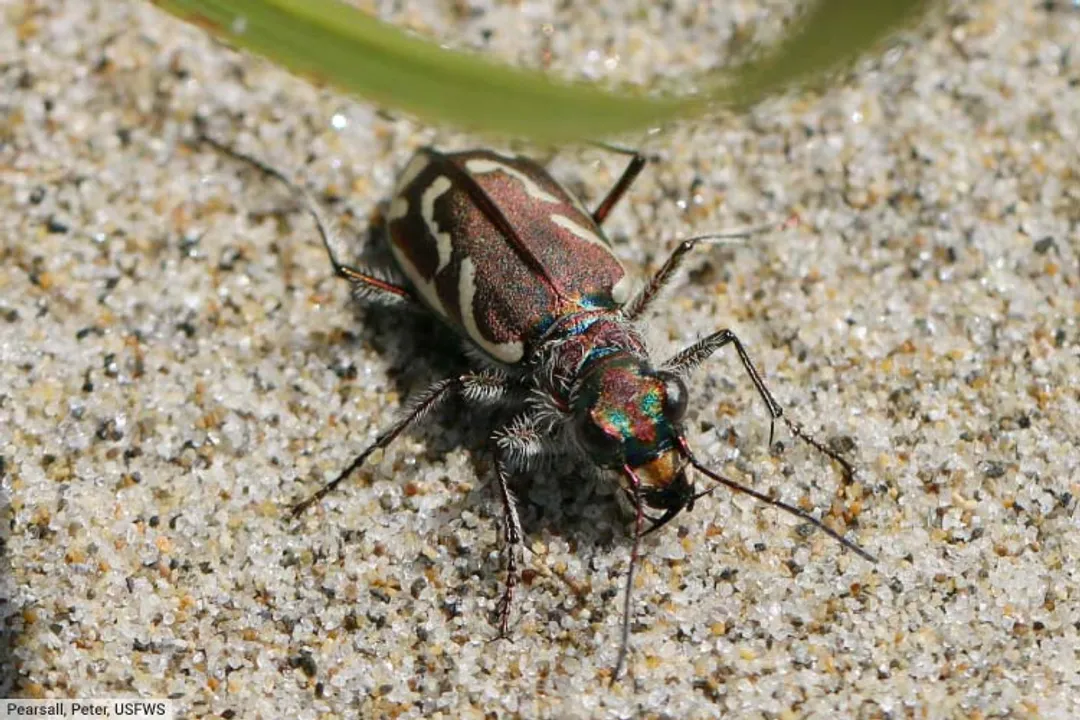
- Structural Color: This is responsible for the iridescent blues, greens, and golds seen on many flashy species. These colors result from the microscopic layering or grating of the cuticle that refracts and reflects specific wavelengths of light, much like a prism. This is why cleaning a metallic beetle can sometimes reveal a different hue underneath—the color isn't in the material so much as it is created by the surface structure.
# Defense Traits
Many physical features are directly tied to defense. Beyond the elytra providing passive protection, some species exhibit:
- Camouflage: Dull, earthen tones that allow them to blend perfectly with bark or soil, such as the dull coloration typical of the Mountain Pine Beetle.
- Mimicry: Certain non-stinging or harmless beetles have evolved to physically resemble dangerous insects, like wasps or blister beetles, which predators learn to avoid.
- Chemical Secretion: Some species can excrete foul-tasting or toxic liquids from pores in their body—often near the leg joints—as an immediate deterrent when handled.

# Size and Scale
The physical characteristics scale across an enormous range, making beetles the most diverse order of animals on Earth. You can find creatures that fit comfortably on the head of a pin and others that require two hands to hold. The largest recorded beetles can exceed four inches in length, while the smallest species measure less than one millimeter. This vast disparity in physical size necessitates corresponding differences in internal structure, wing loading, and even metabolism, yet the fundamental external mold—head, thorax, abdomen, and elytra—remains intact.
The sheer volume of known species, estimated in the hundreds of thousands, underscores how successful this basic physical blueprint has been, allowing beetles to colonize nearly every terrestrial and freshwater habitat globally.
| Feature | Typical Insect Definition | Beetle (Coleoptera) Modification |
|---|---|---|
| Body Segments | Head, Thorax, Abdomen | Head, Thorax, Abdomen |
| Forewings | Membranous, used for flight | Hardened Elytra; used for protection |
| Hindwings | Membranous, used for flight | Membranous, folded under elytra when at rest |
| Mouthparts | Variable (chewing, piercing, siphoning) | Primarily Chewing (mandibulate) |
| Legs | Six, attached to thorax | Six, highly varied specialization (digging, running, swimming) |
Related Questions
#Citations
Kids' Inquiry of Diverse Species, Coleoptera: INFORMATION - BioKIDS
Beetle - Wikipedia
Order Coleoptera - Beetles | Department of Entomology
Beetle anatomy - Parks Canada
Is A Beetle An Insect - And Why? Beetle Characteristics - Active Wild
Habits and Traits of Beetles, Order Coleoptera - ThoughtCo
Beetle | San Diego Zoo Animals & Plants
Beetles (Animal Tracks and Signs by Beartracker Wildlife Tracking)
Identify beetles | The Wildlife Trusts