What sensory organs housed in the head capsule must function both above and below the water surface for water beetles?
Answer
Compound eyes
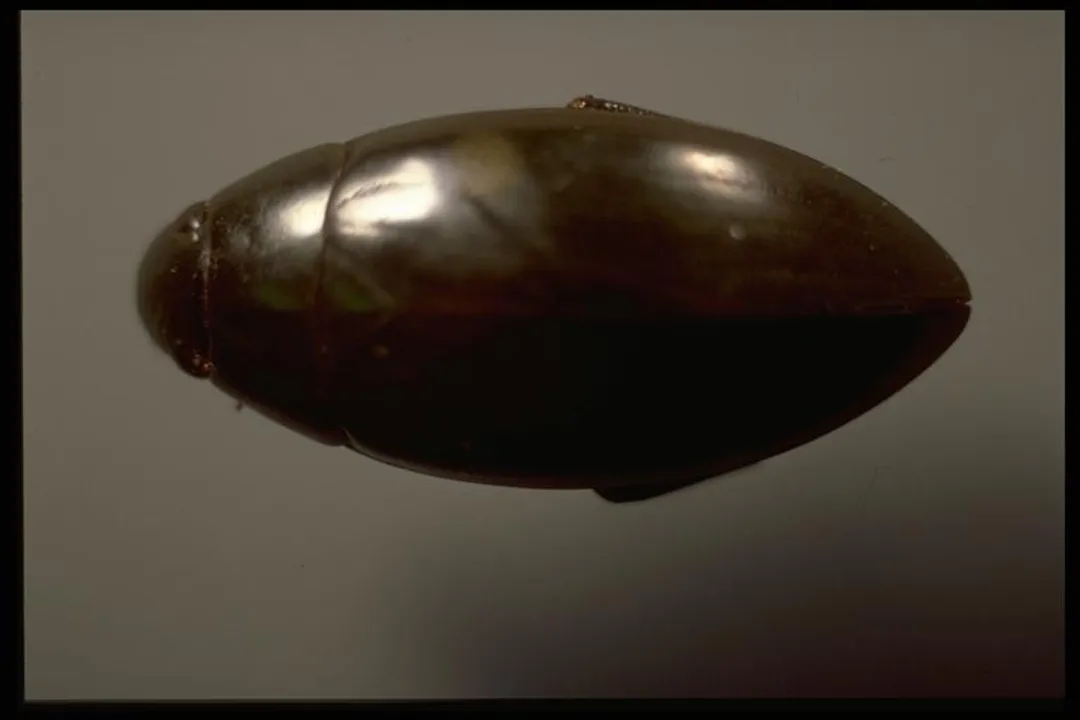
The head capsule of the water beetle contains essential sensory apparatus required for survival in a semi-aquatic environment. The compound eyes are housed here, and they face the unique challenge of needing to maintain visual acuity and function effectively across two very different media: air (above the surface) and water (below the surface). This dual functionality is necessary for locating resources, avoiding terrestrial or aquatic threats, and navigating the boundary layer. While antennae also aid in sensing, the compound eyes are explicitly noted as needing to perform reliably in both environments, a common hurdle for many creatures that straddle terrestrial and aquatic existence.
Related Questions
What structural feature forms a reservoir for trapped air in many adult water beetles?What type of antennae do Giant Water Scavenger Beetle adults possess?Which larval structure allows some diving beetles to breathe while remaining mostly submerged?How are the hind legs of powerful swimming predaceous diving beetles specialized?What difference illustrates niche partitioning between predatory diving beetle larvae and their adults?What visual observation signals the trapped air mechanism in the Giant Water Scavenger Beetle?Which fundamental characteristic do water beetles share with their terrestrial Coleoptera relatives?Which species is significantly smaller, measuring only around 3.6 to 4.2 millimeters in length?How is the larva of the Giant Water Scavenger Beetle described in terms of physical appearance?What sensory organs housed in the head capsule must function both above and below the water surface for water beetles?