What unique feature replaces antlers in male Chinese water deer (*Hydropotes inermis*)?
Answer
Prominent, elongated upper canine teeth (tusks)
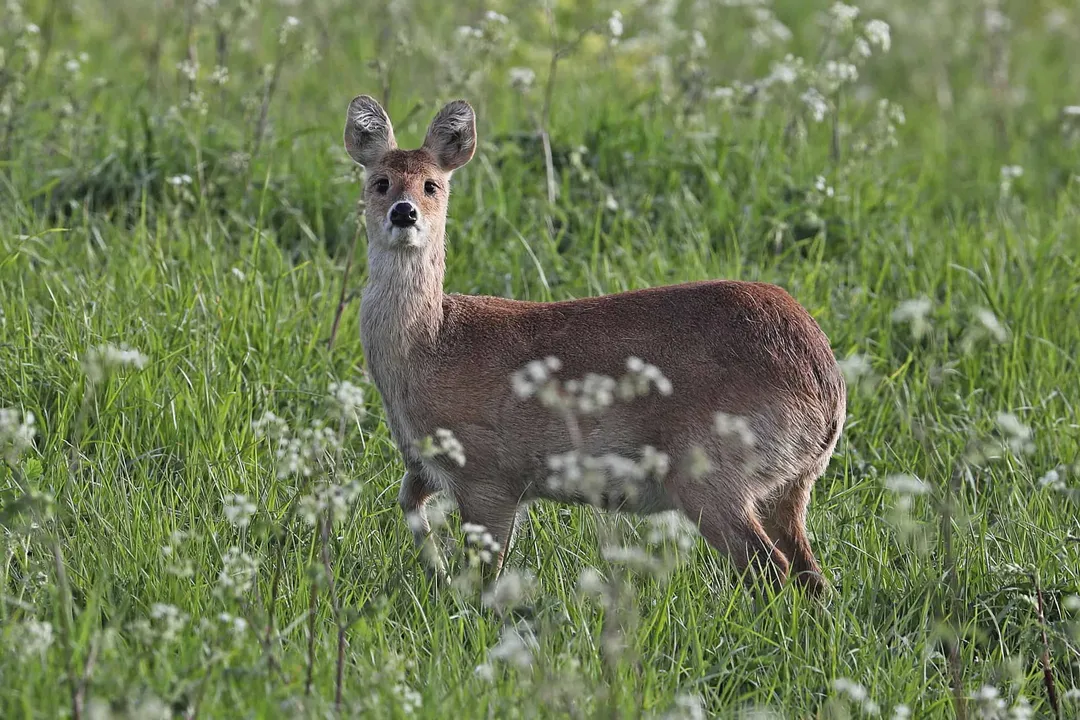
Male Chinese water deer lack the characteristic antlers typical of most Cervidae members. Instead of growing and shedding annual bone structures from the skull, the males possess large, downward-projecting upper canine teeth, commonly known as tusks. These tusks are derived from the dental structure, specifically modified canines, and are genetically fixed rather than regulated by the seasonal hormonal cycles that govern antler regrowth in other deer species. This unusual weaponry is used for combat, dominance contests, and territorial defense, representing a significant morphological divergence within the deer family.
Related Questions
What unique feature replaces antlers in male Chinese water deer (*Hydropotes inermis*)?Which specific family level grouping defines the Chinese water deer lineage?What does the Latin species epithet *inermis* signify regarding *H. inermis*?What primary characteristic defines the Order Artiodactyla for this ungulate?Why is the monotypic nature of the genus *Hydropotes* significant in classification?What specialized digestive trait places *H. inermis* in the Suborder Ruminantia?Why are antler condition metrics inapplicable for assessing feral *H. inermis* populations in the UK?Which non-deer species is the tusked Chinese water deer often compared to morphologically?What does the diminutive size of *H. inermis* suggest about its ecological niche?How does the seasonal pelage change of *H. inermis* contrast with some other deer species?